


29.05.2021.
From the Life of Two Zadar Palaces, part 1
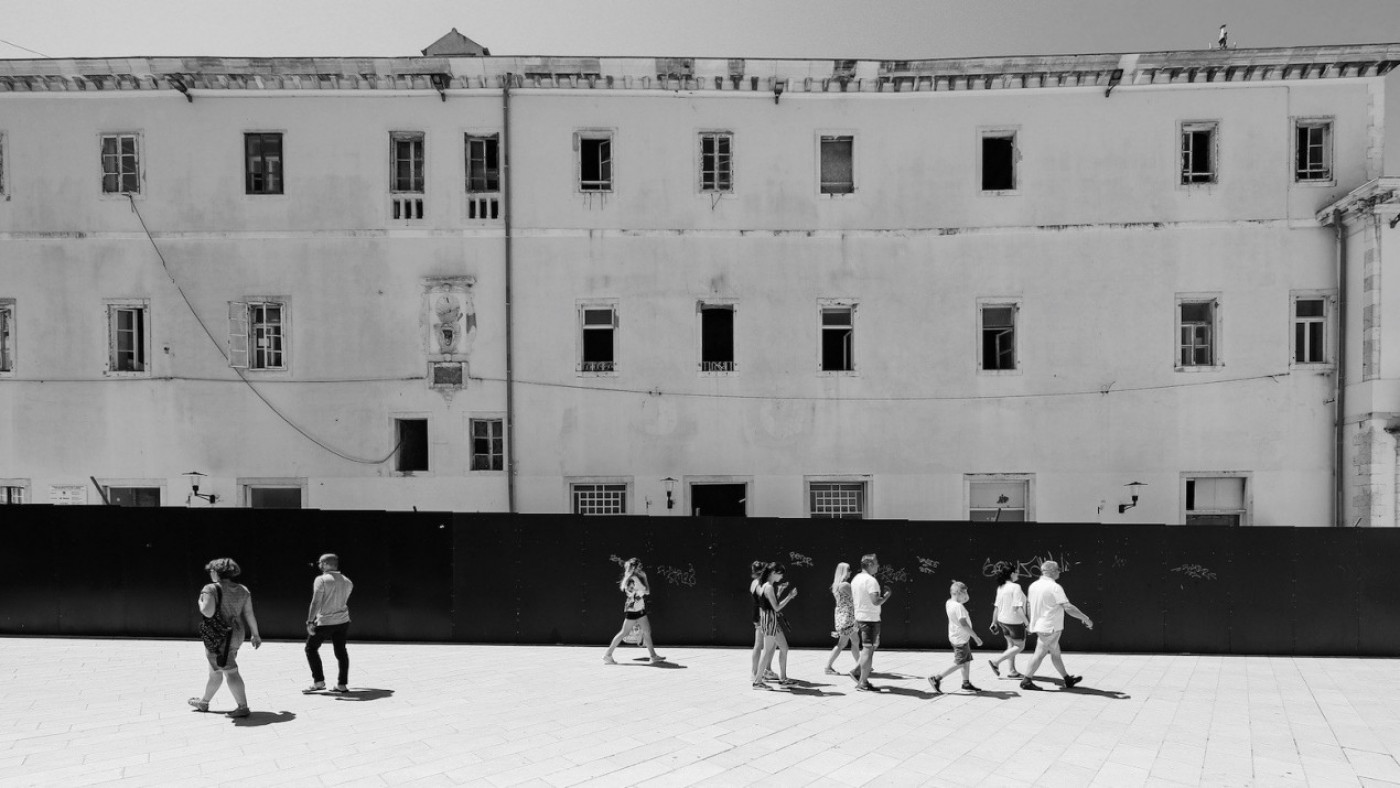
When in 1804, one of the magnificent Rector's and Providur's Palace renovations in Zadar, designed by the classicist architect Frane Zavoreo, began, the aim was to turn these palaces into the residence of the Austrian governor of Dalmatia. The three-year renovation of 1804-1807 completely changed the appearance of the northern facade of the Rector's Palace, while the new aesthetic vision of construction in a symmetrical spirit represented the first successful classicist project in Zadar.
In the late 19th century, two smaller surrounding buildings became state property (previously owned by the Berettini family), so the palace's west façade and environment were further altered. A decision was then made that these two buildings should be pulled down to have an unimpeded view of the west facade and make the obtained surface into a garden. The Rector's Palace, with its new looks, during the 20th century, gave spirit to the cultural life of Zadar through multiple functions and roles; as a city library, a music and ballet school and a concert hall. Radio Zadar, the Petar Zoranić mixed choir and the Juraj Baraković girls' choir were also housed in the Rector's Palace.
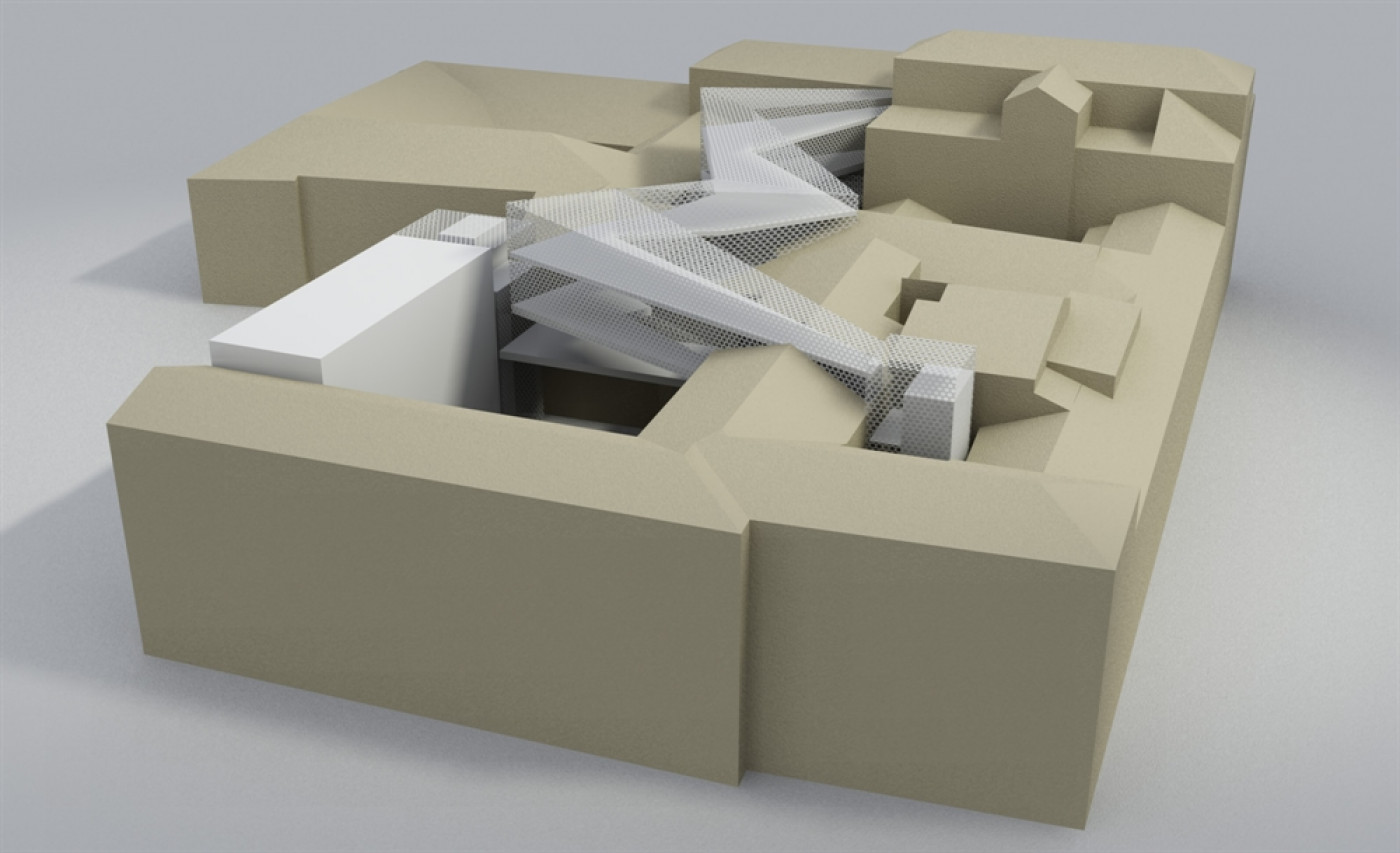
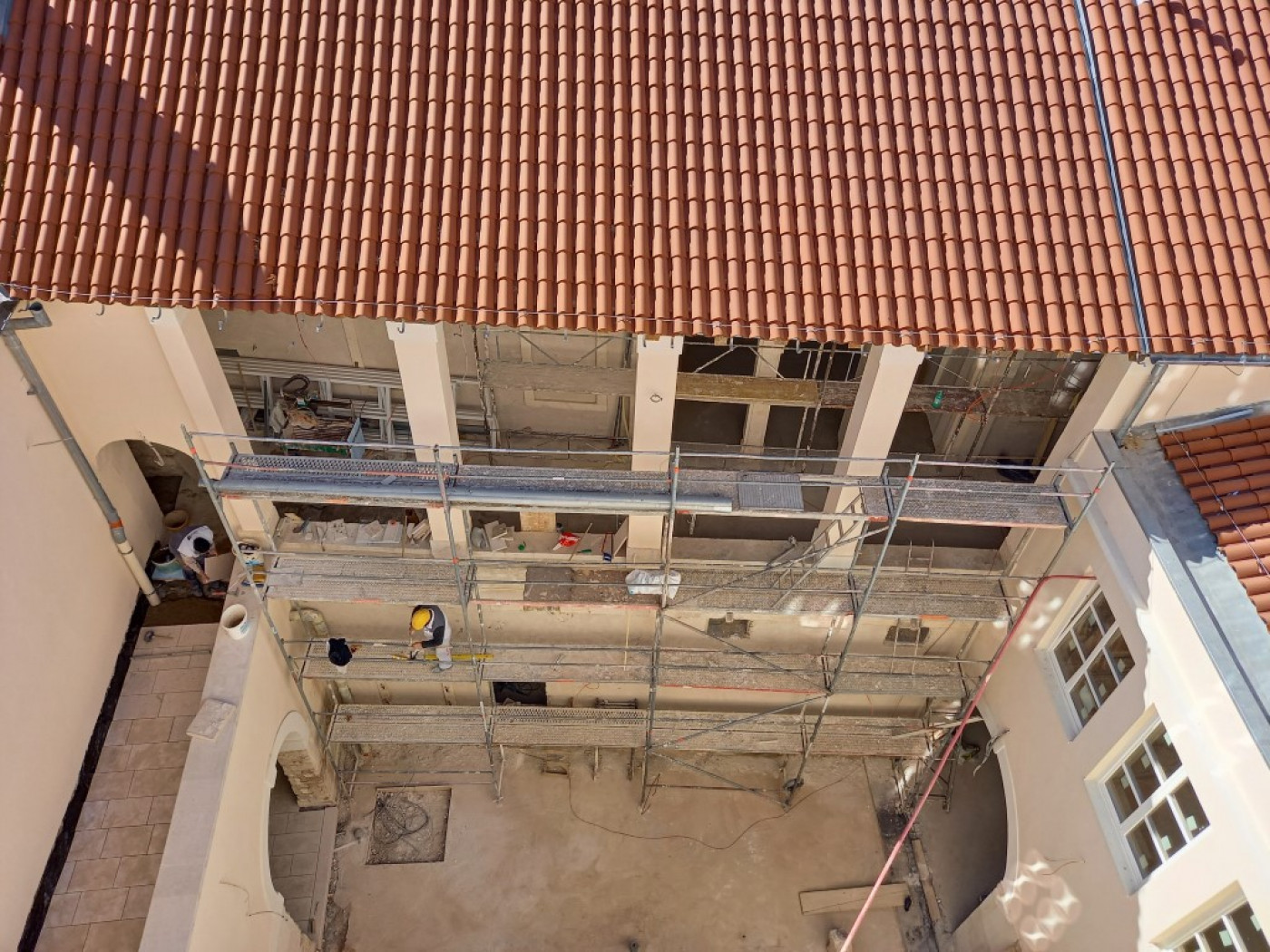
It used to be the palace of dukes and proveditors, then the city council. Today, after ten years of work on the Heritage Museum project, it will become Museum 2 in the historic city centre consisting of the Rector's and Providur's palaces. Museum 2 will house all the departments of the Zadar National Museum, so this project will give a new dimension to the institution, which will operate according to modern museum standards.
After almost two thousand years of continuity in various forms, styles and purposes in the same place, today's Rector's Palace and Proveditor's Palace will finally become what they have always been, although in entirely different ways and different eras. They will be the initiators of cultural life at the eastern edge of the Zadar peninsula.
Historical sources had records of the Rector's Palace in Zadar as early as the 13th century. Still, archaeological excavations have revealed parts of the building from Roman and late antiquity, so it is evident that the area has been inhabited and urbanized since ancient times. It was first mentioned in a document from 1288 called the Municipal Palace. Still, ten years earlier, it had also been mentioned in a document on renting an apartment for the duke, while in 1283, the construction of a residential house for the duke's advisers was completed.
New mention of the palace and its great hall comes from the 14th and 15th-century documents presenting meetings held there and its repairs. Furthermore, historical records from 1352 mention for the first time that the council of the Zadar commune met in the hall of the Rector's Palace (sala comitatis). Although six years later the council still met in the mentioned hall, the Rector's Palace was then called the Grand Palace of Zadar.
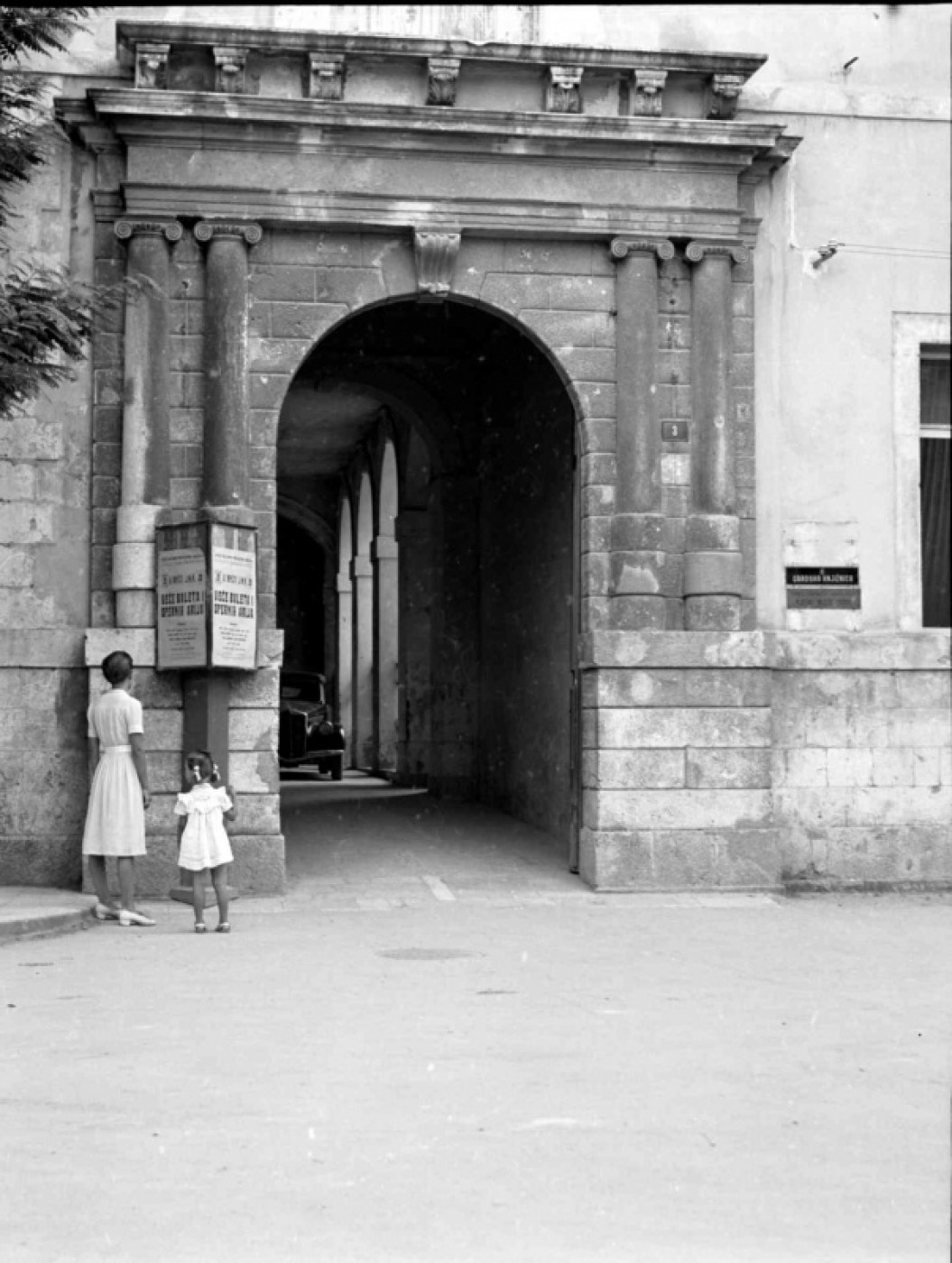
Photography from the holdings of the antiquarian association Starinar in Zadar
In 1366, the Rector's Palace was ceded to the then Duke Karlo Drački ( ital. Carlo III di Napoli, engl. Charles III of Naples, born in Schiavonea ( ital. Schiavone - Slav; a Slavic person) in the province of Corigliano-Rossano (medieval Greek name Ruskia hora) in Calabria, a descendant of the Neapolitan branch of the Anjou dynasty who would become King of Naples in 1382 and King of Hungary in 1385. His son Ladislav of Naples (Ladislao of Naples) was crowned Hungarian-Croatian king in Zadar in 1403.
Karlo Drački in the Hungarian Chronicles from 1488
The following document dates back to 1421 and was compiled by Chancellor Teodor de Prandino. For the first time, this document mentions the location and appearance of the palace. Prandino states that the palace borders the church of St. Stephen, on the north side a public street, on the east and west the houses of Zadar dignitaries, and on the south side the monastery of St. Plato. The palace was built of stone, and the document says it was covered with half-round tiles and had taverns, warehouses, an office, and two horse-stables.
The basic information about public notary Teodor de Prandino is that he was the son of Antonio Ferraroli and came from the hinterland of Venice, i.e. from the city of Vicenza. He performed the notarial service on imperial authority. In the Zadar commune, he worked in several different services: the Kaptol clerk, the municipal notary public and the notary of the Grand Court Palace of the Zadar commune. Prandino settled permanently in Zadar and married a daughter of the merchant Toman , son of the late Juraj. During his stay in Zadar, Prandino, together with prominent Zadar residents, connected into a densely intertwined social network, and complete coexistence with the city was manifested in the construction of a hospital. His will has also been preserved, whose transcription was published by Branka Grbavac PhD in the Contribution to the Study of the Biography of the Zadar Notary Teodor de Prandino from Vicenza.
His arrival in Zadar coincided with the end of the civil war and the struggle for the Hungarian-Croatian throne between supporters of King Sigismund of Luxembourg (germ. Sigismund von Luxemburg) and of Ladislav of Naples when Ladislav of Naples was crowned Hungarian-Croatian king.
Emperor of the Holy Roman Empire Sigismund of Luxembourg at the age of sixty-five, the work of Antonio di Puccio Pisano or Pisanello
It is likely that upon his arrival in the Zadar commune, he first acted as a notary of the Grand Court Palace of the Zadar Commune, i.e. as a notary for civil disputes. In this position, he replaced the notary Vannes de Bernardo from Fermo. In addition to the duty of notary for civil disputes, Theodore, from April 1407, briefly took over the notary position of the Consul and Sea Court Palace when he was replaced by the notary public Petarde Carbonis. The preserved Prandino’s notarial register has six bundles and is kept in the State Archives in Zadar.
Schau das Video an
.
Möchtest du gern mehr wissen?
Vorschläge

Gastronomie
A Book About The Dalmatian Truffle “Donat's Black Diamond”
01.02.2021.

Gastronomie
Royal Vineyards - a Story That Lasts for Nine Centuries
07.06.2021.
Lifestyle, Neuheit
A New Brochure for Experiencing the Zadar Archipelago First-Hand
15.07.2025.
Neuheit
Vote for Zadar Christmas Market
28.12.2022.