
24.02.2023.
Permanent Exhibition of Religious Art in Zadar – on the Traces of the Rich Past
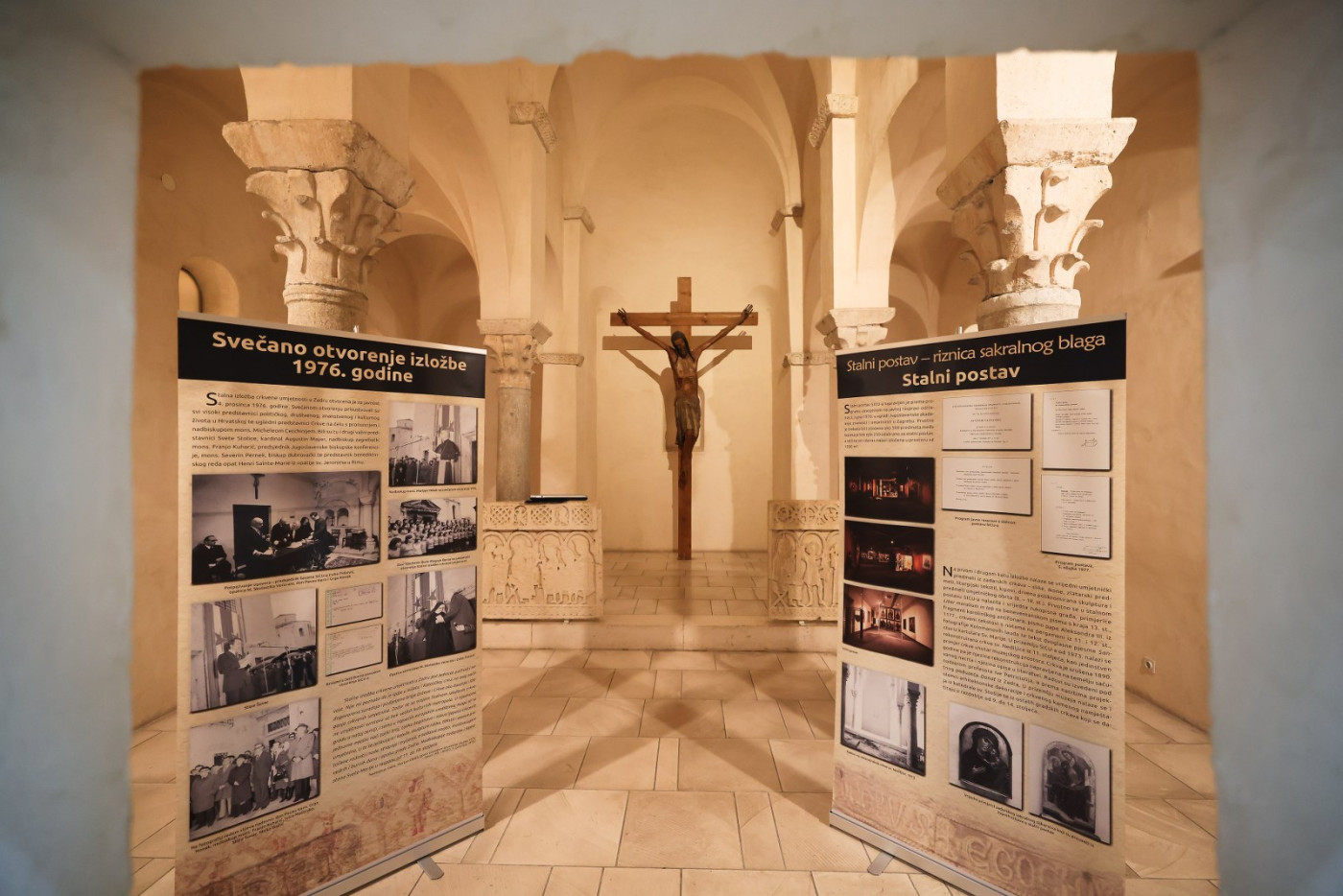
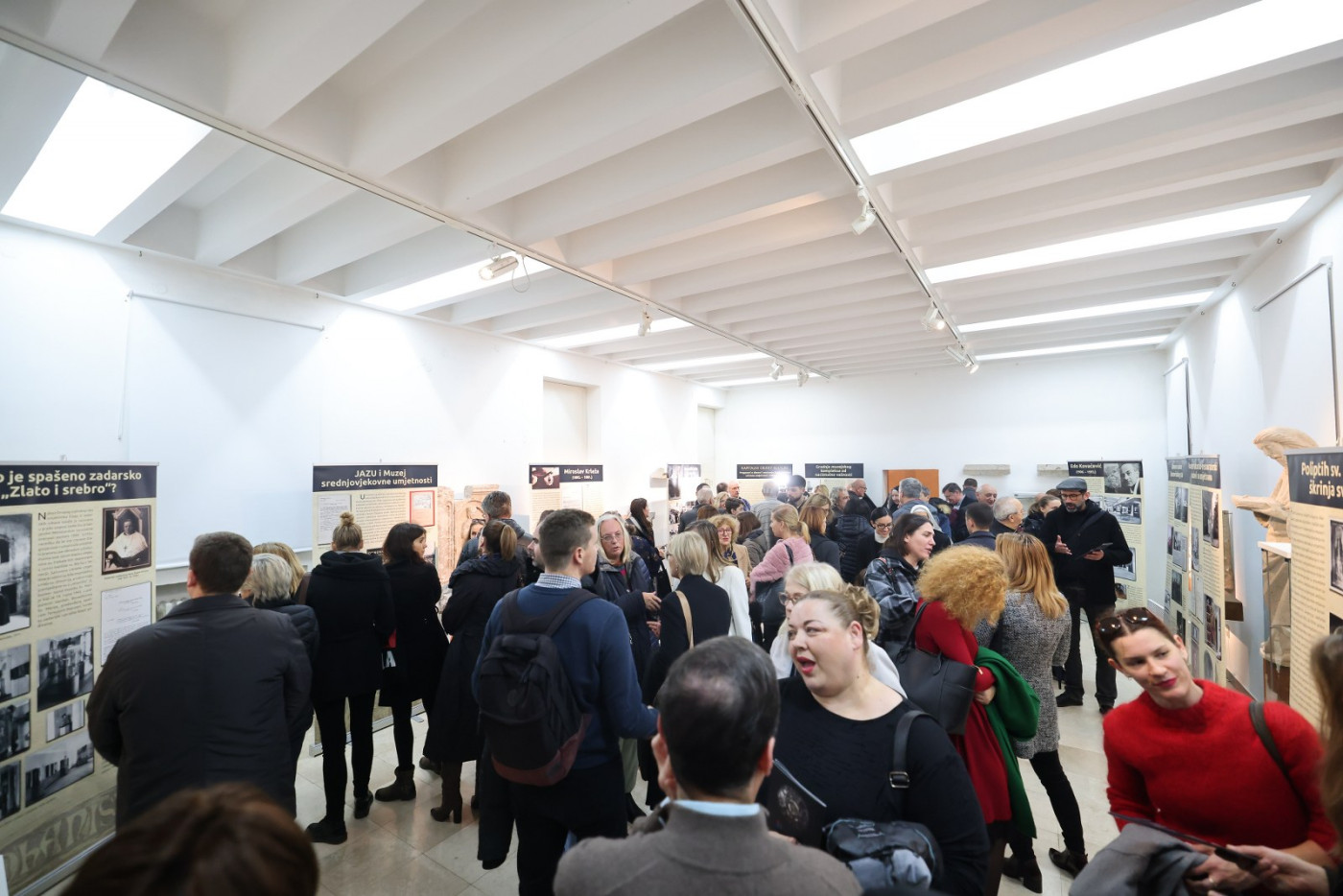
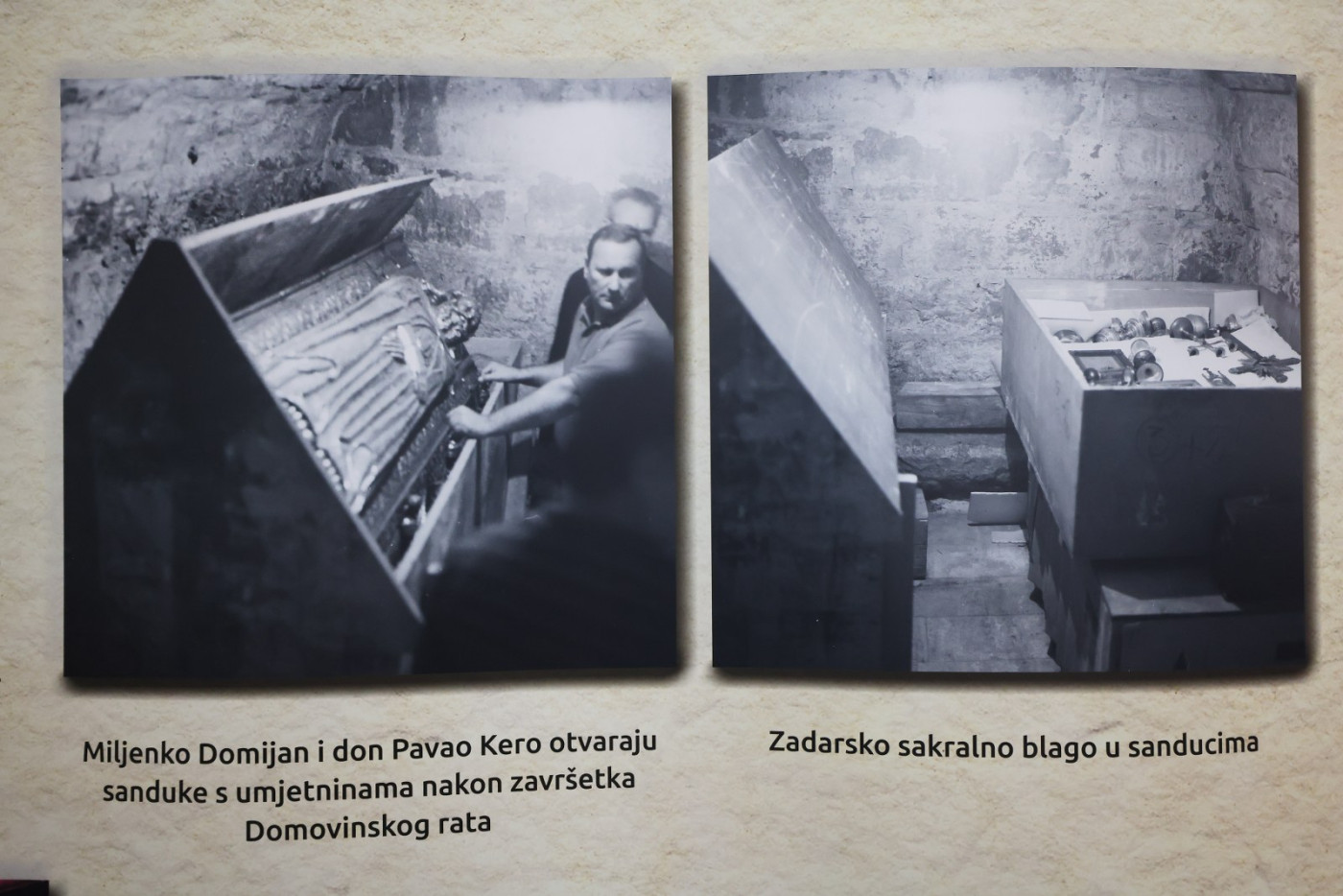
The Permanent Exhibition of Religious Art in Zadar– on the traces of the rich past by the author, assistant professor Ana Jordan Knežević, PhD, curator of the Permanent Exhibition of Religious Art in Zadar. The exhibition is open to all visitors until July 31, 2023. Since numerous visitors were present at the opening of the exhibition, and a great interest is still present with the general public and the academic community, the possibility for the exhibition to be prolonged is open.
The idea on establishing a museum of religious art in Zadar came to life back in 1948 when the famous Croatian writer and academic Miroslav Krleža visited the city following its destruction during the Second World War. Krleža was so overwhelmed with the religious art that in 1951 he organized an exhibition of the Gold and Silver of Zadar in Zagreb. He also encouraged the publication of the monograph of the same name, for which he also wrote the preface in which he glorified the sacred treasures of Zadar. Nine years after this exhibition, the year-long negotiations started between the church and secular authorities on the construction of a religious art museum and the renewal of St. Mary's Convent complex. The negotiations were successfully finalized in 1970 with the Agreement on the Establishment of the Permanent Religious Art Exhibition in Zadar, and two years later the convent building was finalized where in 1976 the Permanent Religious Art Exhibition was setup.
The exhibition entitled The Permanent Exhibition of Religious Art in Zadar– on the Traces of the Rich Past is designed to include three chronological-thematic units. The first unit covers a series of historical and social events that preceded the establishment of the Permanent Religious Art Exhibition and have influenced its development to the present day. The first unit is dedicated to the events prior to the Second World War, war destruction of the city and St. Mary's Convent and the saving of the Gold and Silver from being transported by ship to Italy. The first structural plans for the post-war reconstruction of St. Mary's complex and the construction of the Medieval Art Museum (later the Permanent Exhibition of Religious Art) were brought by the Yugoslav Academy of Science and Art with special merits to Miroslav Krleža, Grga Novak, Branimir Gušić and Vjekoslav Maštrović who in 1970 took the role of director of the “Permanent Exhibition of Religious Art in construction”.
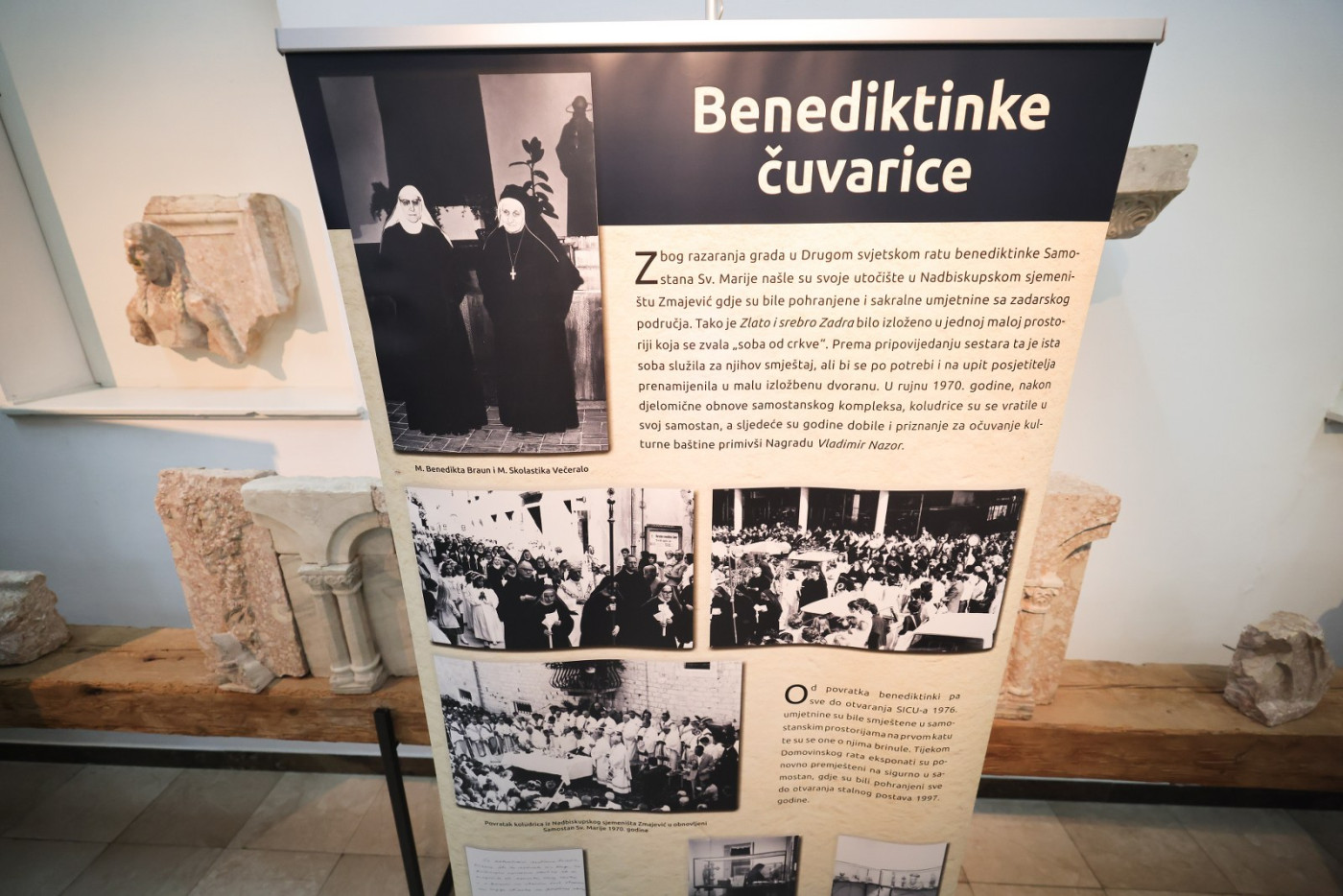
The second unit starts with the display of diplomatic negotiations between the church and secular authorities on the reconstruction of the convent complex and thus the establishment of the Permanent Exhibition of Religious Art in Zadar where Archbishop Monsignor Mate Garković and his successor Monsignor Marijan Oblak were exceptionally active. Due to their destroyed home, the Benedictine nuns of St. Mary were in that period located in the Archbishop Zmajević Seminary, and where the Zadar religious treasure was stored. It was only after twenty-six years that the nuns returned to the reconstructed museum where the valuable religious works of art were transferred and which were under their custody in the rooms of the convent until the official opening of the permanent setup of the Permanent Exhibition of Religious Art.
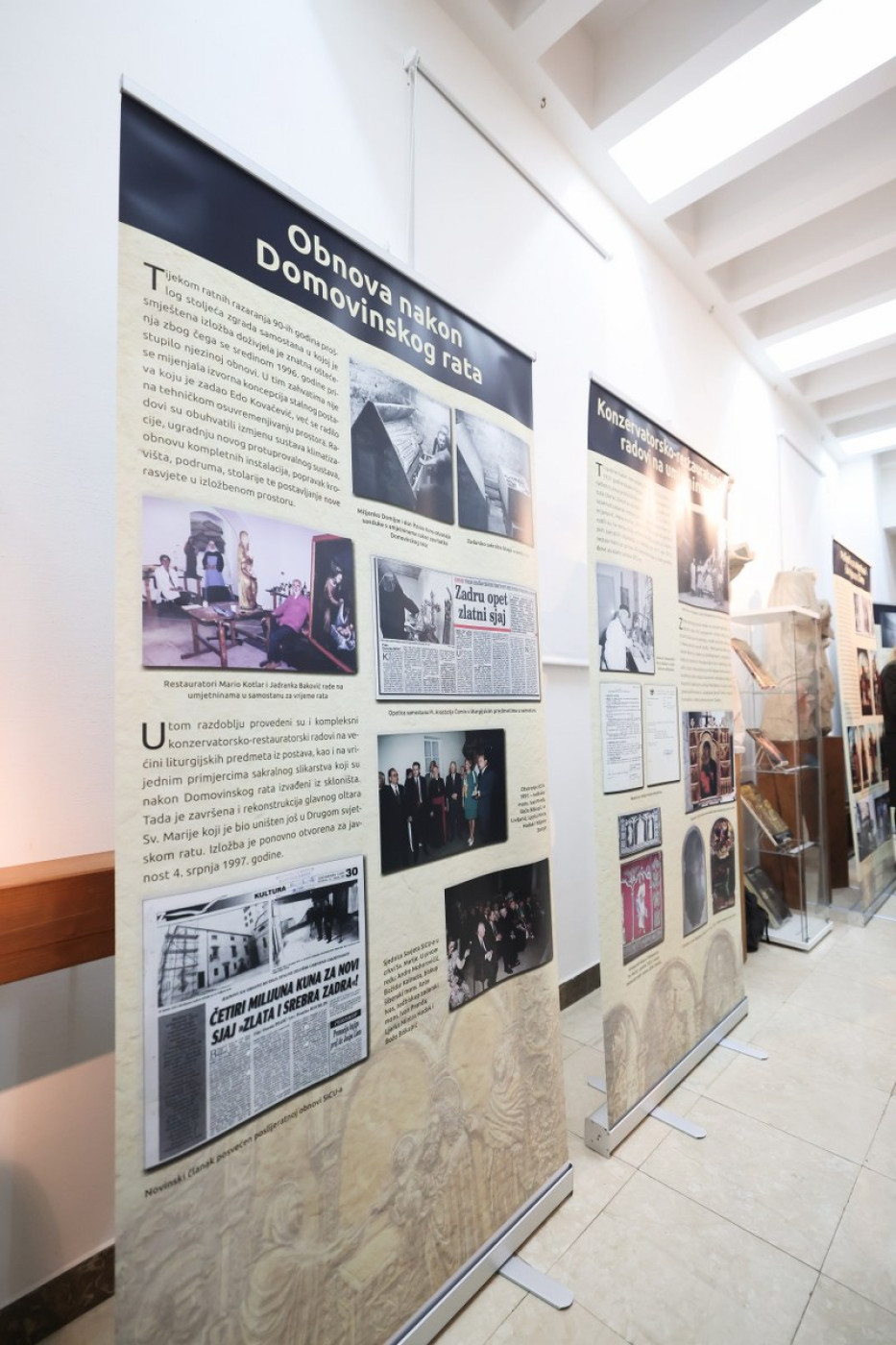
The last chronologically-thematic unit named Permanent Exhibition – Treasury of Sacred Treasures is dedicated to the valorization of the Permanent Exhibition of Religious Art layout, and whose conceptual artistic solution is the work of academic painter Edo Kovačević (1906 – 1993). The artistic design of the SICU's permanent exhibition is recognized today as one of the best solutions for museum interiors of the 20th century. Design furniture signed by Bernardo Bernardi (1921 – 1985), was ordered for the arrangement of the office spaces and the library. Bernardi is our famous architect who created timeless works of architecture and design in the fifties of the past century and thus left an indelible mark on the Croatian cultural scene.
The exhibition was created on the basis of extensive archival research, and the material used in its realization comes from the Archives of the Permanent Exhibition of Religious Art, Archives of the Benedictine Convent of St. Mary in Zadar, Zadar Archdiocese Archives, Croatian Academy of Science and Art Archives, Zadar Conservation Department Archives, Zadar Archeological Museum, Zadar National Museum (collection of photographs and negatives), Zagreb National and University Library (collection of manuscripts and old books), Zadar State Archives, Croatian Architecture Museum of the Croatian Academy of Science and Art, Croatian Restoration Institute, Scientific Library in Zadar and from the private archives of Abdulah Seferović and Aleksandar Kotlar.
Permanent Exhibition of Religious Art
Trg opatice Čike 1
23000, Zadar
Opening hours (Mon - Fri): 10 - 13h, 17 - 19h
Schau das Video an
.
Möchtest du gern mehr wissen?
Vorschläge
Veranstaltungen
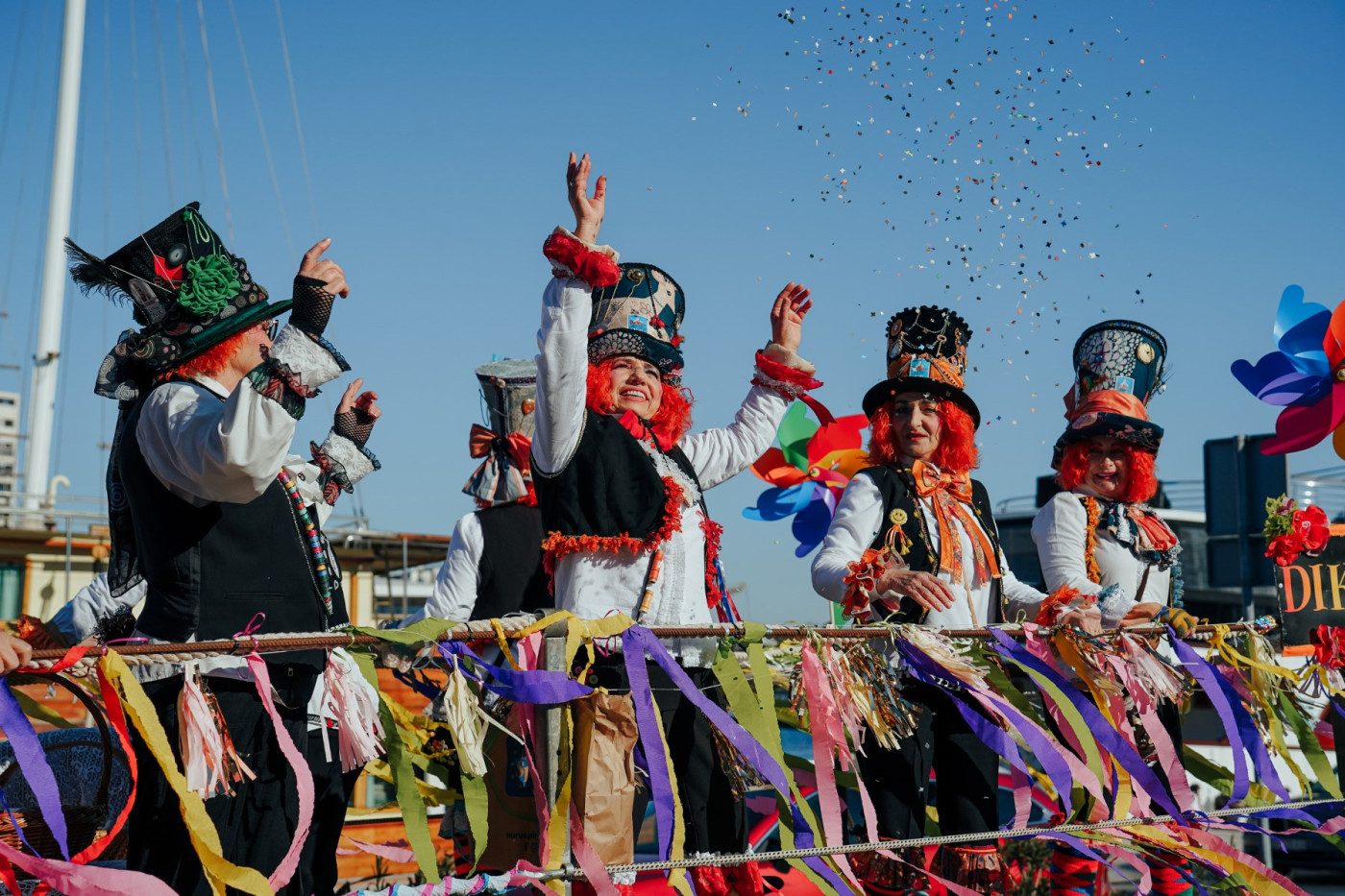
With the Grand Carnival Parade, the Carnival Time 2025 Has Come to an End
03.03.2025.

Gastronomie
Antique Podded Broad Beans in Lamb at Restaurant Kornat in Zadar
31.05.2022.
Neuheit
Adaptation Of Zadar Tourist Board Website For Persons With Disabilities
02.10.2020.
Veranstaltungen
Embrace Zadar 2021
06.07.2021.