
15.10.2021.
Raštika (Collard Greens) | the First Greens Enjoyed by Pharaohs and Gods
With autumn and colder days, the human body undergoes changes that affect every individual differently, and they respond, consciously or unconsciously, by adjusting their daily diet.
Fortunately, autumn brings a wealth of colourful produce, fruit and vegetables. It is also the favourite time of the year for fishermen: from the seabed where they have taken refuge from the summer heat, the fish get slightly closer to the coast as the sea temperature drops.
Cabbage arrives on our tables in the autumn
With colder days, our diet changes, and one vegetable for real gourmets in Dalmatia is increasingly more often on the menu - zelje, more precisely cabbage in all its subtypes. There are many ways and recipes by which we prepare cabbage either as the main course, just as a side dish or a quick light dinner for which the shredded cabbage leaves are sautéed in a bit of onion and olive oil and served with a boiled egg.
The custom of shredding cannonball cabbage into sauerkraut in the autumn and its use in winter in various recipes, especially in sarma, the well-known rolls of whole leaves of sauerkraut stuffed with minced meat, is also popular in Zadar. There is almost no household in which sarma is not cooked in large quantities during the New Year's holidays, in the largest pots in the house, where pieces of dry-cured pork are obligatory.
However, one type of cabbage has a special status in the Zadar area and is especially popular. The local name for it is raštika or broskva (Collard Green). Although many people plant this biennial cabbage in the gardens of Zadar's backyards, many consider raštika to be a wild, self-grown plant. There may be a grain of truth here. Namely, the famous culinary canconier, journalist, culinary historian and publicist Veljko Barbieri revealed to us the historical path and the millennial presence of raštika on the tables since the time of the Egyptian pharaohs. Raštika is a primordial cabbage, the first to be grown from a wild, self-grown plant, from which many other types of cabbage have developed. Like citrus, cabbage is also prone to easy crossbreeding of subspecies: two different species next to each other will create a new variety after a while.
Raštika - a sacred plant that sprouts from the tears of Zeus
But even more than that: according to Barbieri, raštika is a sacred plant with miraculous properties, a dish of the gods that we find in pharaonic tomb frescoes and paintings. It springs from Zeus' sweat that originated in a predicament after a strenuous mental effort. Only when he ate the newly sprouted leaves, says the myth, did the thoughts of the leading Greek god become cleared up, and he solved the problem.
Photo: pexels.com
Whatever happened to the pharaohs, the gods and their problems, raštika has historically remained on the tables here as a favourite food of late autumn and winter. On the hearths of old kitchens, in a cauldron on the outside covered with soot from everyday cooking, with a piece of dry pork or, on hungry days, with only some leftover bone from long ago-eaten prosciutto, raštika would be cooked only just picked in the garden behind the house. Anyone fond of cabbage will say that it is more delicious after a cold "bite" of the winter frost. Then it becomes incredibly "sweet", as we say it here.
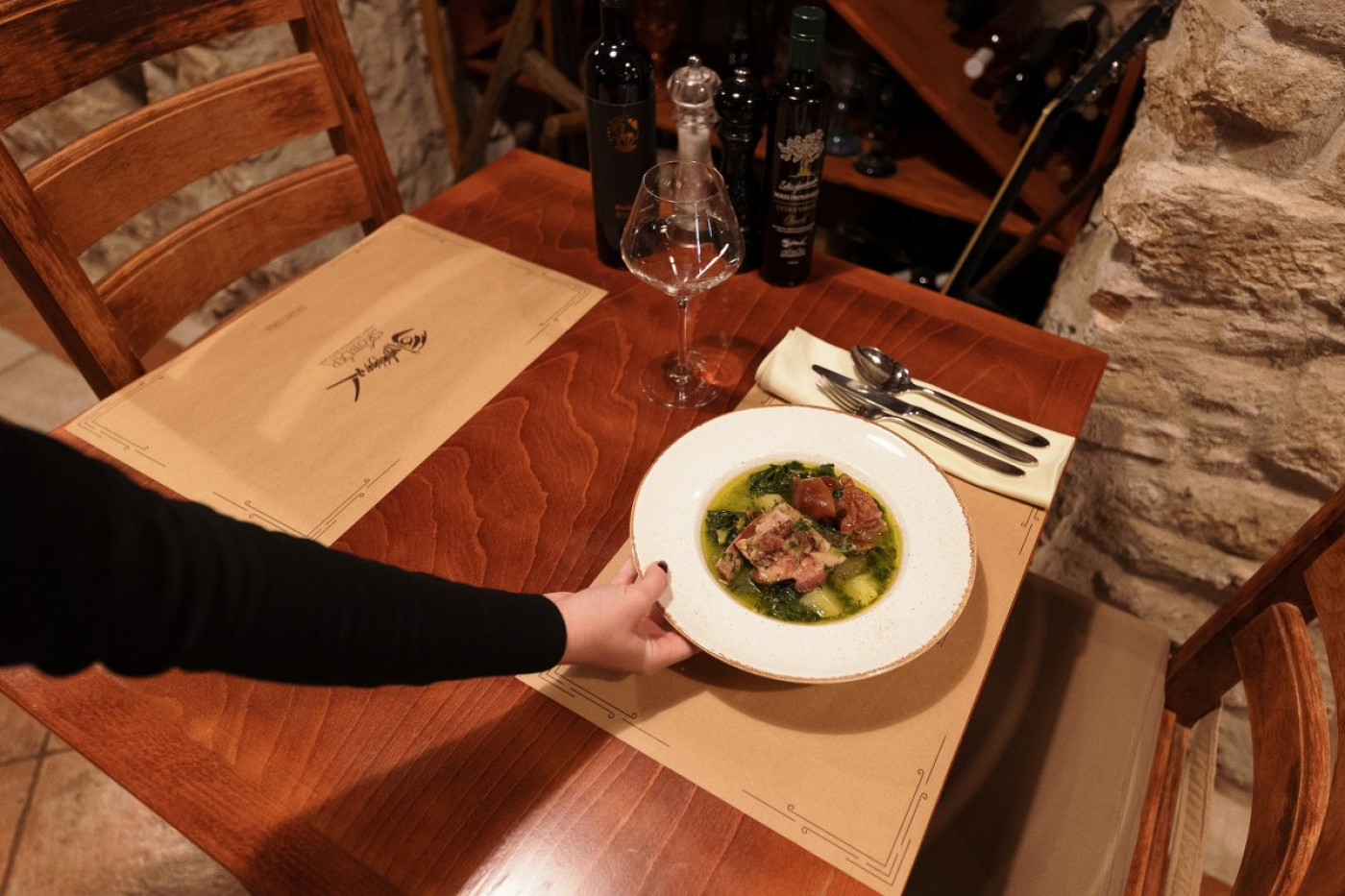
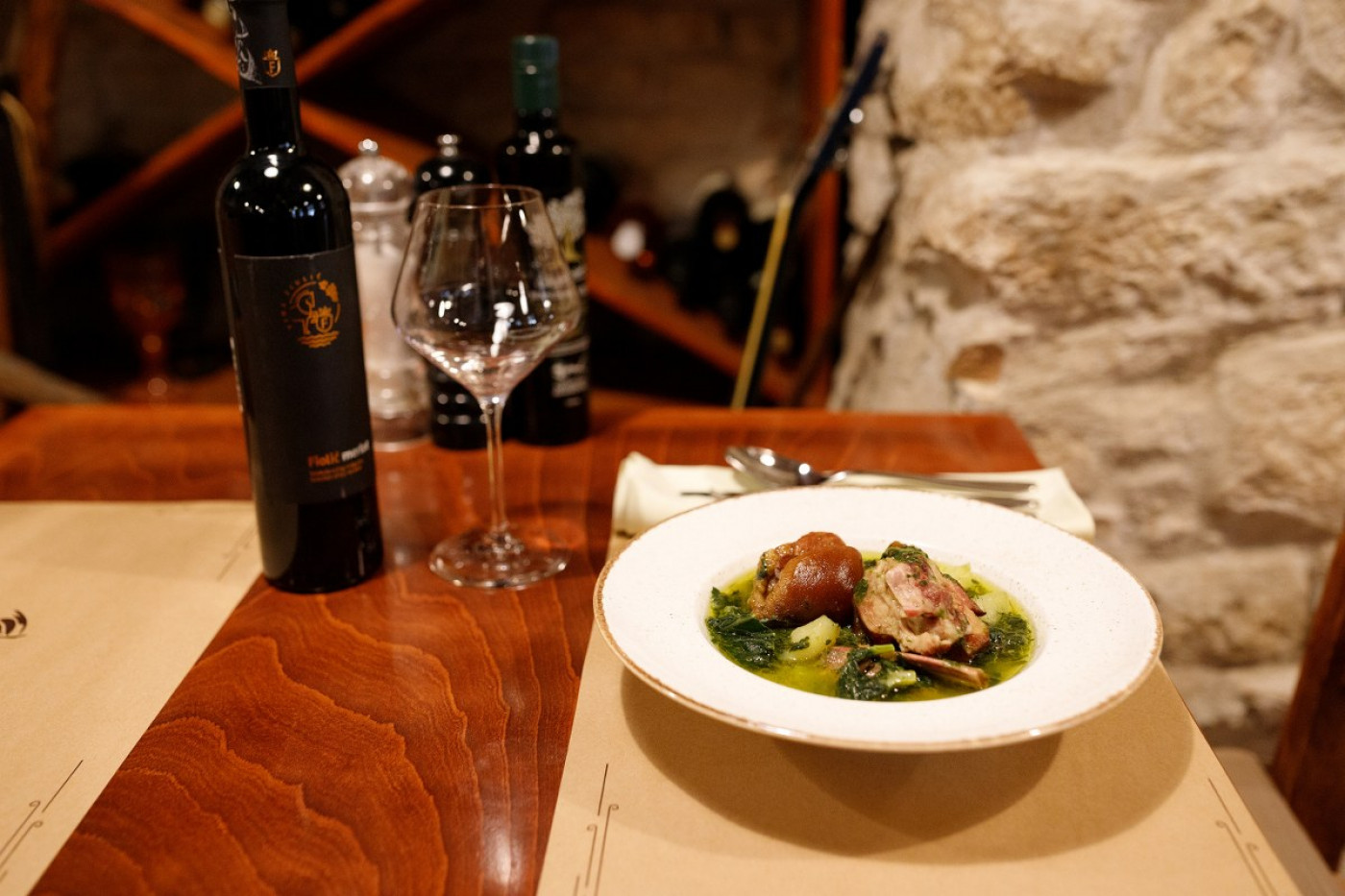
Zelje (greens) for marenda at Konoba "Skoblar"
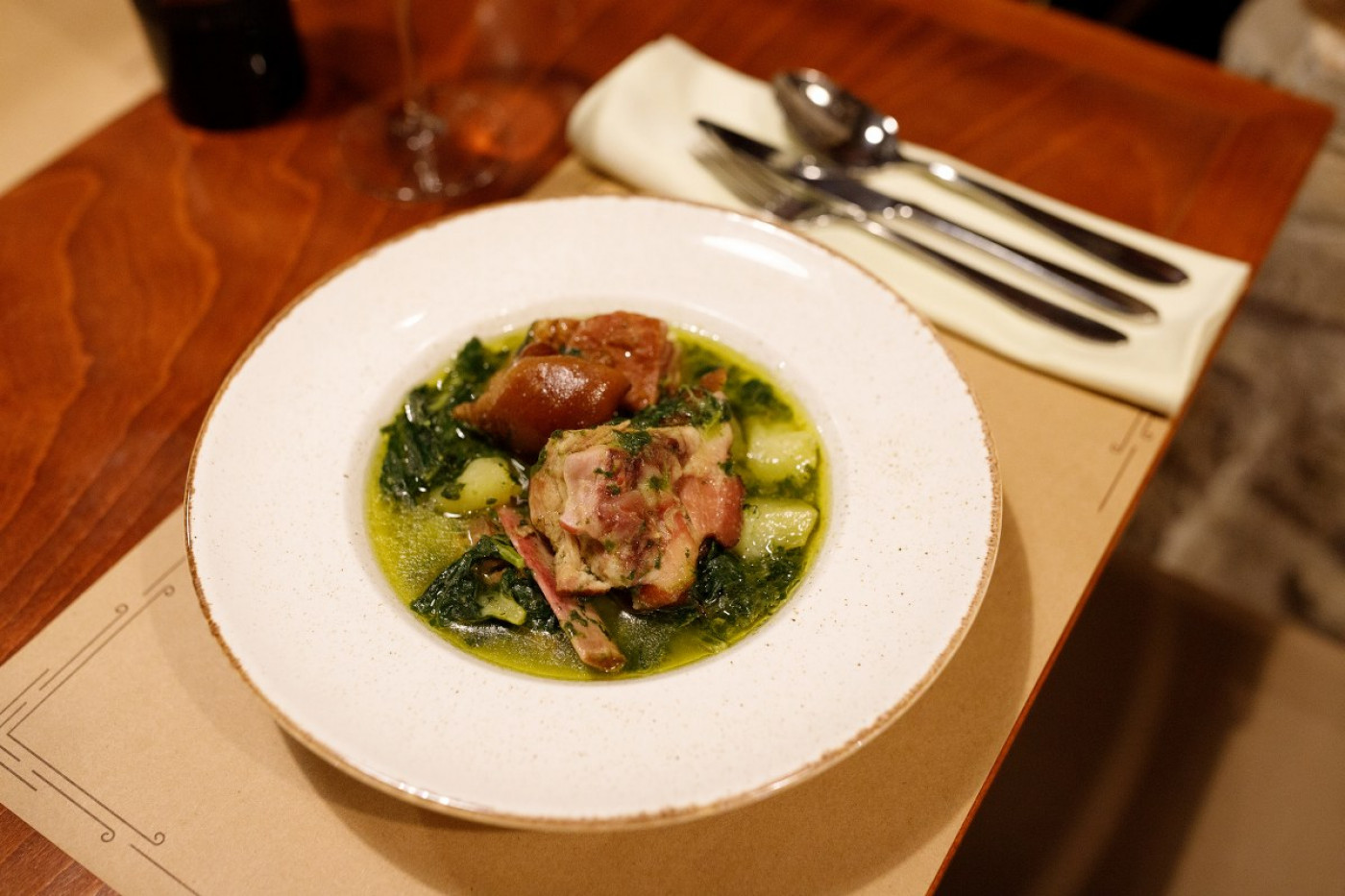
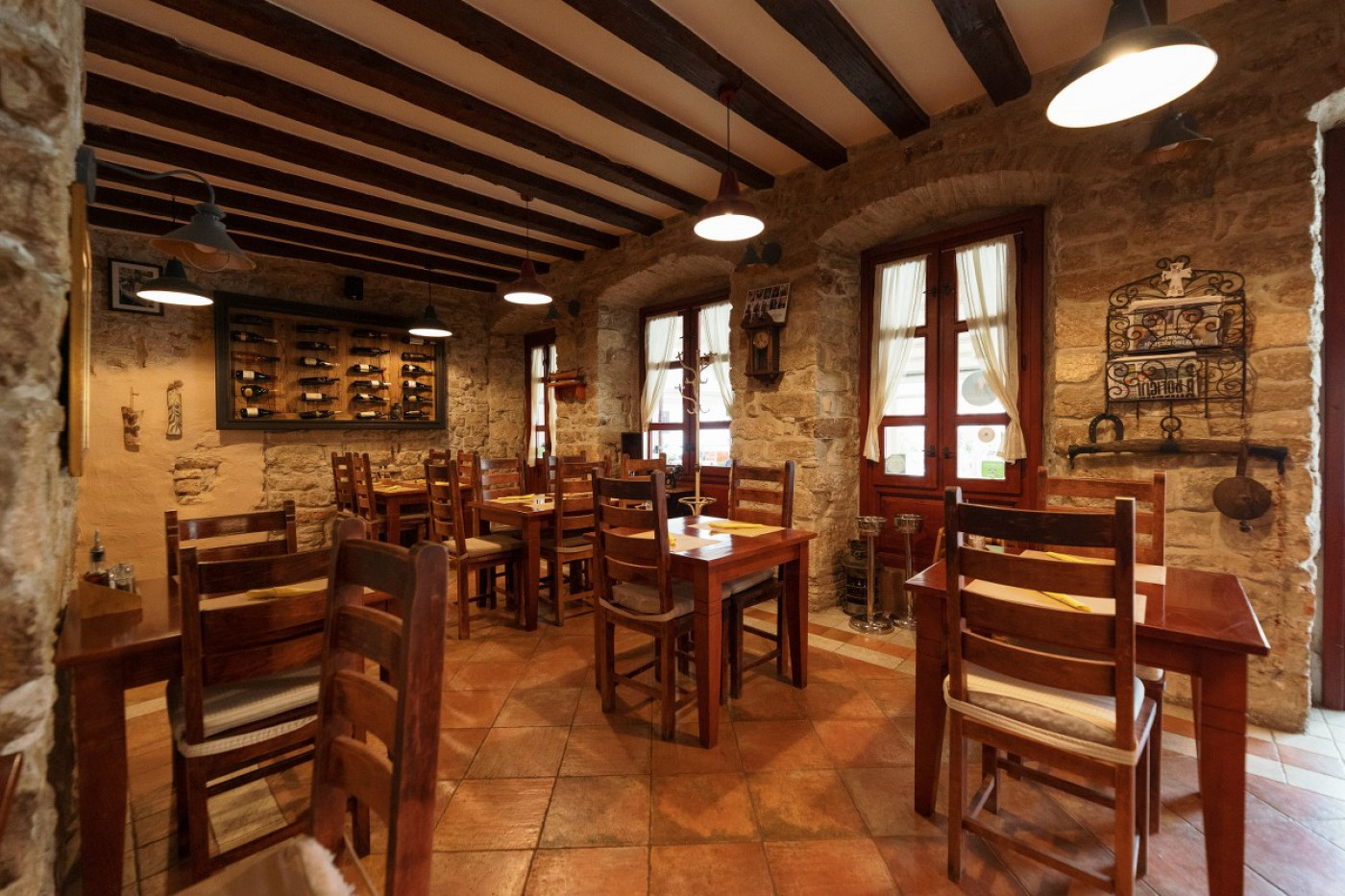
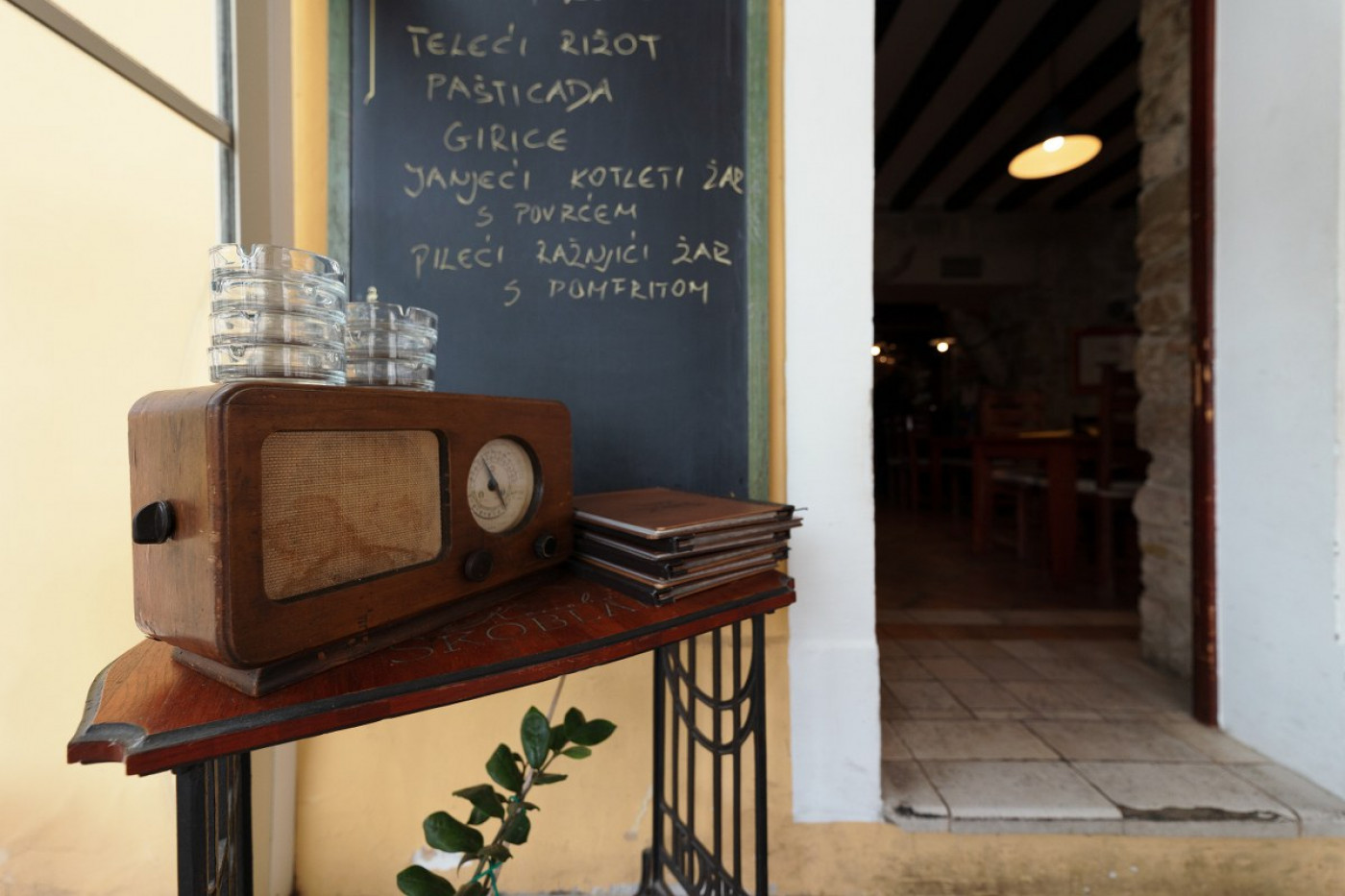
In Zadar's Konoba "Skoblar", raštika (collard greens) or some other type of cabbage in a stew with dry-cured meat is regularly offered in the colder months of the year. The traditional way of preparing food is characteristic of the cuisine of this tavern anyway. And quite rightly so because the family catering business of this renowned Zadar family was started by Ante Skoblar, who began his catering pursuit in 1946. In 1966, he opened his own restaurant on the site of today's konoba. It is located on Petar Zoranić Square, near the Five Wells Square, throughout history known as one of the most important water reservoirs in ancient Zadar.
The catering business was later continued by Ante's son Bruno, a famous Croatian football player. His brother Josip, Ante's older son, gained football fame in France in Olympique de Marseille. In the season 1970/71, Josip won the Golden Shoe for being the top scorer in Europe, and his record of 44 goals in one league season in France to date has not been broken by anyone. That is why today's konoba (tavern) "Skoblar" was called "Zlatna kopačka" (The Golden Shoe) for a long time and was a cafe. Twenty years ago, Bruno decided to return the original form of the tavern and bring back almost exclusively traditional dishes of Zadar and Dalmatia.
Today, the job was taken over by Bruno's son, who was named after his famous uncle - Josip. He maintains the Zadar tavern's cult, which is a favourite place of local lovers of good local food and especially marendas. In the summer, many tourists go to the restaurant, so it is best to book a table in advance.
For the most part, traditional dishes, prepared long ago by the famous footballers' father, have remained on today's menu. Josip and his team of cooks combine traditional dishes in their original form, the way "our grandmothers" would have done them, with those prepared in a somewhat more modern way.
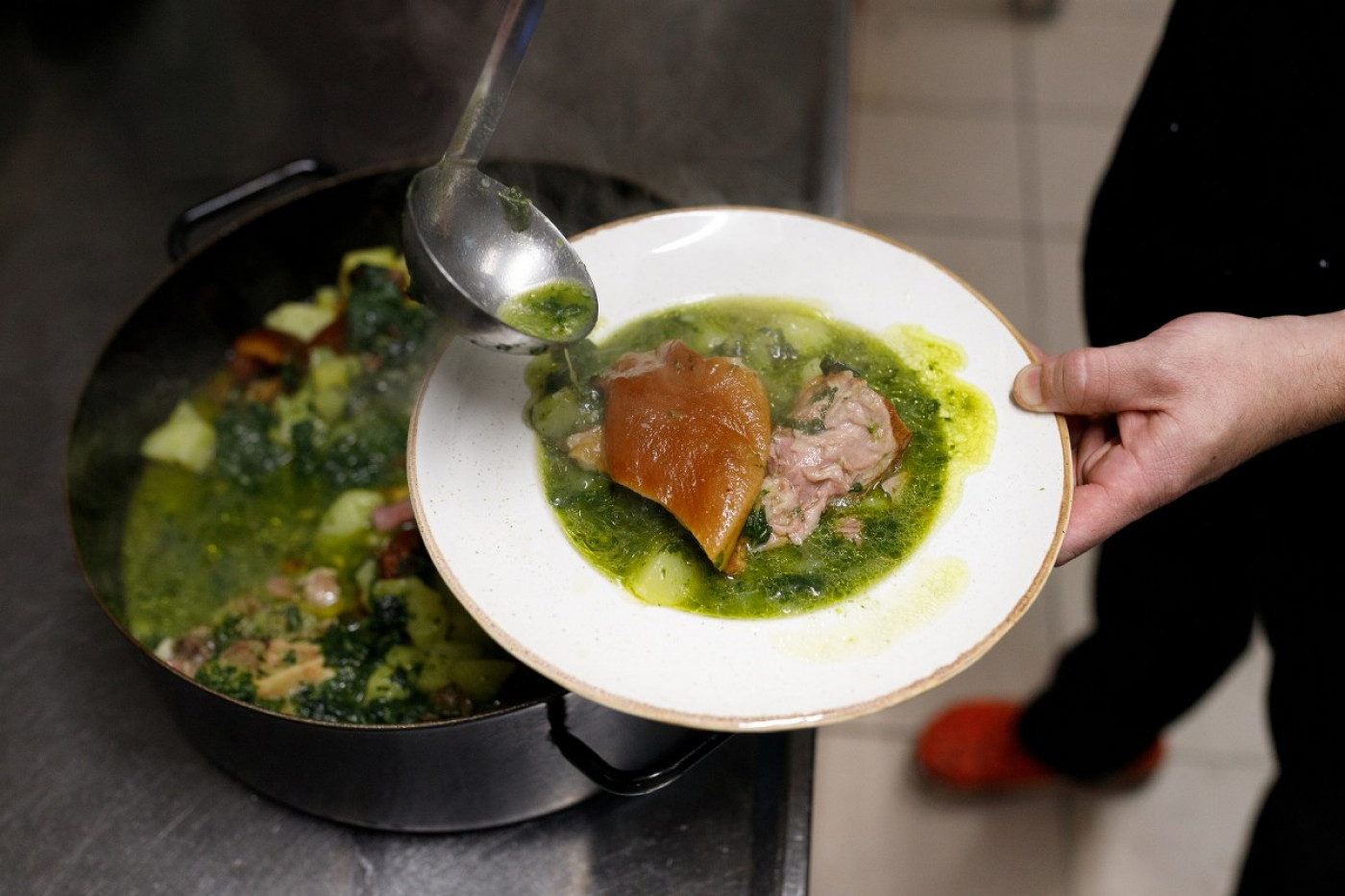
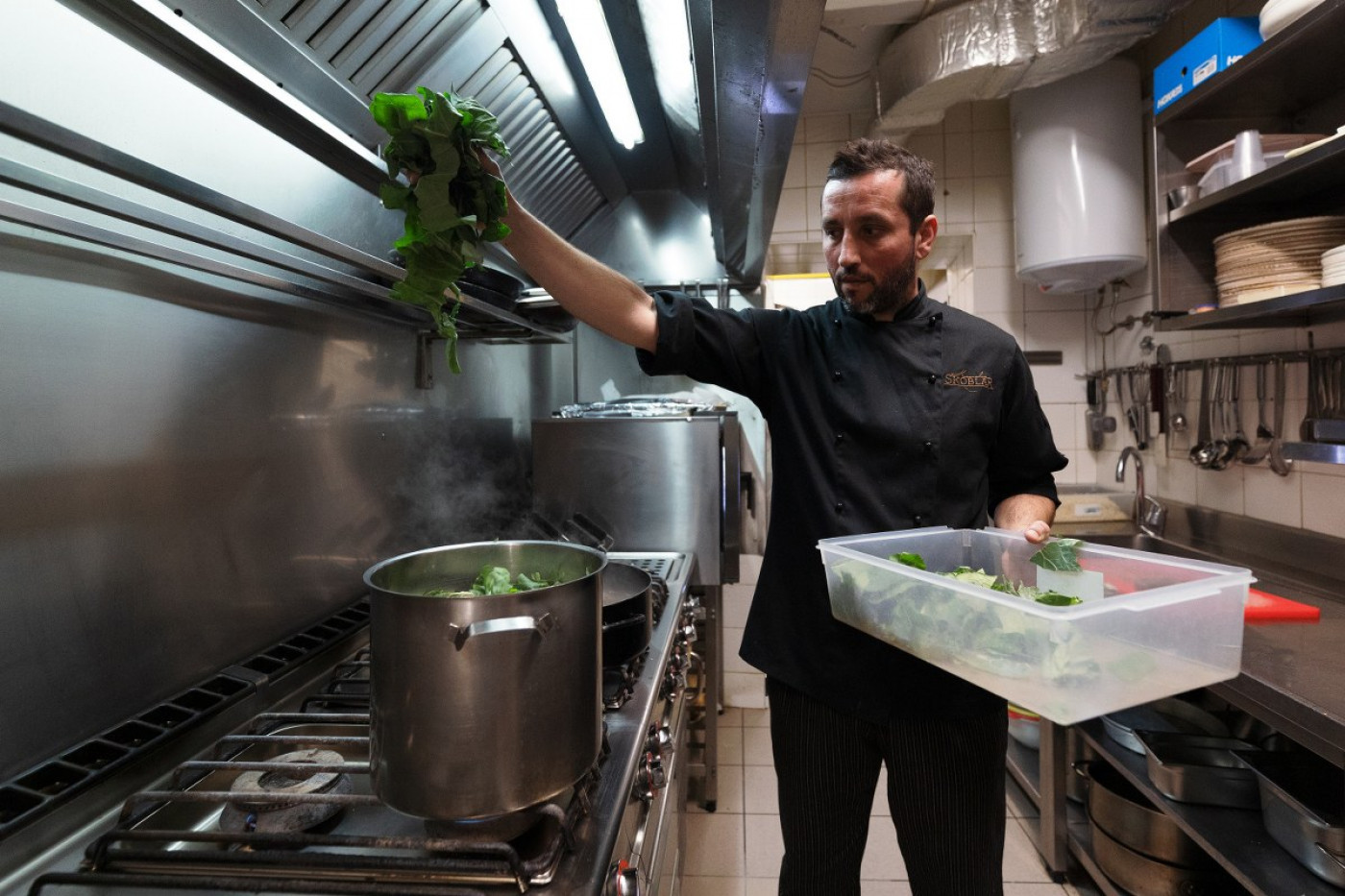
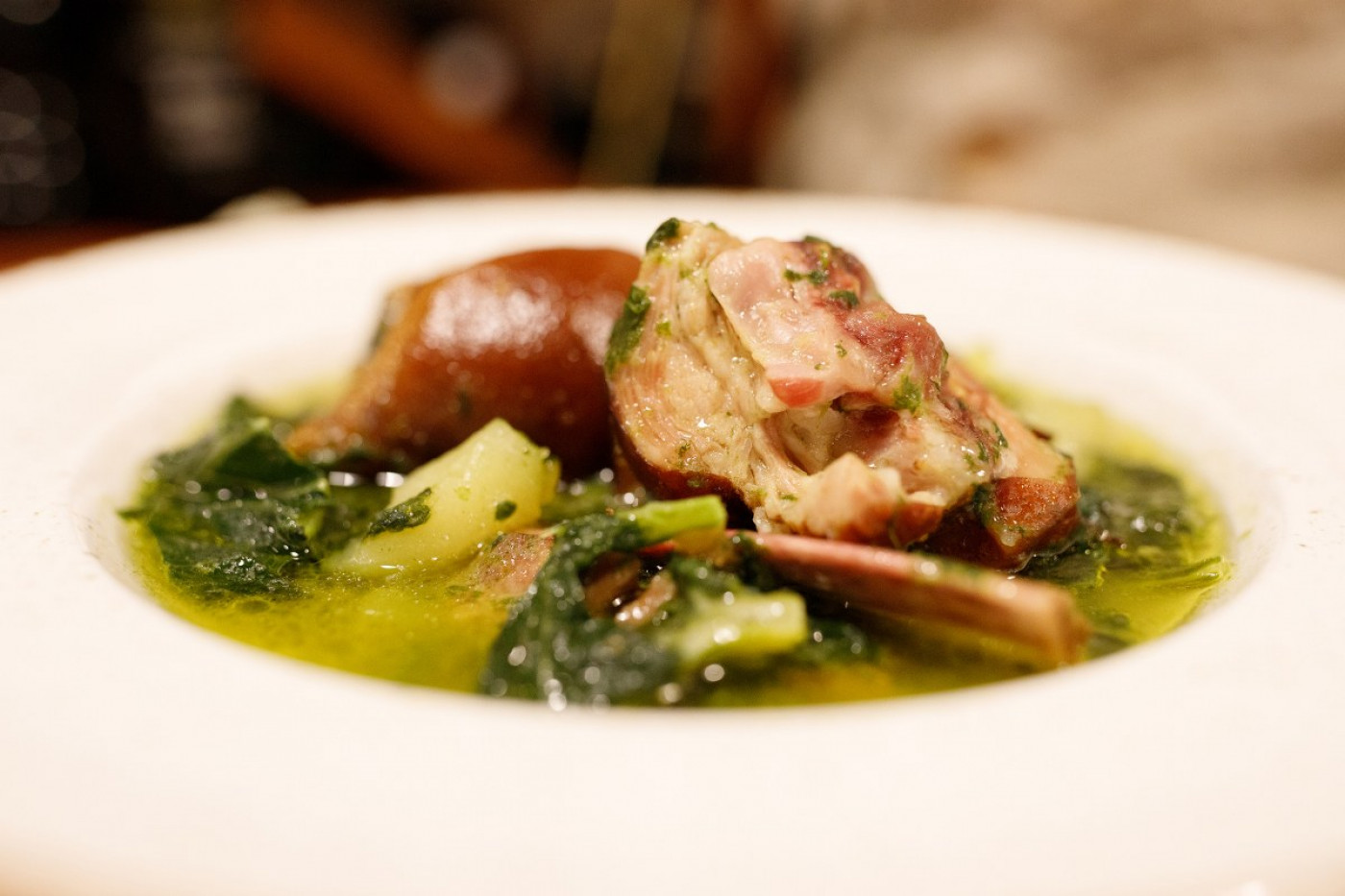
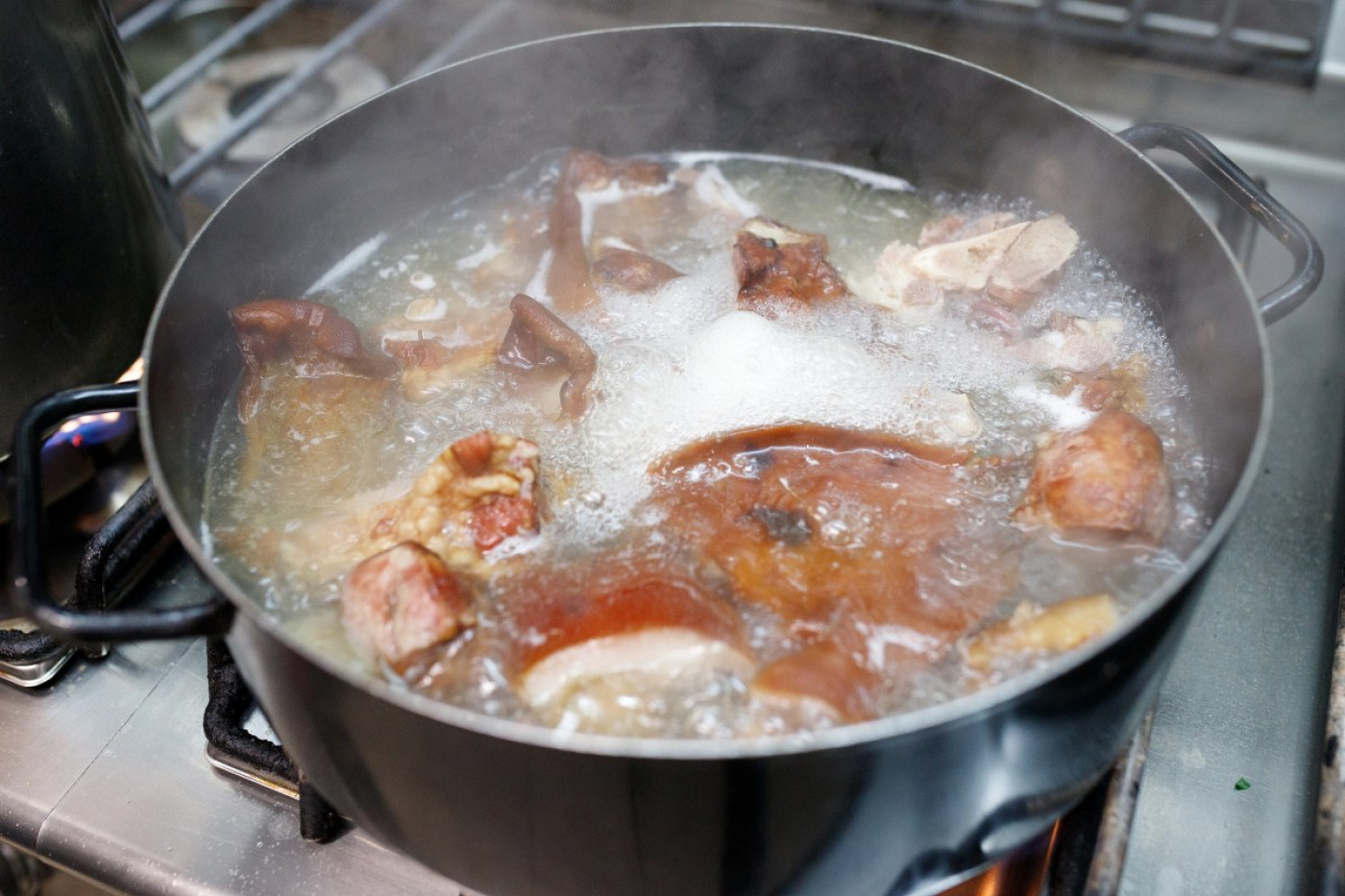
Raštika with potatoes and dry pork at "Skoblar" is cooked in the original, most straightforward and, according to many, the best way, without a lot of spices, with just a little salt, pepper and, of course, olive oil. Thus the greens, in this case, the raštika, will retain their original, full flavour. Chef Frane Grdović first cooks dried pork in a pot.
True connoisseurs of dry pork will always choose positions for the pork head, especially fat cheeks. The meat will take an hour and a half to cook, so about halfway through it, Frane will put on water in another pot and, when it boils, he will add the cleaned collard greens' leaves.
After that, he will put pieces of dry cooked pork in the same pot, finish everything together briefly and season with a grain of salt because dry meat must be salted in the drying process. Then a little pepper is put in, and finally when everything is ready, olive oil. The dish, boiled greens, along with one or two pieces of pork, can go onto a plate.
It will be a powerful, refreshing, and above all healthy marenda, a meal enjoyed by both the palate and the stomach that will not feel the need for a new meal for quite a long time.
Schau das Video an
.
Möchtest du gern mehr wissen?
Vorschläge

Lifestyle
Zadar: Cheerful, Full of Song, and Wrapped in Festive Cheer
27.12.2024.
Neuheit
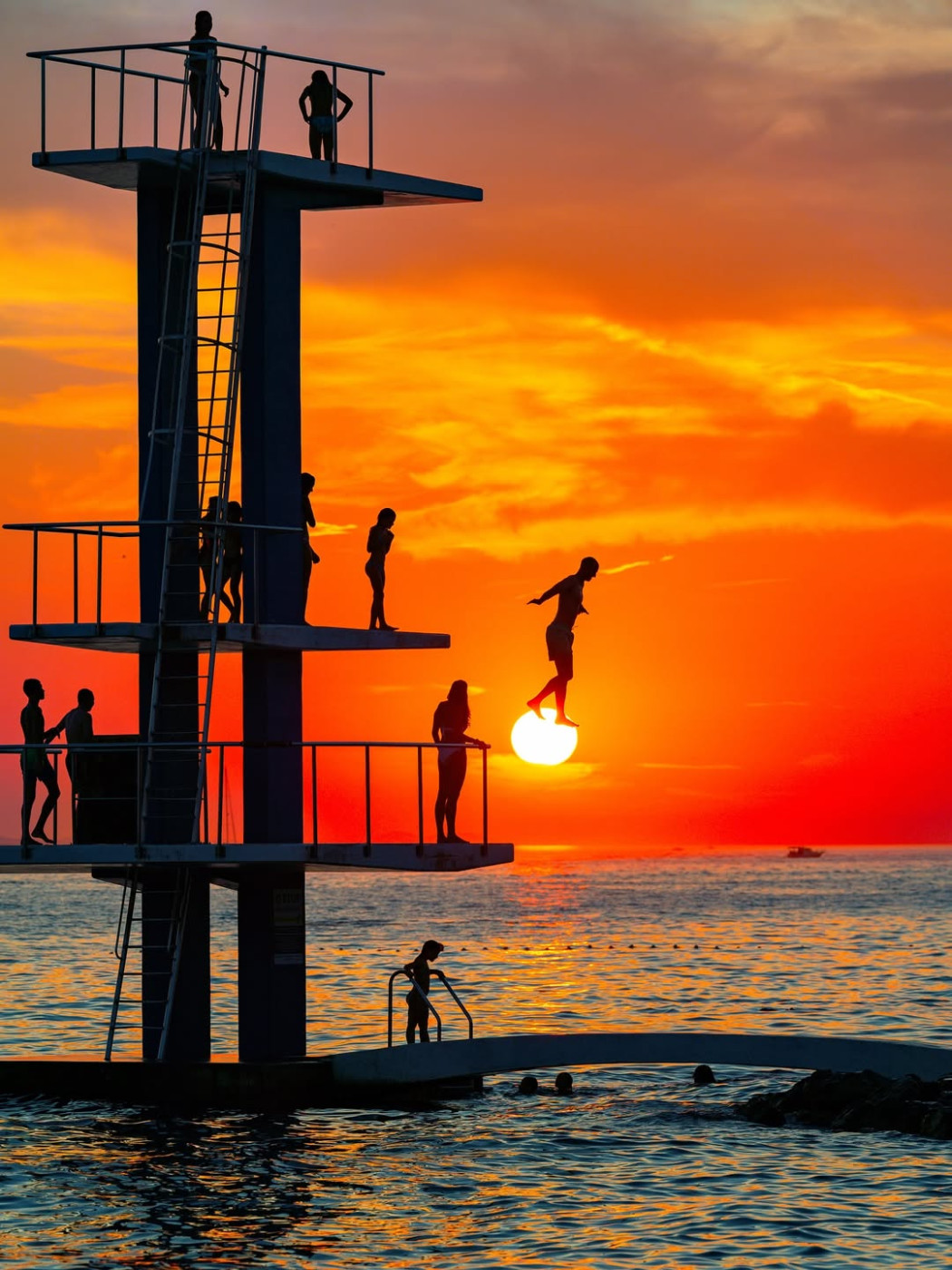
Award from National Geographic for Zadar’s Sunset
13.10.2025.
Gastronomie
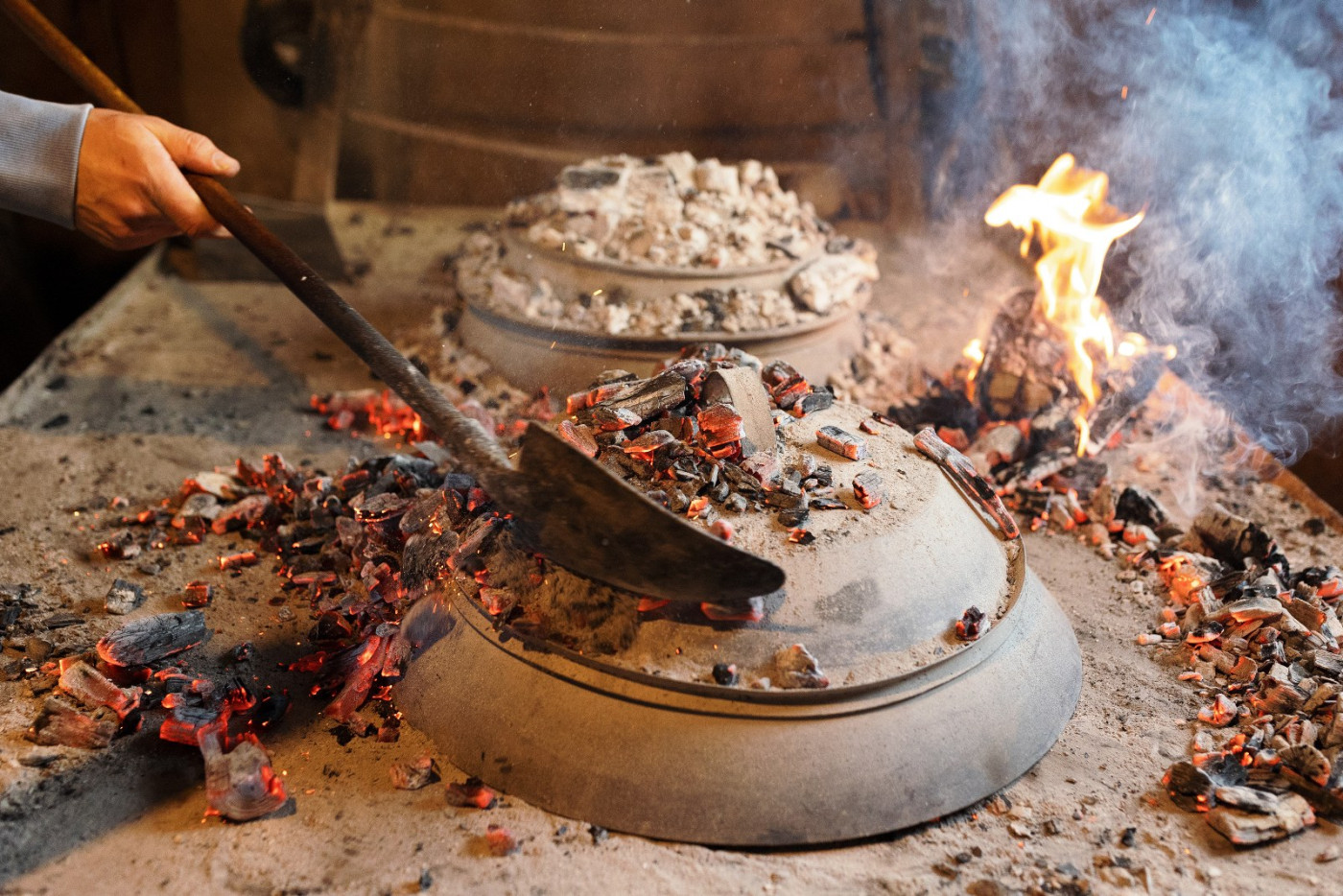
What to Eat in Zadar | 15 Dishes That MUST Be Enjoyed | Part 1
11.07.2023.
Veranstaltungen, Neuheit
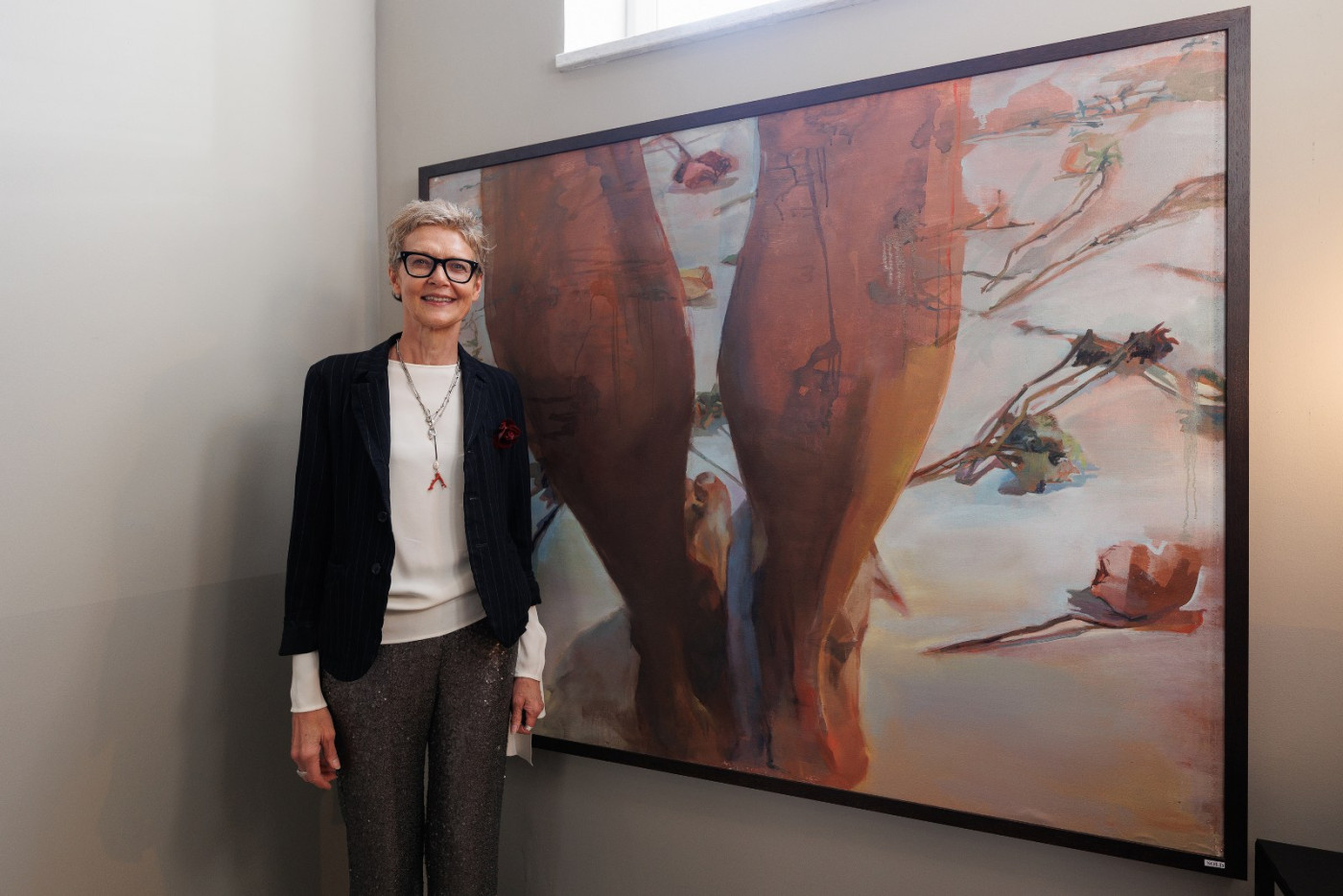
The Yolande Heijnen Exhibition Has Opened in the Almayer Art & Heritage Hotel
09.05.2023.