


29.06.2021.
God Created Man; Zadar Created Basketball, Part 2
In April 1945, the Zadar Sports Association was founded, whose basketball team was one of the city's many sports sections. At the Sporting Event (Fiskulturni slet) held in Zagreb in the same year, the Zadar basketball players won second place in the men's and women's competition. In the autumn, a tournament with four city teams took place in Zadar. Then, for the first time in the continent's history, the playoffs were played, which would come to European basketball courts only 40 years later.
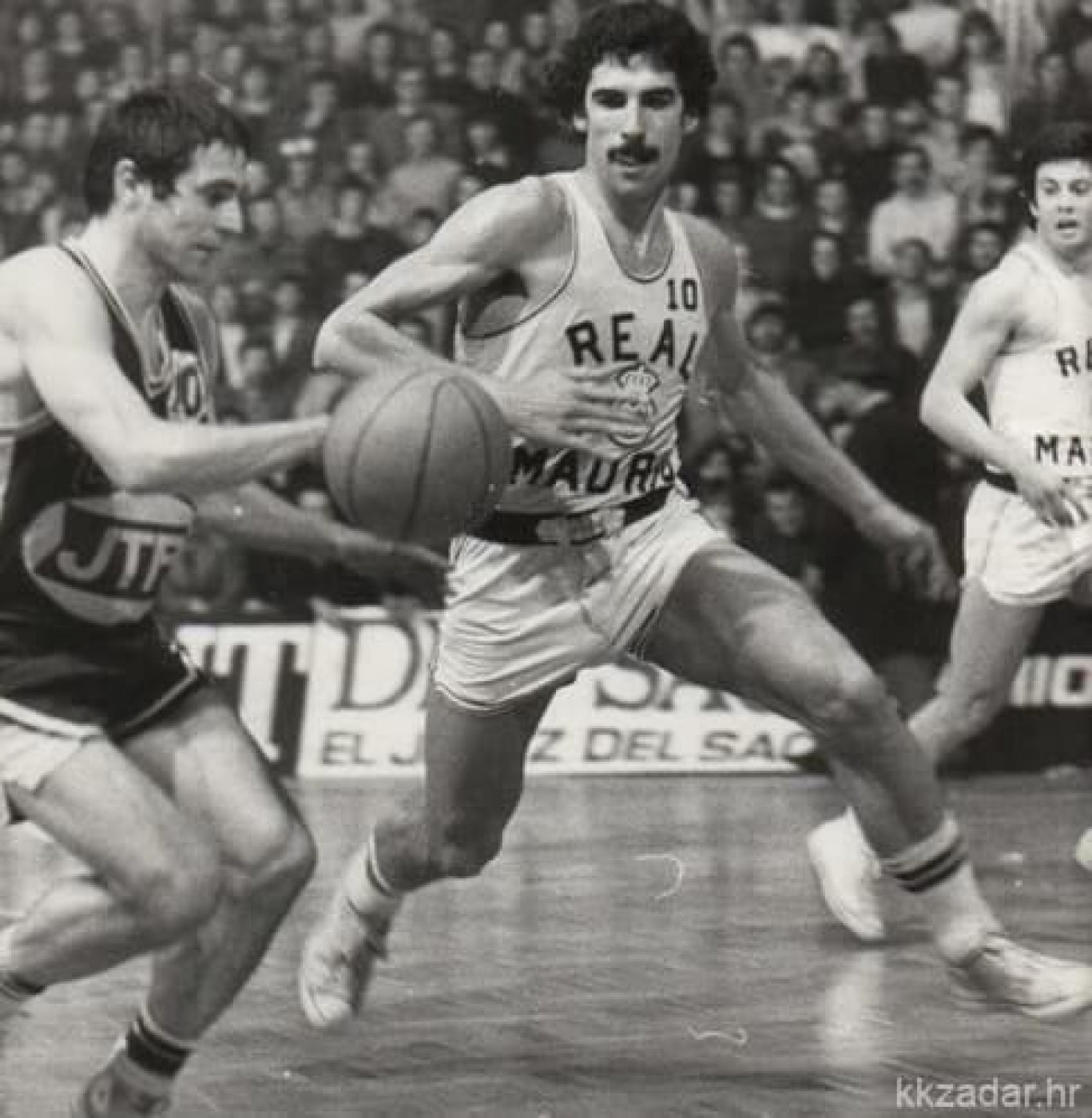
The following year, Zadar won the Croatian Championship, while at the federal level, they were again the runners-up and the first ex-Yugoslav National Team players came from Zadar: Guido Pitoni and Madera Kalmeta. The basketball players of Zadar continued their series of success during 1947 and 1948 when they won the titles of champions of Dalmatia and Croatia, and in 1951 the basketball players of Zadar left the Zadar Sports Association and became an independent club - the Zadar Basketball Club. At the age of only 14, Giuseppe Pino Giergia played in the Zadar jersey for the first time. Although at the peak of his career, the charismatic Giergia was considered as a basketball genius, his teammate Krešimir Ćosić, with whom Pino formed the Zadar basketball dream tandem, became even more famous.
Photo: Krešimir Ćosić & Pino Giergia, TZG Zadar
After dominating American college basketball, being elected to an All American collegiate team, and shattering the notion of non-American players being ephemeral in the homeland of basketball, Ćosić could have, if he wanted so, accepted the invitation to sign the Los Angeles Lakers. That had been decades before those who paved the way to the US basketball market for other Europeans such as Dražen Petrović, Toni Kukoč, Dino Rađa and Stojko Vranković. It was the 1973 NBA draft and the Lakers were short of a high-quality, tall player. They saw such a player in Ćosić.
"He is a numero uno. He was a basketball visionary, he knew everything, and he had everything: a great game insight, assists with a head as a playmaker. He shot like the killer winger and is known to have been an extra quality centre. He was the best European player of all time ", Dino Meneghin used to say about Ćosić. Meneghin was the Varese, Milan Olympia and Pallacanestro Trieste centre, one of the great ones of the European basketball and the 1970 NBA draft as the Atlanta Hawks' choice. It is now clear why at the top of the cult sports hall in Jazine, which was built in 1967 in just 70 days in order to achieve the basic standards for the participation of Zadar in the European Basketball Cup, for a long time, there was the recognizable inscription God Created Man; Zadar Created Basketball. The original caption, however, was a bit different.
Photo: KK Zadar
A quiet family man, Ivica Černak, was employed at Vinilplastika in the early 1970s, a PVC processing factory located a kilometre barely from the city centre. In Vinilplastika workshops and plants and other Zadar factories, all the walls, door, and interiors of the small offices inside the facility were pasted over with placards and cuttings from the daily, weekly or magazine press that wrote about the Zadar Basketball Club. There was also a board exclusively intended for monitoring basketball events. Basketball was a constant and almost the only topic of all conversations during lunch break or rest. When Zadar played in its hall in Jazine in the evening, the afternoon shift workers finished their work earlier preparing for the match. With the help of other workers, it took Černak a whole week to create two large placards made of plastic sunblinds and cloth. One that had a harmless fan slogan, "There's no joking in Jazine, BC Zadar is up to defeat everyone".
In contrast, the other one had a bit more subversive caption in terms of the very narrow freedom of expression in the then-communist state - "God created the Earth; Zadar created basketball". Both inscriptions were decorated with a red-white-blue background that mimicked the Croatian tricolour flag, which was perceived as a presumptuous nationalistic provocation at the time of Croatia's national awakening and political movement in the early 1970s. Immediately after placing the placard in the hall, the police removed it without too much explanation, and in the next twenty years the placard vanished without a trace.
Photo: KK Zadar
The story of the placard slowly faded away, and it would have been completely forgotten if in the 1990s, after the collapse of socialist Yugoslavia and the independence of the Republic of Croatia, it did not reappear on the hall wall above the press section along with a massive photograph of Krešimir Ćosić. The unknown author slightly changed the content of the placard and now it said, "God created man; Zadar created basketball". Although this caption did not significantly change the glorification of Zadar basketball, a small change did not cheer up the author of the 1971 original.
"It bothers me that the message is distorted. Zadar cannot create basketball, but the people of Zadar, the people who live in it ", complained Černak in an interview to a local newspaper, thus adding to the phenomenon of Zadar basketball with another controversial detail.
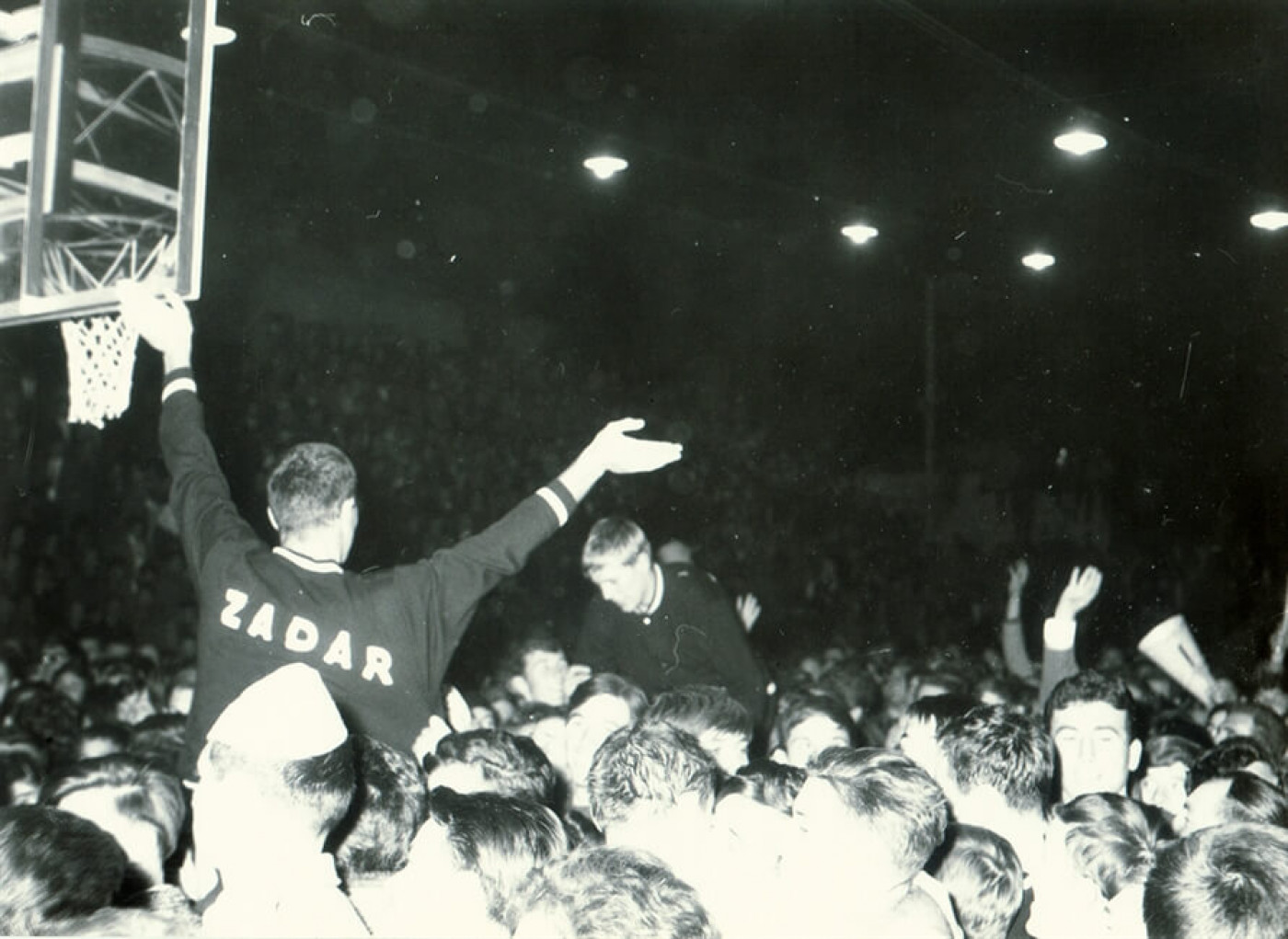
After winning three championship titles in 1965, 1967 and 1968, Ćosić temporarily bid goodbye to Zadar basketball and went to the USA to Brigham Young University, while Giergia went to Italy to work as a coach and player. Their return will bring new titles in 1974 and 1975. After the leave-taking of Pino Giergia the following year, there came the end of the big duo of Zadar basketball, crowned with five ex-Yugoslav championship titles and winning the Cup in one of the most memorable games that Zadar played in that period. It was in 1970, and the final match was played in Split against Jugoplastika.
Photo: Pino Giergia, KK Zadar
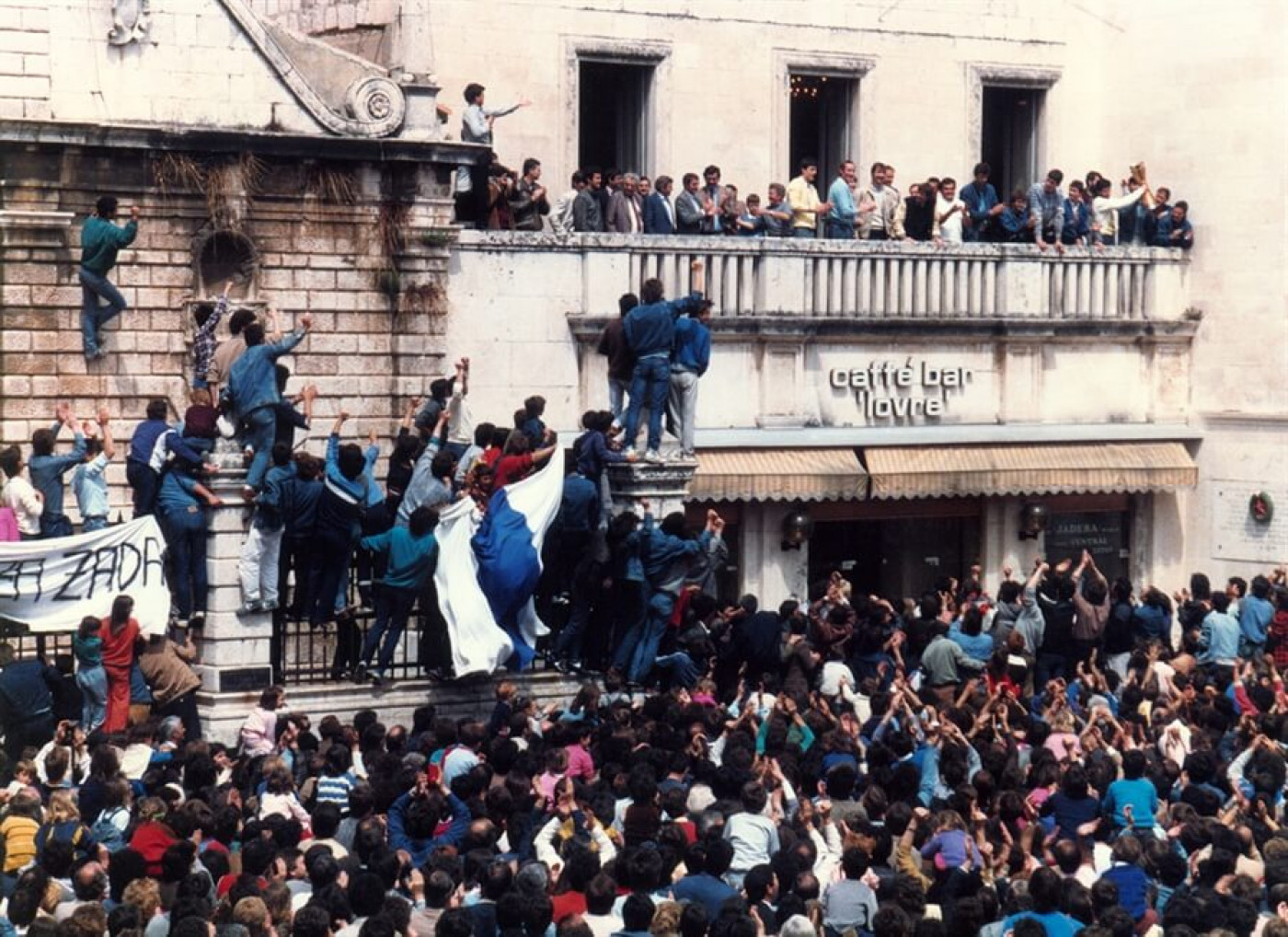
Champagne had already been put on cooling in Split because ambitious citizens of Split counted on the fact that Zadar without Ćosić, who was already in the USA, had a slim chance of winning. However, Ćosić suddenly showed up at the game, much to the amazement of everyone and before a crowd of 6,000 in the packed hall, a third of whom were from Zadar. He helped Zadar in the 64:60 victory with 19 points scored. However, the hero of this story was Giergia, who scored six consecutive points at 57:57 at the very end and practically took the Cup to Zadar. The last championship that Zadar won with Ćosić and Giergia will be remembered for 25 consecutive championship victories. Zadar scored almost 90 points per game on average with a brilliant 53 per cent of the team's shot and received 78 points. It was a farewell from Giergia, but not from the habit of winning. Still, it would take a whole decade for another generation of champions to be re-established in Zadar.
Voir la vidéo
.
Veux-tu savoir plus?
Propositions

Gastronomie
Degarra and Fiolić From Zadar: the Entry Into the World of Premium Winemakers
07.12.2020.
Lifestyle
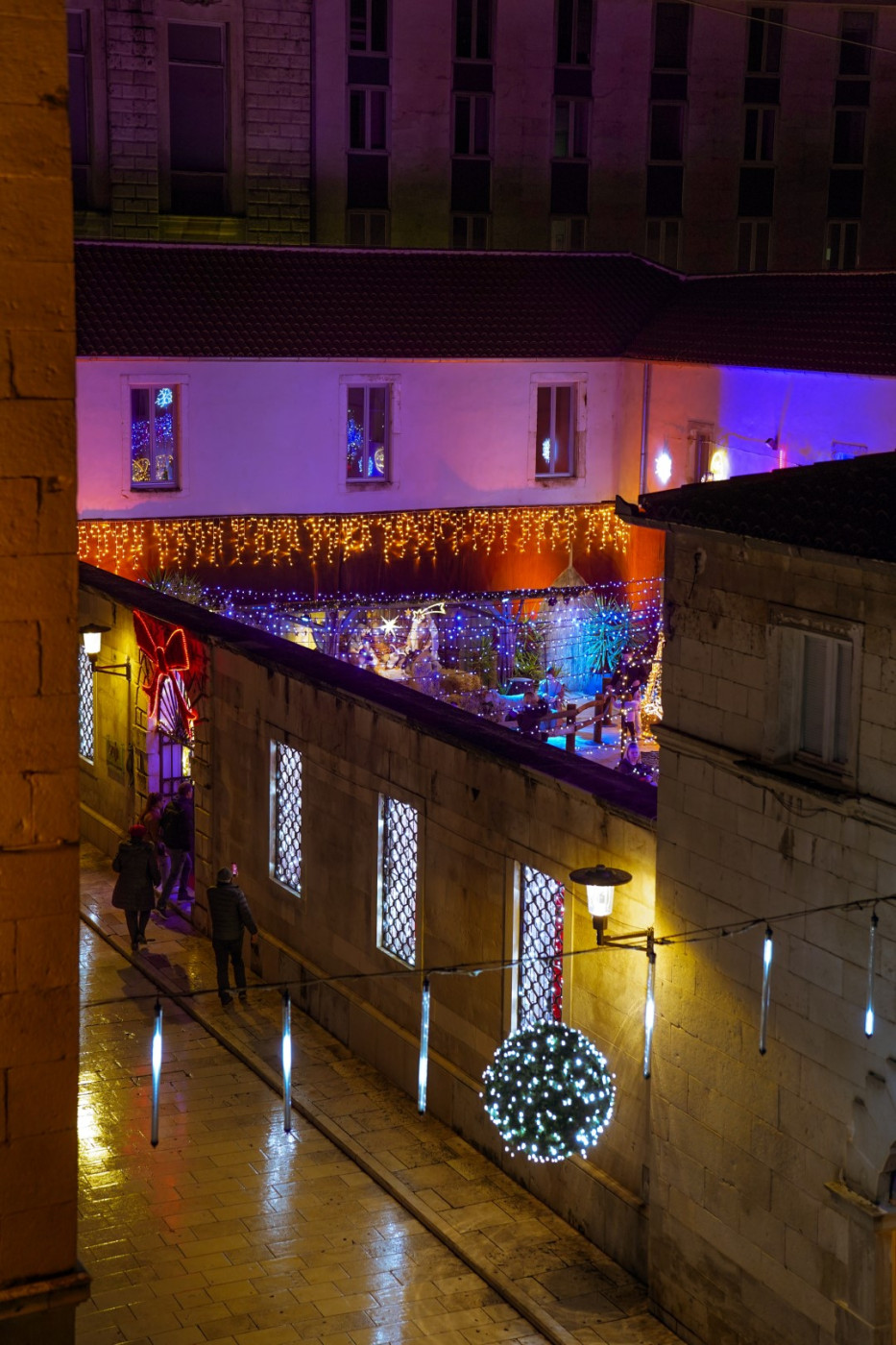
Christmas Fairy Tale in the Heart of Zadar - The Atrium of Cedulin Palace
19.12.2023.

Nouveauté
National project - Advent of Croatian High Schools
03.12.2021.

Evènements, Lifestyle
Zadar Christmas Market 2022
04.11.2022.