
22.12.2021.
How did the Norwegian Codfish Become the Gastronomic Tradition of Zadar
None exists in the Adriatic, but it has long been a special part of the local culinary tradition!
The tradition of preparing codfish dishes is alive in the kitchens of many peoples. This cold sea fish that lives in two oceans and around Greenland is of a great economic importance in many countries, but it is still unusual that codfish, primarily the one dried in Norway, gained a culinary cult status on the eastern coast of the Adriatic, in Dalmatia and in Zadar too. So, with all the richness of the fauna of the Adriatic Sea, the fishing tradition and knowledge of the inhabitants of the Croatian coast, codfish, which is not found here, is the food from which many local dishes are made.
The journey of codfish from the Northern seas across Venice to Zadar and Dalmatia
There is a well-known explanation of this paradox, and it is related to the name of the Venetian navigator and merchant Pier Querini and the 15th century. In 1431, after already crossing the English Channel, Querini experienced a shipwreck on a voyage to Belgium, so he ended up in a lifeboat in the Lofoten Islands in Norway, where the hosts fed him with what they had in abundance – codfish, and with its most prized subspecies today, the one that lives in the Norwegian Sea, Gadus morhua.
When he returned home, Querini brought a certain amount of dried codfish and realized its advantage: in addition to being a tasty and valuable food, it is easy to transport in this form because codfish loses 80 percent of its weight when dried. And that is how much it brings back by rehydration, i.e. soaking. For the same reason, rice arrived in the Mediterranean and Europe in the 3rd century, with the army of Alexander the Great, which ate this useful grain when returning from conquests in Asia. At the same time as Querini, the Portuguese fishermen learned about the benefits of dried codfish, who supplied their sailors' ships on ever-long exploring ocean voyages with this food, precisely because of the minimal weight and maximum nutrition. That is why Portugal is one of the largest consumers of cod in the world today (even though over 250 tons are imported to Croatia annually), but that is another story.
Dalmatia was already a part of the Venetian Republic in Querini's 15th century, and Zadar was its most important and capital city. While the rest of Dalmatia under Venice often changed its borders due to constant attacks by the Turkish Empire, walled Zadar endured and kept its status as the main Dalmatian city, a city where trade and crafts flourished and contemporary urban life developed, which included high culinary standards, at least among wealthy citizens and the nobility.
When in the 16th century an intensive codfish trade began through Venice, triggered by the great famine of the lower classes of the European population, this fish reached both Zadar and other parts of Dalmatia. The local population knew about the technique of drying Adriatic fish and its consumption, but only some species were suitable for this, and not the ones of the highest quality, but primarily the so-called sea game and cephalopods. Fresh fish was consumed by the wealthy, and dried one by the poor, so codfish entered Zadar gastronomy by the narrow gate out of pure necessity.
The main star of the Christmas Eve meal
Codfish gained its high status in the local eating habits in later centuries for another reason: regardless of fishing luck or bad weather, it was always available for the pre-holiday one-day Christian fast, which restricts the consumption of meat of warm-blooded animals (meat free day). That is why cod is still the main star of the Christmas Eve meal.
And in Zadar, Christmas Eve morning is celebrated in an incredibly special and lively manner. The old part of Zadar, all cafés and restaurants, alleys and squares are full of locals, cooked cod smells everywhere, and many caterers treat their guests with cod dishes.
Today, codfish is prepared in many restaurants throughout the year, although its consumption is associated with Christmas Eve. In spite the fact that many Zadar chefs, amateurs, as well as professionals, created dozens of dishes from dried or fresh cod, two old dishes were, and remain particularly popular. These are Codfish Bianco and Codfish Stew (Brodetto). At this point it is necessary to remember that for both dishes dried cod should be soaked for at least 24 hours, then boiled in salted water with bay leaves, and before preparing any dish, the meat should be separated from unnecessary meat and skin. And be careful to keep the codfish stock from cooking. Codfish Bianco is a simple dish that requires more strength than culinary skill. Boiled cod and boiled potatoes are combined in one pot, seasoned with salt, pepper, olive oil, parsley and garlic and then the covered pot should be shaken long and hard until the ingredients entwine, and the dish gets a creamy texture.
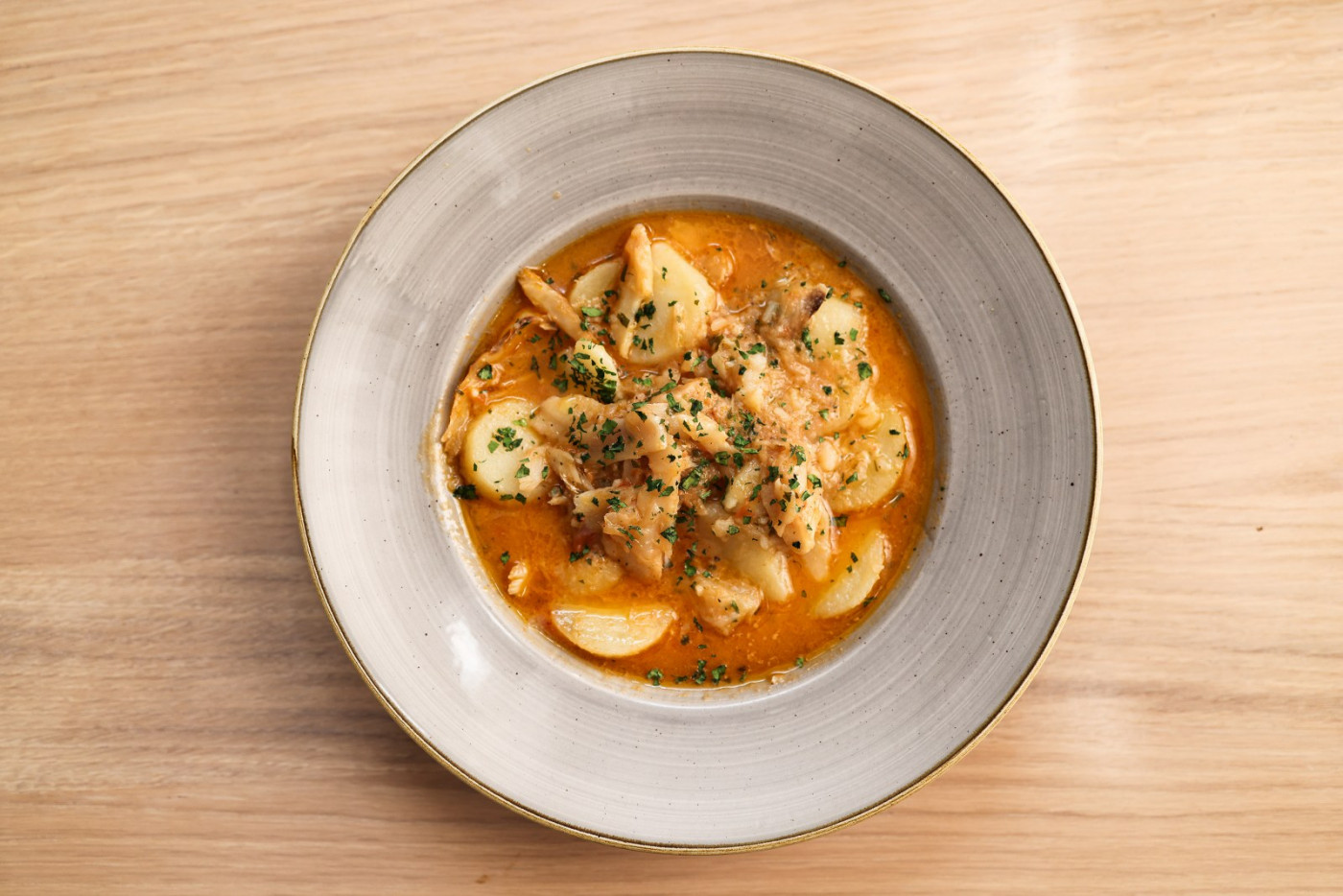
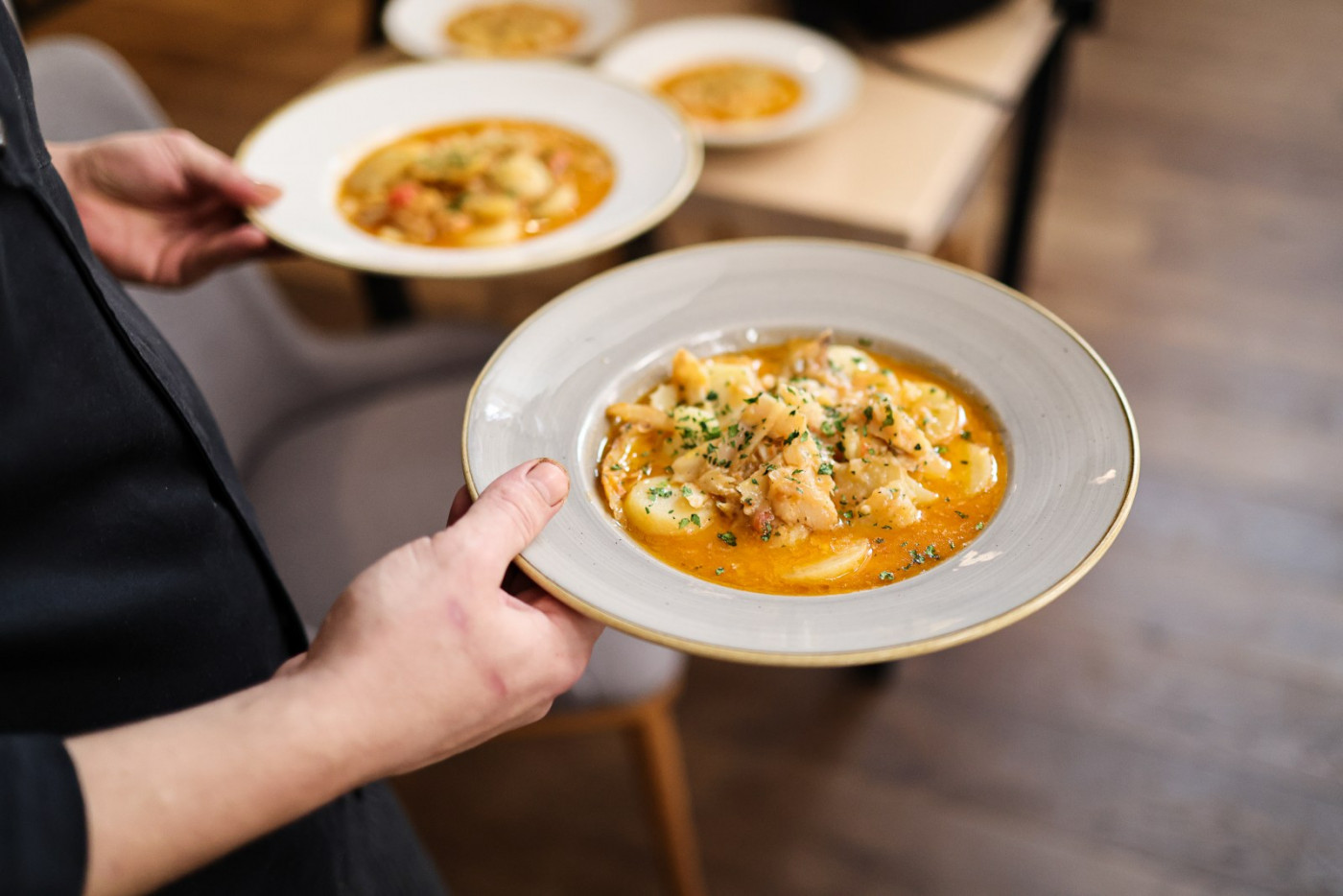
Codfish Brodetto at the “2 Ribara” restaurant (“2 Fishermen” restaurant)
Brodetto (Italian for soup) is a combination of thick soup and casserole and is one of the most popular fish dishes in Zadar, out of almost all types of fish. However, while it is desirable to have more types of fish, crabs and even shellfish in other brodetti, codfish does not tolerate competition.
Chef Vedran Novaković showed us how to prepare the original Zadar codfish brodetto at the “Dva ribara” restaurant. This restaurant is located in the very centre of the old part of Zadar, the peninsula, near Varoš district. It is the favourite place of local good food lovers, as well as tourists, and chef Vedran forms the menu from traditional Zadar and Dalmatian dishes, which is dominated by good fresh fish, crabs, and shellfish. The restaurant uses produce from small family farms from Zadar region, local winemakers, and olive growers and, of course, fishermen. Cod dishes at this restaurant are being prepared all year round, but December is Codfish Month at the restaurant, because then guests are offered at least five or six cod dishes, such as risotto, tagliatelle or gnocchi with cod, and the one in truffle sauce.
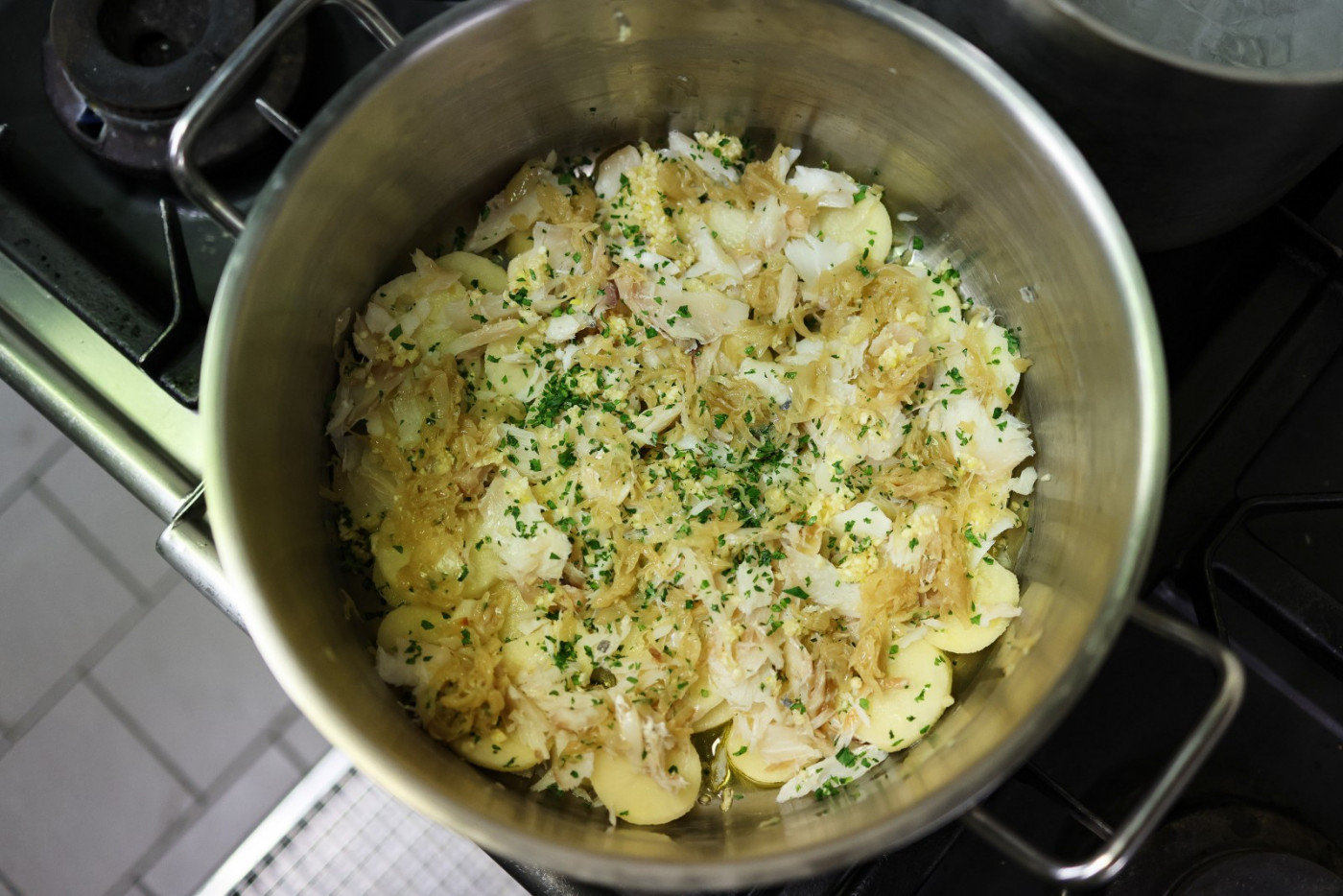
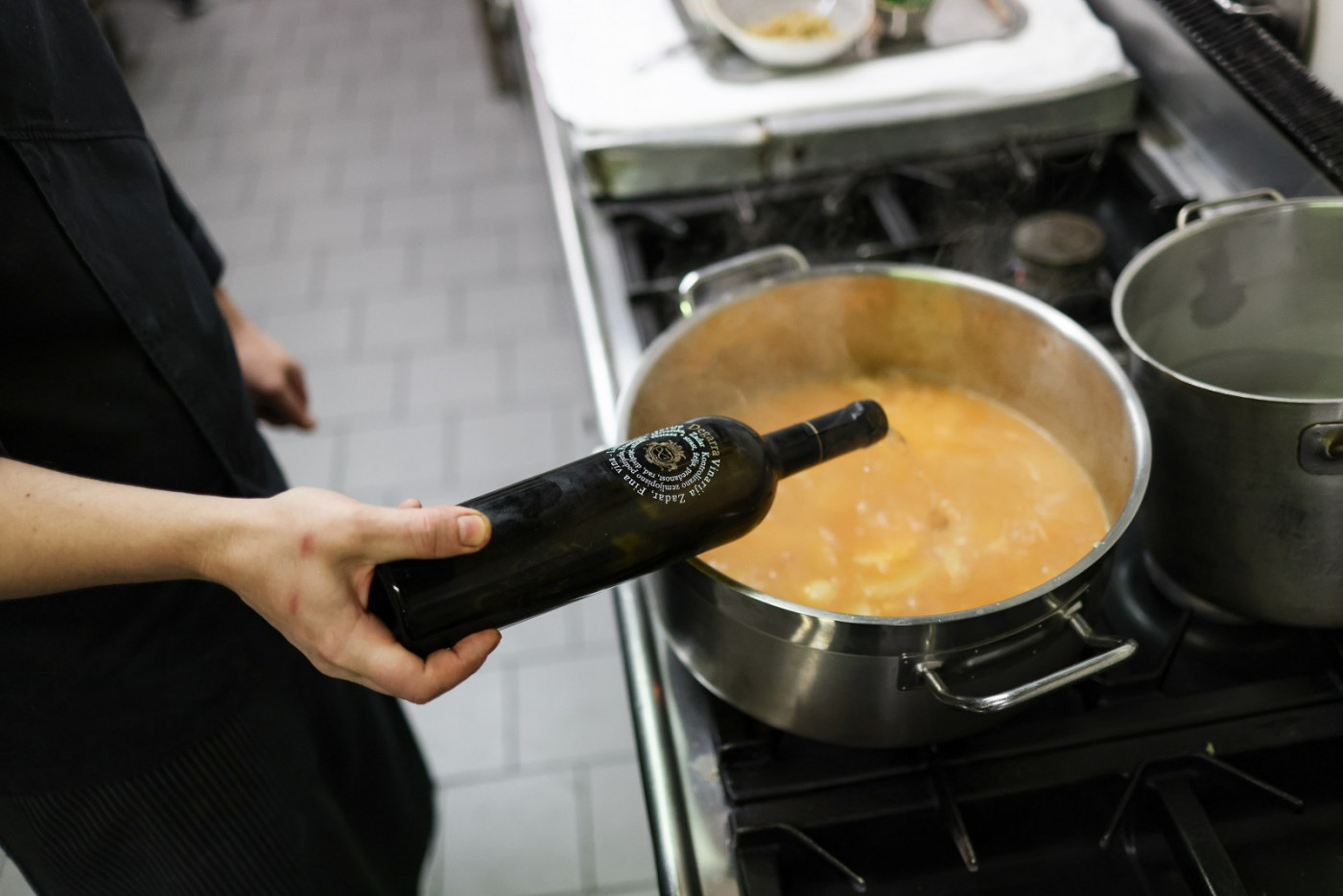
Our host, Vedran, stewed the onion in olive oil for a long time, added a lot of garlic, and then arranged and seasoned the dish in another pot for the final preparation. He added rows of potato slices, then stewed onions, then pieces of boiled codfish, and so forth, until he used up all the ingredients. He poured the codfish stock over everything, put the cream of ground tomato peels, and added salt. The dish was being cooked for as long as it took for the potatoes to soften completely, and then the chef added a small quantity of garlic, pepper, and white wine towards the end of the cooking. We will enjoy the same wine later with our brodetto – a 2019 Pošip by Zadar Winery "Degarra".
Before serving, chef Vedran sprinkled the plate with the finished dish with some more young extra-virgin olive oil and - that was it. You absolutely must try top-quality codfish from Norway in the way it is prepared in Zadar. But once will definitely not be enough.
Voir la vidéo
.
Veux-tu savoir plus?
Propositions
History, Sport
God Created Man; Zadar Created Basketball, Part 3
07.07.2021.

History
Gold and Silver of Zadar
02.02.2023.
Gastronomie
The Botanist | Vegan Restaurant Deep-Rooted in the Mediterranean Gastro Heritage
26.05.2023.
Gastronomie
Venetian-Style Liver - a Testimony to the Common History of Zadar and Venice
28.02.2022.