

10.01.2022.
Zadar on the Maps by Geographer Ptolemy and Ottoman Admiral Piri Reis
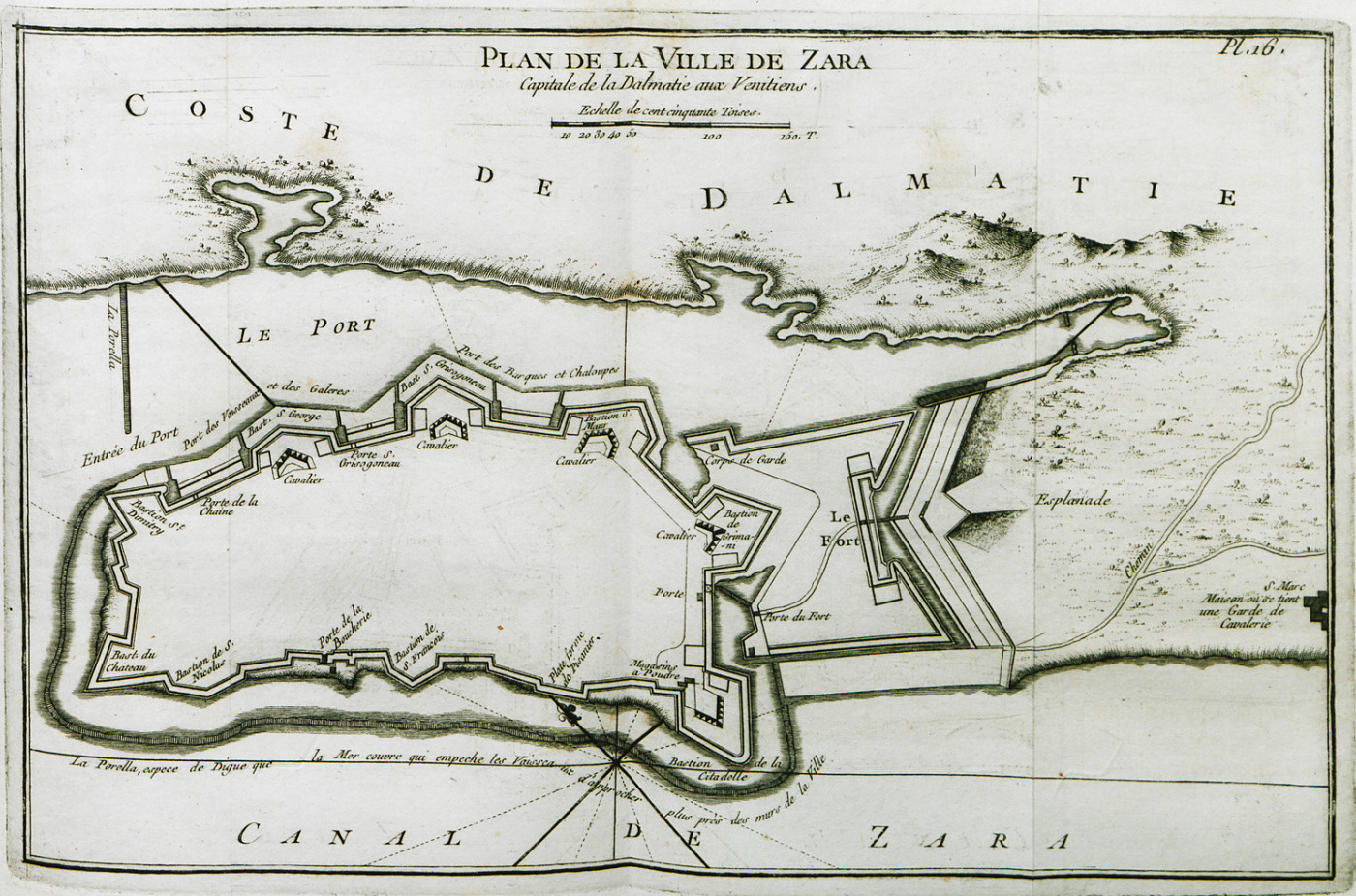
Since its founding 3,000 years ago, Zadar has been an indispensable anchorage on the eastern Adriatic coast, an important port during the long historical epochs of the metropolises of Dalmatia and the Adriatic.
This is evidenced by the most important cartographic works of antiquity and the late Middle Ages: Ptolemy's Geographical Instruction from the middle of the 2nd century and the Book of the Sea of the Ottoman pirate and admiral Piri Reis from the first half of the 16th century.
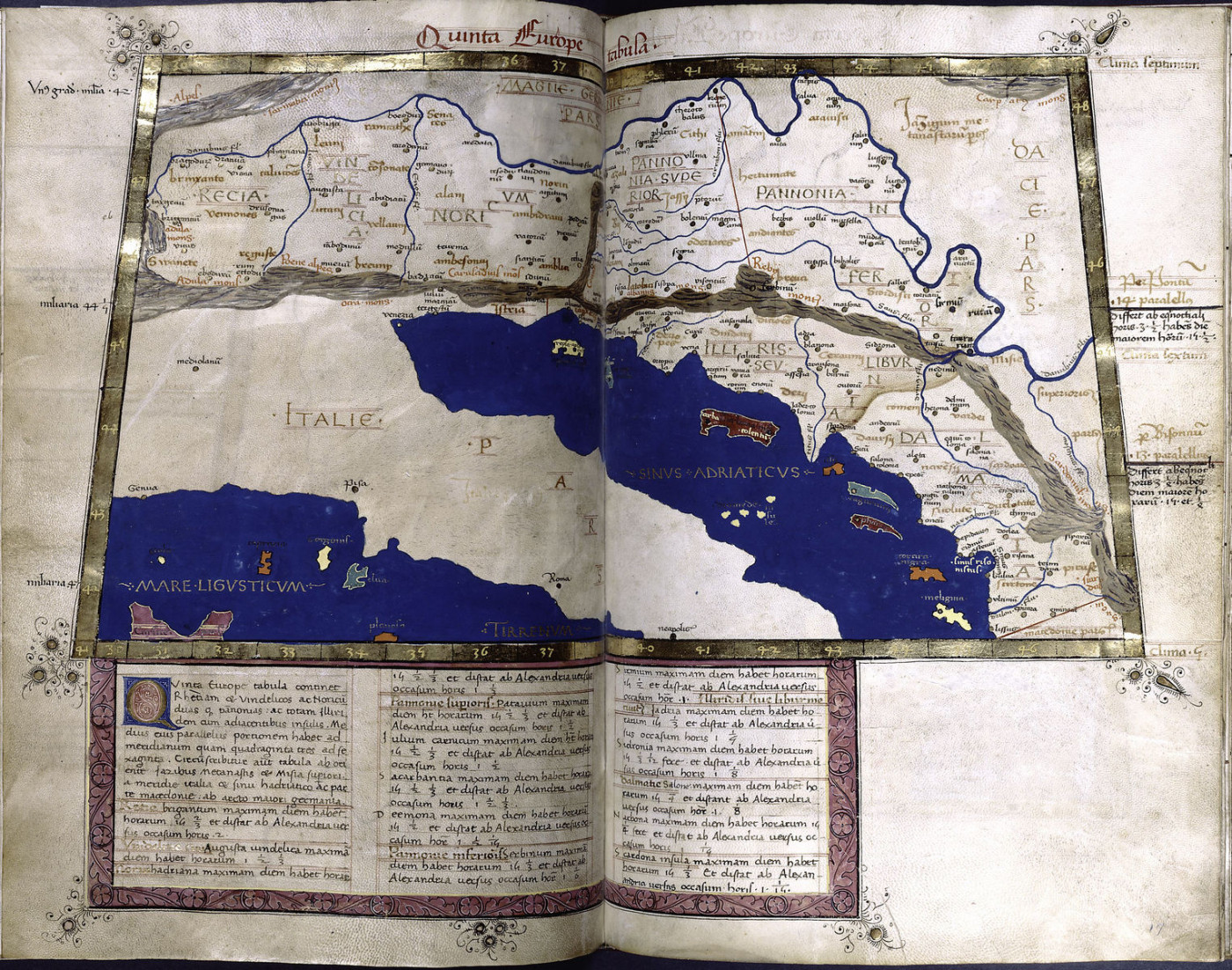
Claudius Ptolemy (Κλαύδιος Πτολεμαῖος, Klaúdios Ptolemaῖos, Claudius Ptolemaeus) was a mathematician, astronomer, geographer and music theorist, a native of Alexandria, Egypt (85-165). In the work of 13 books, The Great Mathematical Treatise, also known as the Almagest after the Arabic translation in which it is preserved, he systematically exposed the ancient science of space within a geocentric system, and the Ptolemaic system was replaced by the heliocentric system of Nicolaus Copernicus as late as at the beginning of the 16th century. Ptolemy contributed significantly to the geographical science and cartography of the ancient world with the work Geographical Instruction (Γεωγραφιϰὴ ὑφήγησις) by which he gained the reputation and name of a world scholar. The work of eight books, including maps of the then known world, is not preserved in the original, but in many Medieval transcripts. In the eighth book there is a map entitled The Fifth Map of Europe (Quinta Europae Tabula) with a very thorough account of Illyricum and Pannonia. On one of the copies, we can see Zadar (Colonia Iadera), which testifies to the importance of the bay, the city and the port of Zadar in the Roman Empire more than 1,850 years ago.
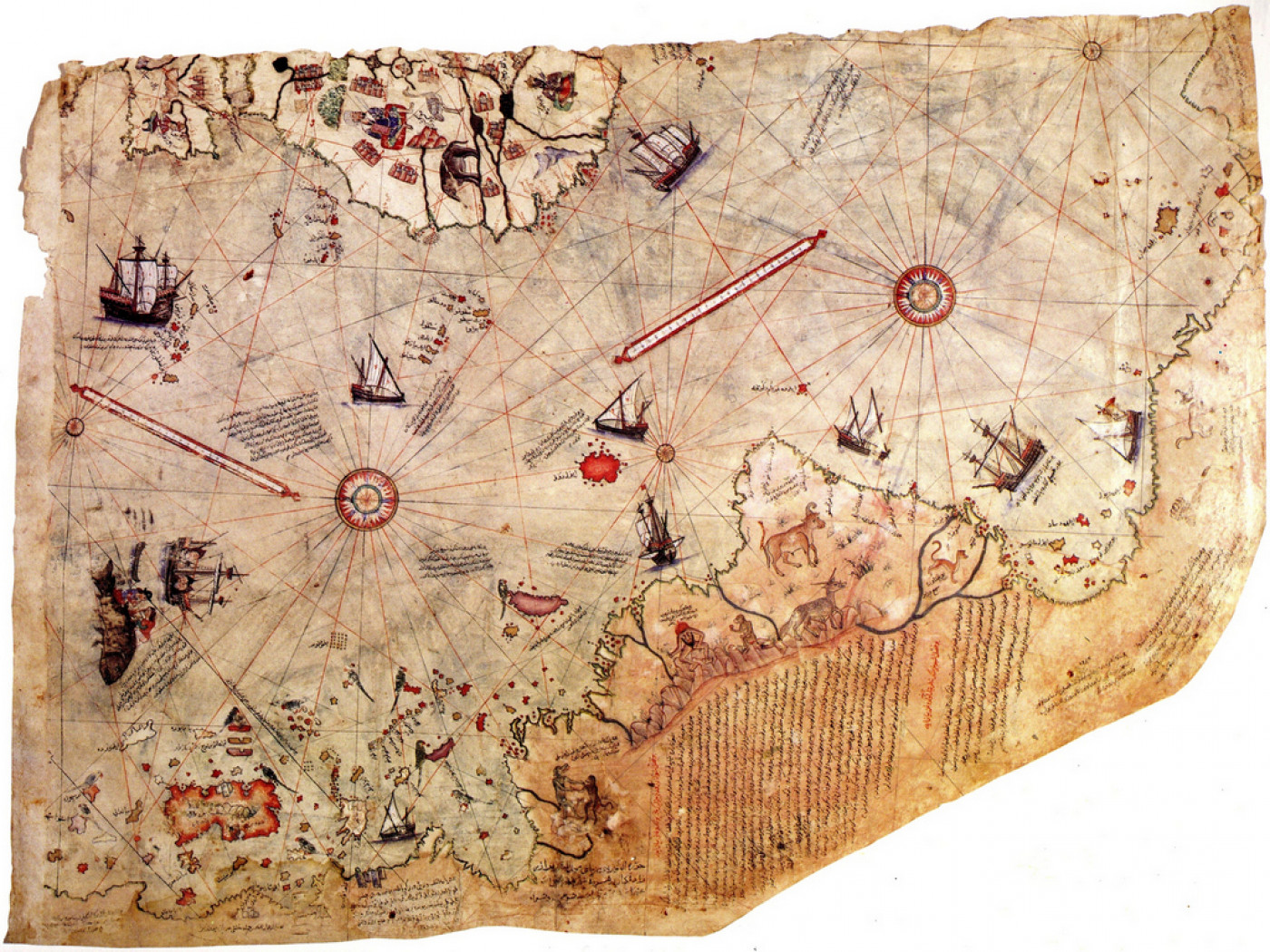
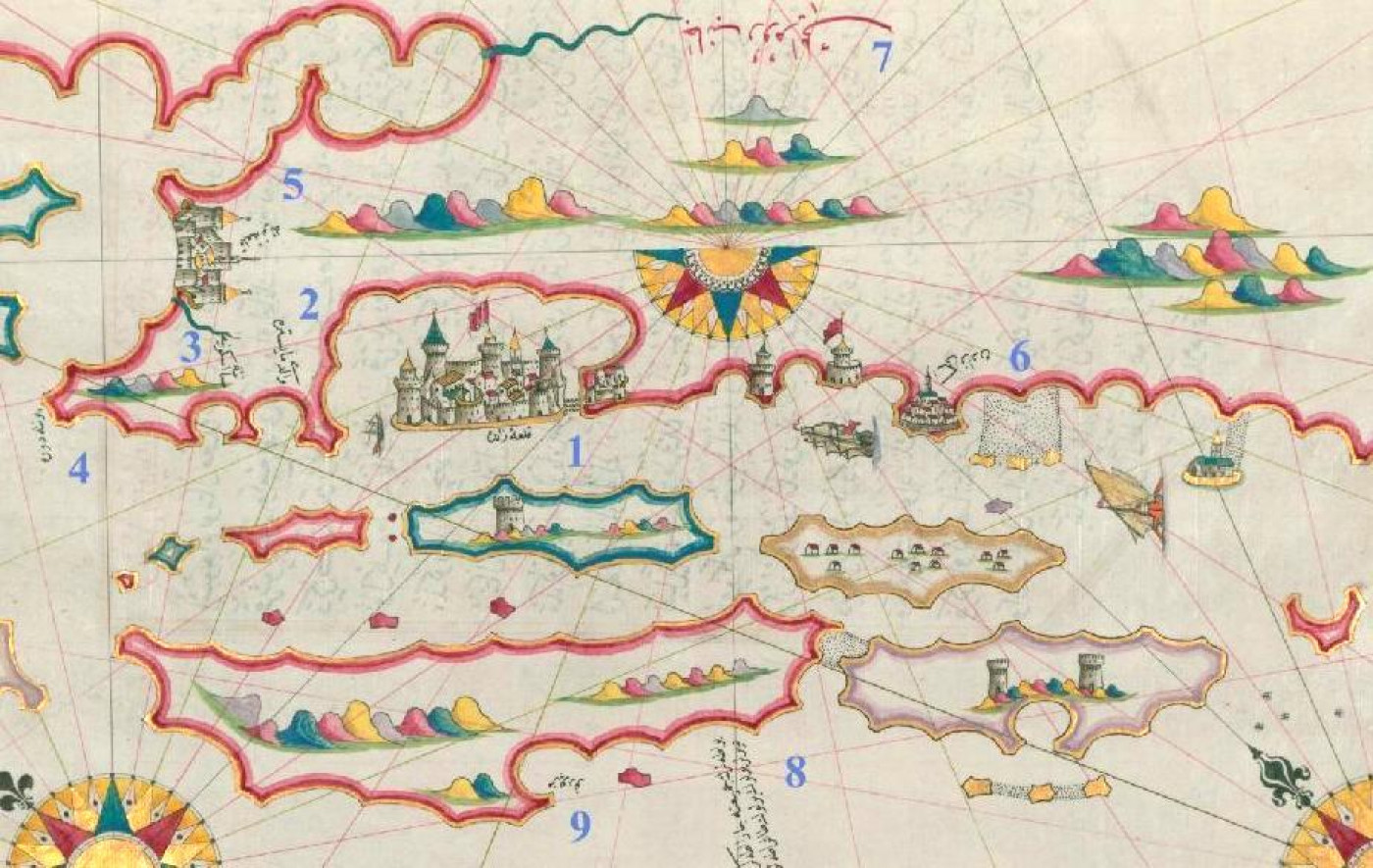
But perhaps the most important mention and depiction of Zadar can be found in the Middle Ages from the beginning of the 16th century, with the famous Piri Reis (Hacı Ahmet Muhittin Pîrî Bey), Ottoman admiral, geographer and cartographer of Suleiman the Magnificent. Admiral Piri Reis (1465-1553) grew up in Gallipoli, the most important port of the Empire of the time, where he compiled the first of his two maps of the world, but only a fragment of the Atlantic with parts of the West African coast and the East Coast of the New World is preserved. In 1517 he commanded a fleet accompanied by the Grand Vizier Ibrahim Pasha on his way to Alexandria. He compiled the notes and maps in 1521 into the first manuscript version of the Book of Navigation (Kitab-ı Bahriye). The revised and expanded manuscript was handed over to Suleiman the Magnificent in 1526, which was named the greatest geographical Ottoman collection of its time as a practical and artistic manuscript. Copies of this manuscript are kept in several libraries in Istanbul and around the world. In the Book of Navigation, the Turkish cartographer described precisely and in detail the port of Zadar with a depiction of the entrances and exits from the port and with auxiliary anchorages, as well as the Zadar aquatorium. Professors Mithad Kozličić, Dubravka Mlinarić and Marta Andrić dealt with Piri Reis's Book of Maritime Studies, so here are notes and a part of the translated text:
This chapter describes one of the fortresses in the Gulf of Wenedik (Venice, the Gulf of Venice, the Adriatic Sea) named Ğara and the islands across. One of these fortresses is called Eski Ğara (Old Zadar, Biograd), and one Yeŋi Ğara (New Zadar, Zadar). Some call the mentioned fortresses Zadire (Ğara, Ğaralar, Zadire, Zadar). But once upon a time, Eski Ğara was a great fortress. It's ruined now. Then, there are a few houses, like villages. They are well maintained. These houses have ships and are engaged in trade. Then, the mentioned Eski Ğara is six miles away from Yeŋi Ğara in the direction of Wenedik. The mentioned Yeŋi Ğara is now a beautiful fortress. This fortress is surrounded by the sea, and in the direction of Šilok (southeast), a chain is stretched towards the coast of Rumila.
The mention of New Zadar (Yeŋi Ğara) and Old Zadar (Eski Ğara) is a reminder of the still vivid picture of the events of 1202 and the Fourth Crusade when Zadar was destroyed for political desires of the Venetian Republic. Most of its survivors escaped by fleeing to Biograd (Alba Civitas, Belgrad), when it was named Jadera Nova (New Zadar). At that time, the real Zadar (Jadera Vetula) was completely destroyed, but when the people of Zadar returned to their city, Biograd got a new name: Old Zadar (Zara vecchia, Jadera Vetula or Alt Zara). Zadar becomes Zara Nuova, and then only Zara.
Voir la vidéo
.
Veux-tu savoir plus?
Propositions

Evènements
Golden Restaurant & Bar Brings 20+ Summer Entertainment Nights to Petrčane
07.07.2026.

Evènements, Nouveauté
Full Moon Festival | The Novelty Is In Its Music and Gastronomy
08.08.2023.

Gastronomie
Evaluation of the Food and Drinks Offered at the Zadar Christmas Market
14.12.2021.

Evènements
Zadar Christmas Market 2026: The Entire Old Town Dressed Up for the Advent
12.10.2026.