30.03.2022.
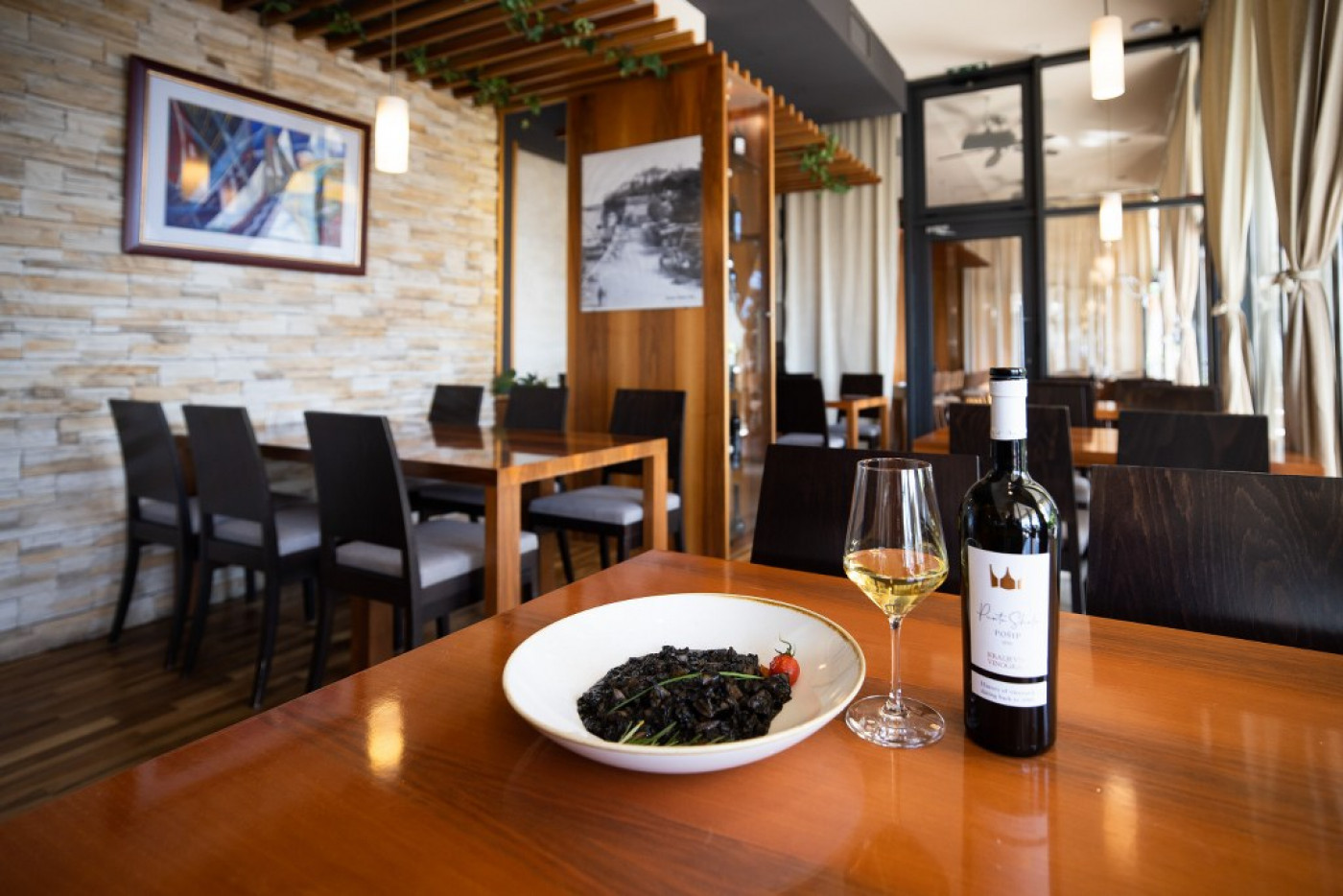
Black Cuttlefish Risotto at the “Bruschetta” Restaurant in Zadar
“U po' marča – sipa i komarča” (“In the middle of March, cuttlefish and gilt-head sea bream”) is an old saying of Dalmatian fishermen, which conclusively states which fishing game is approaching shallow waters in the first month of spring. It is somehow also the time when squid hunting in the Adriatic drops or stops, and its relative, the cephalopod common cuttlefish, becomes a frequent catch in the fishing nets, trap nets and on artificial bait used by sport fishermen.
Sea Chameleon
The common cuttlefish (or European common cuttlefish, Sepia officinalis) is a real sea chameleon that adapts its appearance to the environment, whether it is prey or hunting itself. However, in both defence and attack, its most important weapon is ink, a pigment in which, along with other elements such as protein, melanin is the most important, the same substance that determines human skin colour. The cuttlefish is brave both when hunting or prey. Its ink confuses and intoxicates both the attacker, a sea predator for which it is a delicious bite, or the prey, tiny crabs and shrimps and fish that it catches with its long, lightning-fast tentacles. Now, we can attribute its courage to the fact that it has three hearts, which is probably why it has a special feeling of love and affection for its partner, i.e., the fishermen are very well aware that if they catch one cuttlefish, a faster and hungrier female, her male partner will very quickly get caught on the artificial bait, because he will not move away from the place where his female had disappeared.
But what interests us more here is the cuttlefish on a plate, in gastronomy. Although the flesh of its body is sweet, tasty and rich, it is especially interesting, in culinary terms, because it holds the biggest amount of ink out of all its mollusc relatives. Man has learned to use this colour over time, first as ink for writing, and then in a series of dishes. In Zadar and Dalmatia, many of today’s traditional dishes were created around cuttlefish and its ink, both in everyday dishes as well as dishes for special occasions and feasts. So today it sounds strange that until a few decades ago cuttlefish was not a particularly prized catch. The fishermen used to return cuttlefish to the sea, in the days when the nets were full of other fish, so that its ink would not make the boat dirty. Often it would end up on the plates of the poorest families, and the price of it at the Zadar fish market was low, half less than, for example, squid.
Today it is no longer so, cuttlefish is a first-class gourmet delight, and in Zadar we prepare it in several ways: in a stew with chickpeas (čičvarda) or broad beans (bob), baked under the baking lid (peka) or in the oven, in salads with potatoes, or in sauces with pasta. We regularly use the most interesting ingredient of the cuttlefish, the thick black ink that inventive chefs mix into pasta dough or pastries for sandwiches. But definitely, the most famous and most popular dish in Zadar and the whole of Dalmatia is black risotto with cuttlefish, which we consume in Zadar as an appetizer, especially at wedding feasts, and as a main dish in our daily diet.
The cuttlefish is widespread in almost all of the world's seas, so it is not unusual that the fishermen or their wives found ways to use the ink of this cephalopod elsewhere, so similar dishes to our Dalmatian black risotto were created in the Mediterranean. Similar, but not the same. The Spaniards, for example, use cuttlefish ink and meat in an unusual black version of paella, while in Italy, especially in the south, chefs prepare sauces with pasta from cuttlefish and ink. No wonder for the Italians. Legend has it that Dalmatian fishermen discovered dishes with cuttlefish and its ink while searching the Mediterranean for oily fish. Whether first in Sicily or somewhere in Spain, remains unknown.
All the Secrets of the “Bruschetta” Restaurant Cuisine
Black risotto is often on the menu of Zadar restaurants, and one of the best is prepared in the kitchen of the “Bruschetta” Restaurant, in the very centre of Zadar, on the peninsula, in Varoš district, not too far from the remains of the pre-Romanesque Stomorica Church, whose architecture, today only in foundations, symbolizes a key, i.e., the keys of St Peter. “Bruschetta” bases its menus, and adapts them to seasons and seasonal produce, entirely on the gastronomy of the Mediterranean, Dalmatia, Zadar and Croatia. The “Bruschetta” cooking team, led by the chef Tomislav Muranić, comprises dishes by combining fresh Adriatic seafood and a rich selection of vegetables from the Zadar region, even wild herbs, so, for example, the restaurant offers a combination of green gnocchi with nettle and European sea bass. The main value of this restaurant's offer is the combination of different types of vegetables in fish and meat dishes, as well as in those with pasta, or in the outstanding and original bruschettas after which the restaurant got its name. That is why it is one of the most popular restaurants in the centre of Zadar.
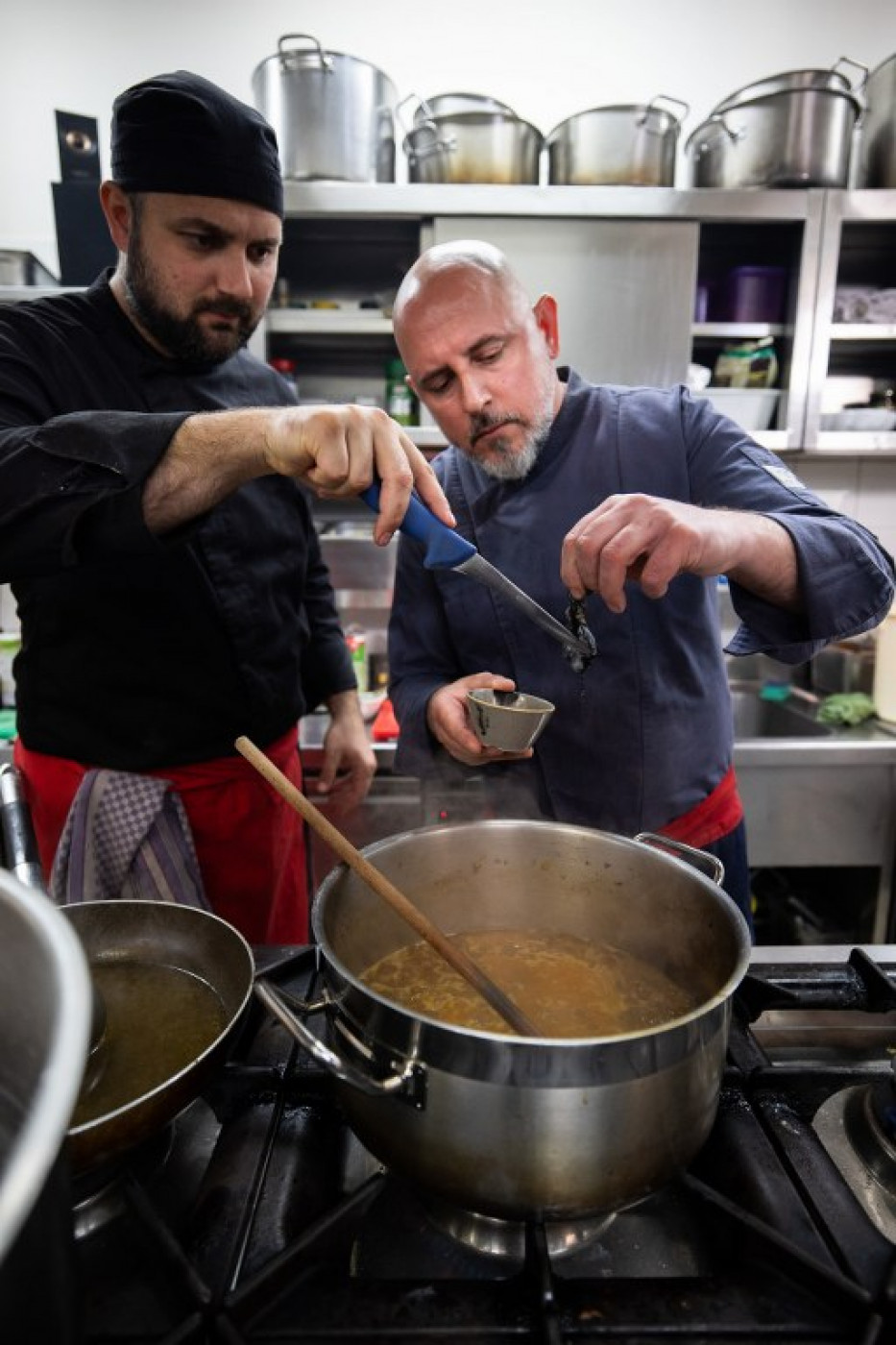
In fact, in the preparation of black risotto, chef Dario Kapović does not really have much space for culinary games, i.e., the best way to prepare the black risotto is the traditional way. The greatest skill is found at the beginning of the preparation of the dish, because you need to know how to clean the cuttlefish properly from the entrails and that one single bone (a dessert for parrots) and preserve the undamaged iridescent bag with the precious ink. That is why it is best to prepare an absolutely fresh cuttlefish, because the ink coagulates when frozen, and becomes almost useless. (Therefore, before freezing, the cuttlefish should be cleaned, and the ink should be mixed with a little water or oil and thus frozen.)
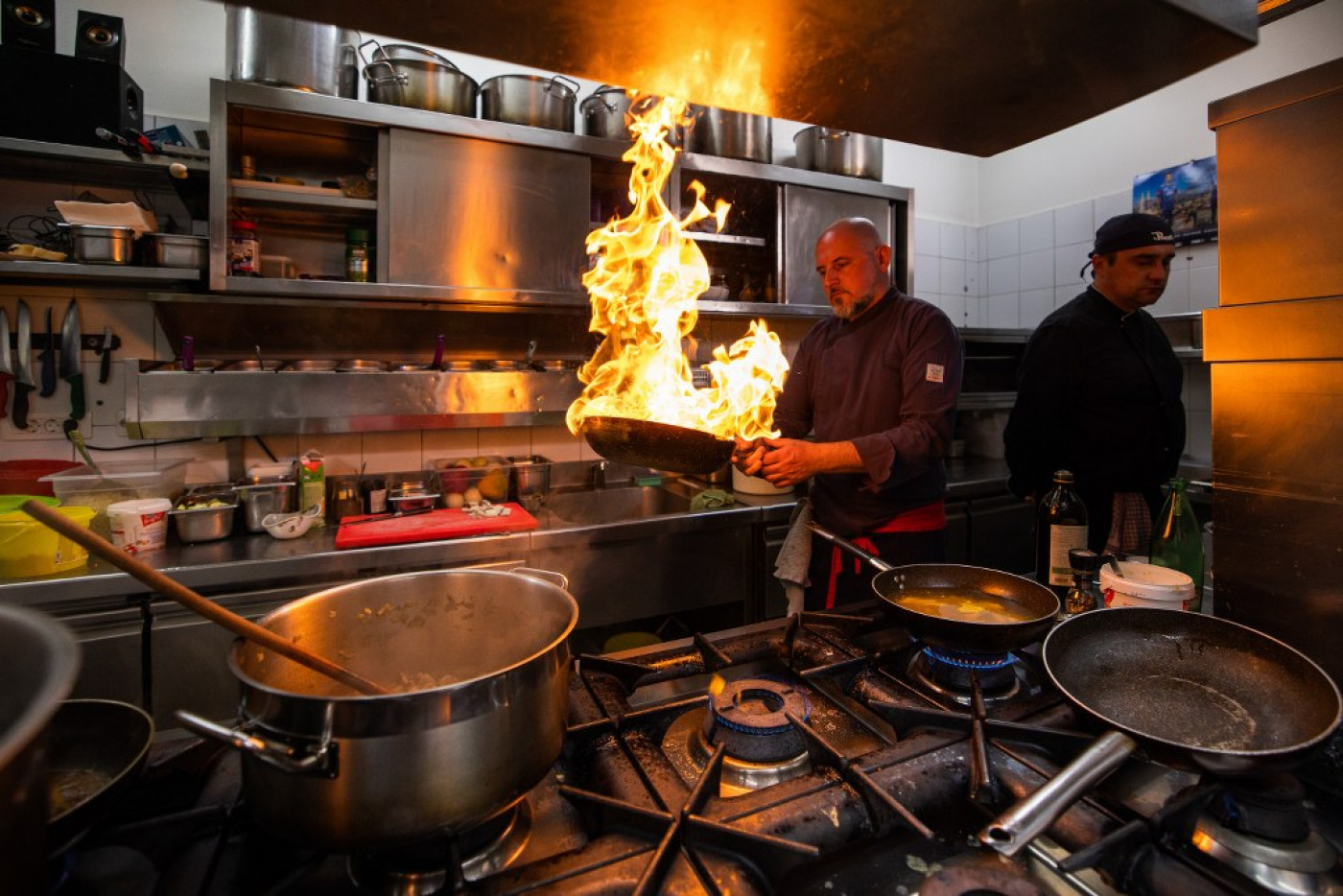
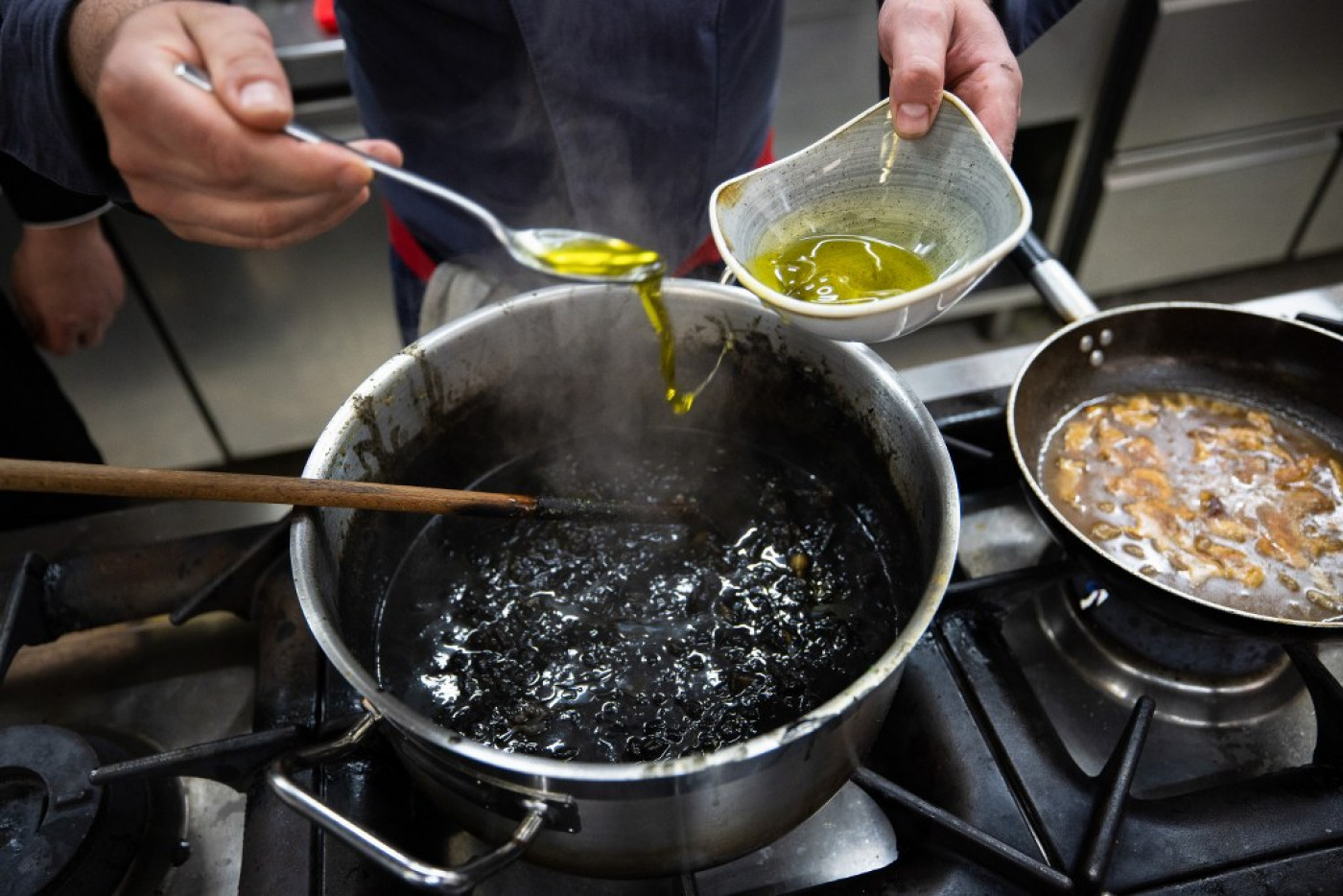
After cleaning, our chef Dario fried some red onion (kapula), added a few bay leaves, then added cut pieces of cuttlefish meat, garlic and a glass or two of dry white wine and let it simmer for about half an hour in a covered pot. Only then did he add the mixed cuttlefish ink and, by actual magic, get a thick sauce into which he put arborio rice. He then finished the dish by drizzling the rice with fish stock while constantly stirring. Undeniably, all risottos ask for this, so that the rice does not burn and to attain a creamy, but not a too gooey or dry dish. A jet of extra virgin olive oil at the very end of cooking made the risotto gleam and obtain an even richer taste.
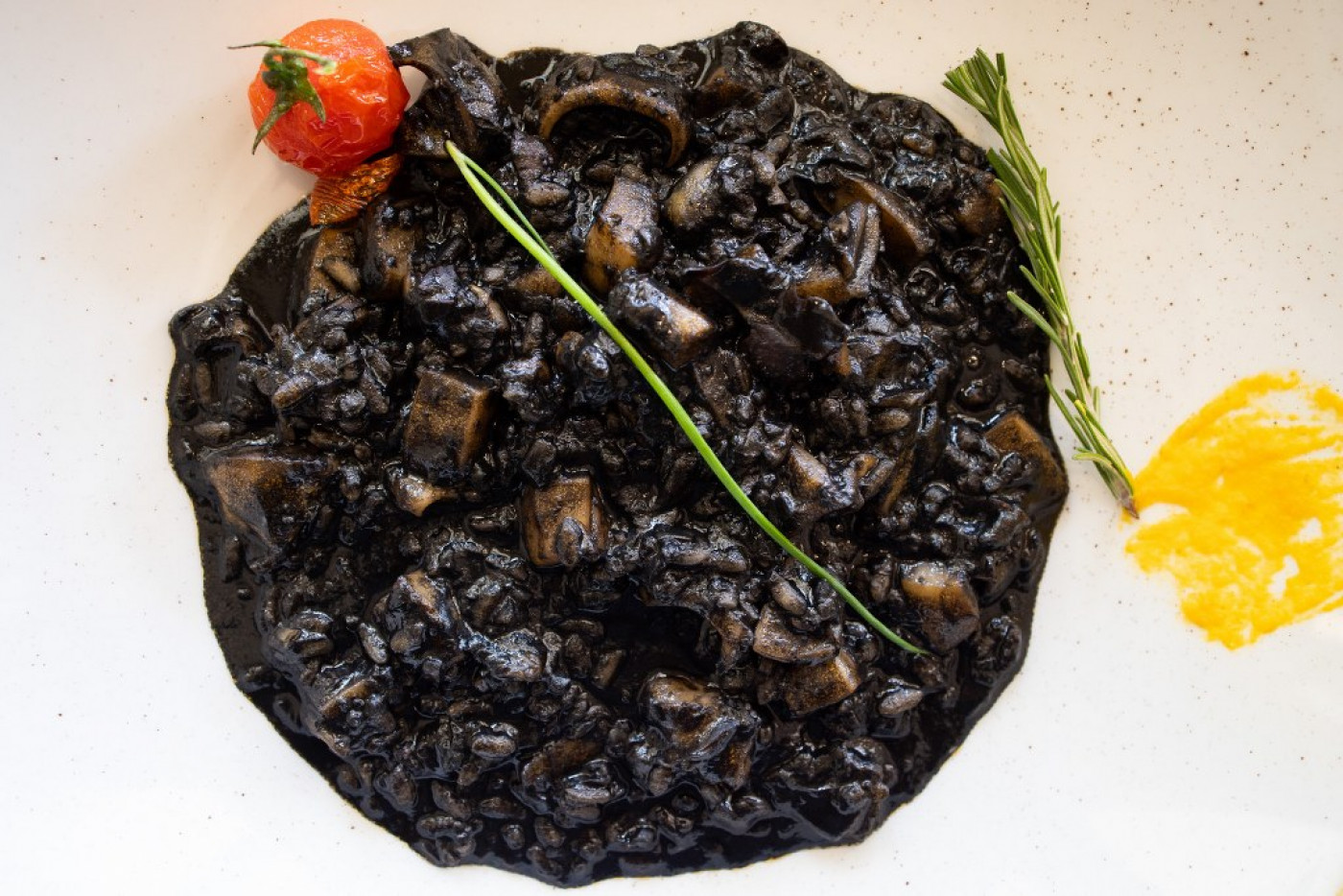
We got an extraordinary rustic dish on our plate, to which the cuttlefish ink gave not only the colour, but also the specific sea flavour and fullness of taste. And no, the ink will not stun you as it stuns prey in the sea. Unless, after this risotto, which is mandatory, you drink a few glasses of the great pošip by the Zadar “Kraljevski vinogradi” winery, with which the “Bruschetta” risotto was drizzled while it was still cooking.
Schau das Video an
.
Möchtest du gern mehr wissen?
Vorschläge