

19.04.2022.
Flavours of Wild Plants 2: Old and Healthy Mišanca in New Dishes of the “Kaštel
There is a total of about 5,500 species of plants in the whole of Europe, about 2,000 in the whole of England and Ireland, and only on Velebit, the largest Croatian mountain, the one that overlooks Zadar and its entire region including the Adriatic, there are more than 1,500 species of plants. In this entire part of Dalmatia, there is a total of about 2,000 plants, of which as many as 76 are edible, tasty and above all healthy.
A Zadar native, Mirna Milković, who is a chemist by profession, as well as a licensed guide across Velebit and its plants, addicted to clean and healthy nature, which is why she was nicknamed Velebit Fairy, entered the soul of every member of this large wild group that enriches the flora of this part of Croatia, calling this assorted wealth “a treasure trove of health”.
Mišanca Picked from the Shelves of the First “Shopping Centre”
Of course, people of this region have been discovering in the long centuries behind us, especially those driven by necessity, i.e., hunger, from the long rows of shelves of the first “shopping centre” called Nature, how these diverse herbs can be of use to preserve their health, for healing purposes, but also for food.
A mixture of wild edible herbs from the untainted Dalmatian nature, cooked in some small cauldron, just at the time when winter food supplies get used up and when the harvest or picking of the first summer vegetables is still far off, hence in spring when the nature flourishes, has become one of the most typical and recognizable dishes of the Zadar region, but the whole of Dalmatia as well. This original, indigenous and ancient dish is called svakober (literally “pick all”) in the wider Zadar hinterland, and on the islands and in Zadar itself it is usually called mišanca.
The secret to mišanca lies in the knowledge of nature and wild herbs, and this knowledge was passed on from generation to generation by pickers, most often rural women. On walks through the nearest countryside, long before the word “recreation” had existed, with a little knife in hand, caring wives and mothers would search for edible and delicious plants, only to return home with a basket full of different herbs. The content of the basket and the later dish differed from meadow to meadow, from one narrow micro location to another. One could find all sorts of herbs: wild chives, young leaves of wild fennel, dandelion, dandelion leaves, wild goosefoot and chicory, wild garlic and wild leek, black bryony and common mallow, Jerusalem artichoke and greater burdock, common daisy, common sorrel and young wild nettle, rocket, wild Swiss chard, asparagus… The list is ever so long.
Sometimes there would only be three or four types of herbs in the basket, and sometimes ten to twelve. Each combination of picked herbs gave a different taste, but most often it would be a mixture of bitter, sweet and spicy taste. A few leaves of, for example, strong and aromatic wild fennel were enough for the dish to get a completely new aroma. And it is precisely wild fennel that often outweighs whether the consumer is repelled or attracted by mišanca. In the world of gourmets, it passes like truffles - they have plenty of fans, but also those who cannot even smell it.
Cooking never took too long, it depended on the type of picked herbs, and if there was a piece of dried pork, mutton or kid goat (kaštradina) in the house that would give a new aroma to the whole dish when cooked, the family would be even happier and fuller. Without any meat addition, mišanca, seasoned with just a little olive oil, was a perfectly healthy and filling vegetarian dish. That vegetarianism in the past was a necessity, rather than a choice of the poor, is another story. That is why people lived longer than the obese rich, insatiable hedonists who simultaneously enjoyed meaty and fatty feasts.
Today, when vegetarianism, or a healthy diet at least, just like the Mediterranean one, has become very “in”, an omnipresent trend, the primordial mišanca is slowly returning to the tables of Zadar households from where it disappeared in turbulent times of escape from the villages and rural and dietary habits. Fans of this dish no longer need to go herb picking themselves, if they do not have the time or knowledge: the herbs for mišanca are easy to obtain at Zadar green markets.
Slowly but surely, mišanca is returning to the menus of Zadar restaurants. Admittedly, it is rarely being prepared in the original way, as a stew, but creative chefs are preparing wild herbs with the taste of the original dish in novel ways, often only as a side dish instead of boring potatoes or Swiss chard, or in a never-before-seen version, which we have discovered at “Kaštel” Restaurant of the Zadar “Bastion” Hotel.
A Unique Herbal Mix Even in Ice Cream
“Bastion” is a four-star boutique hotel with 27 accommodation units that built its entire concept, from the interior to the offer of dishes at the restaurant, on the rich cultural heritage of Zadar. How could it not, when it was built on the historic defensive walls of Zadar from the 13th century i.e., in the old part of the city, not far from the Sea Organ and the Greeting to the Sun. The Hotel Restaurant “Kaštel”, with as many as two spacious terraces blended into the ambience of the old walls, has been a member of the prestigious Restaurant Association “Relais & Châteaux” for years, and on the list of Michelin recommendations.
The restaurant's offer is based exclusively on local ingredients and the heritage of Zadar and its region. Chef consultant, and one of the most famous Croatian chefs, Marijo Čepek and “Kaštel” chef, Ivan Turković, find inspiration for their dishes in unique flavours that are an integral part of Dalmatian family culture, so they include some old culinary themes and forgotten foods, in new, more modern ways on the restaurant menu. Is it, therefore, unusual that these two chefs also found their inspiration in the old chest of aromas, flavours and health, known as mišanca?
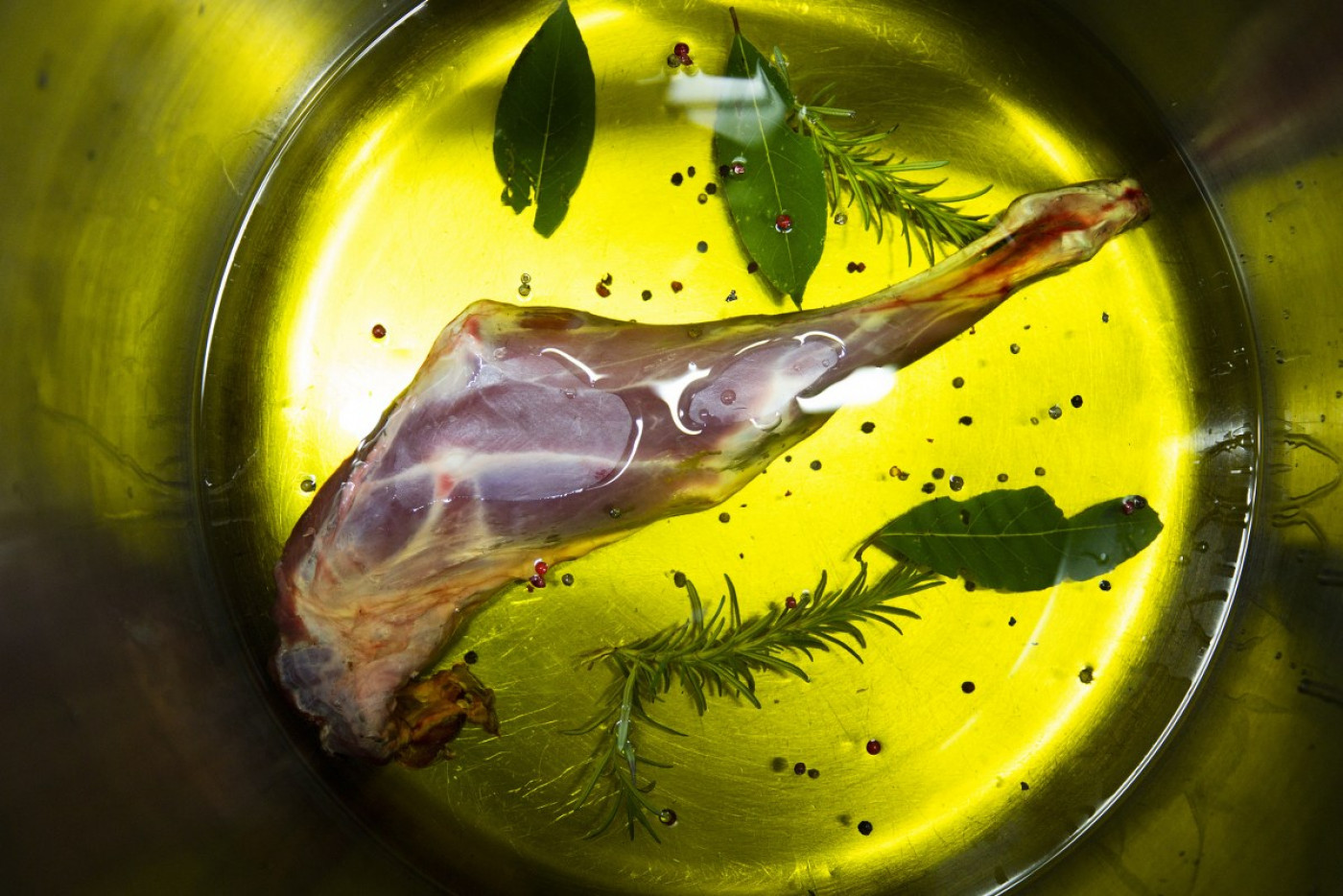
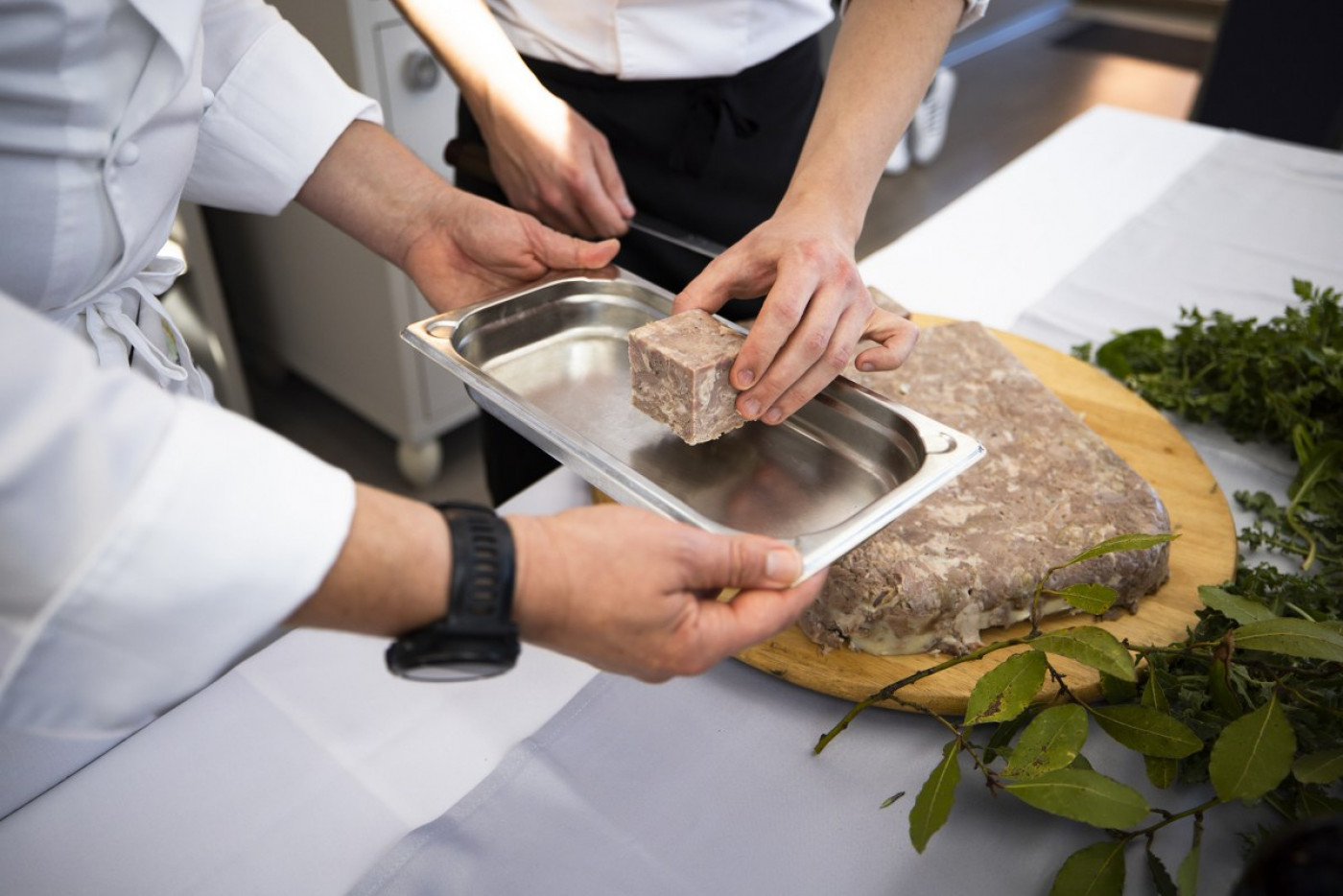
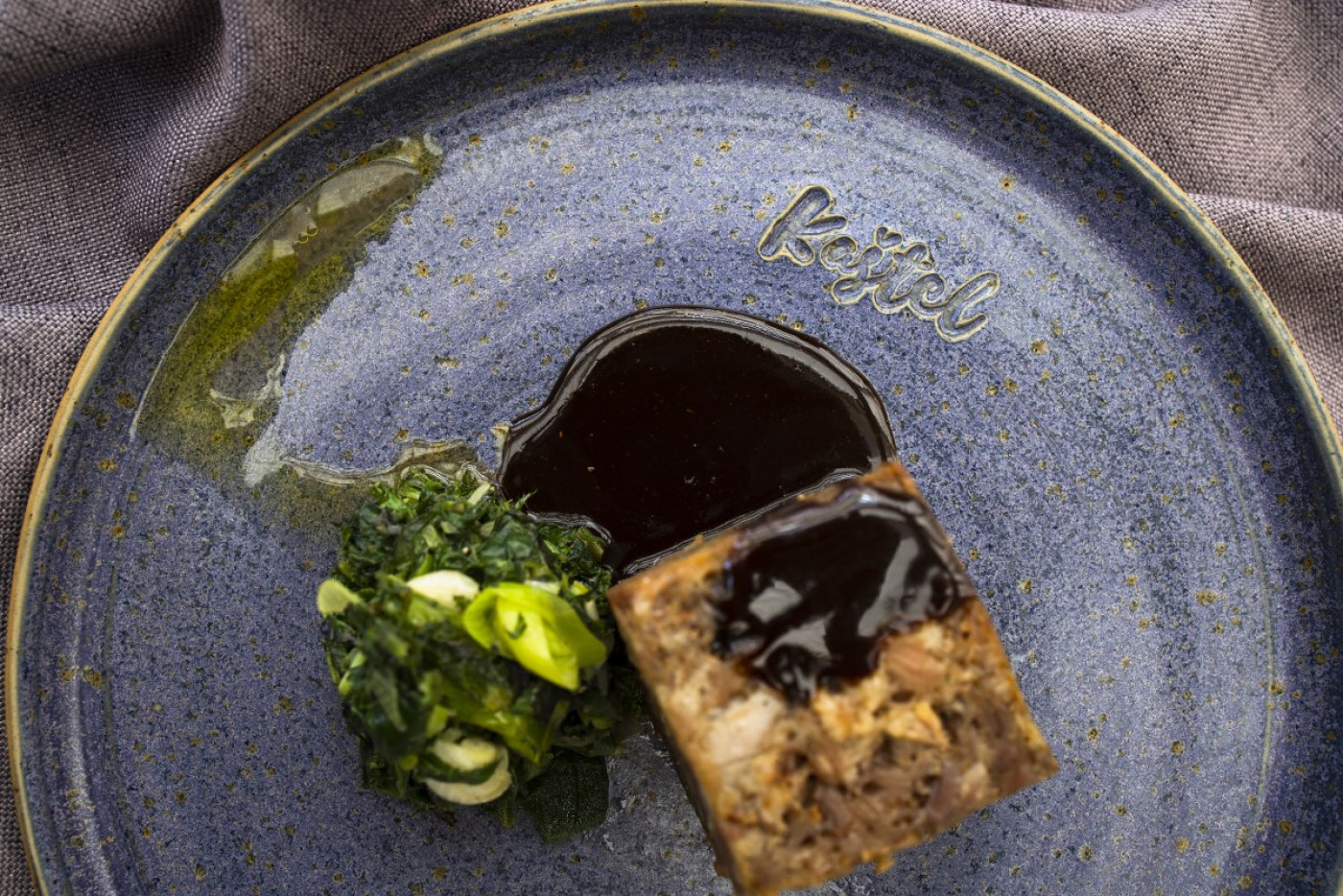
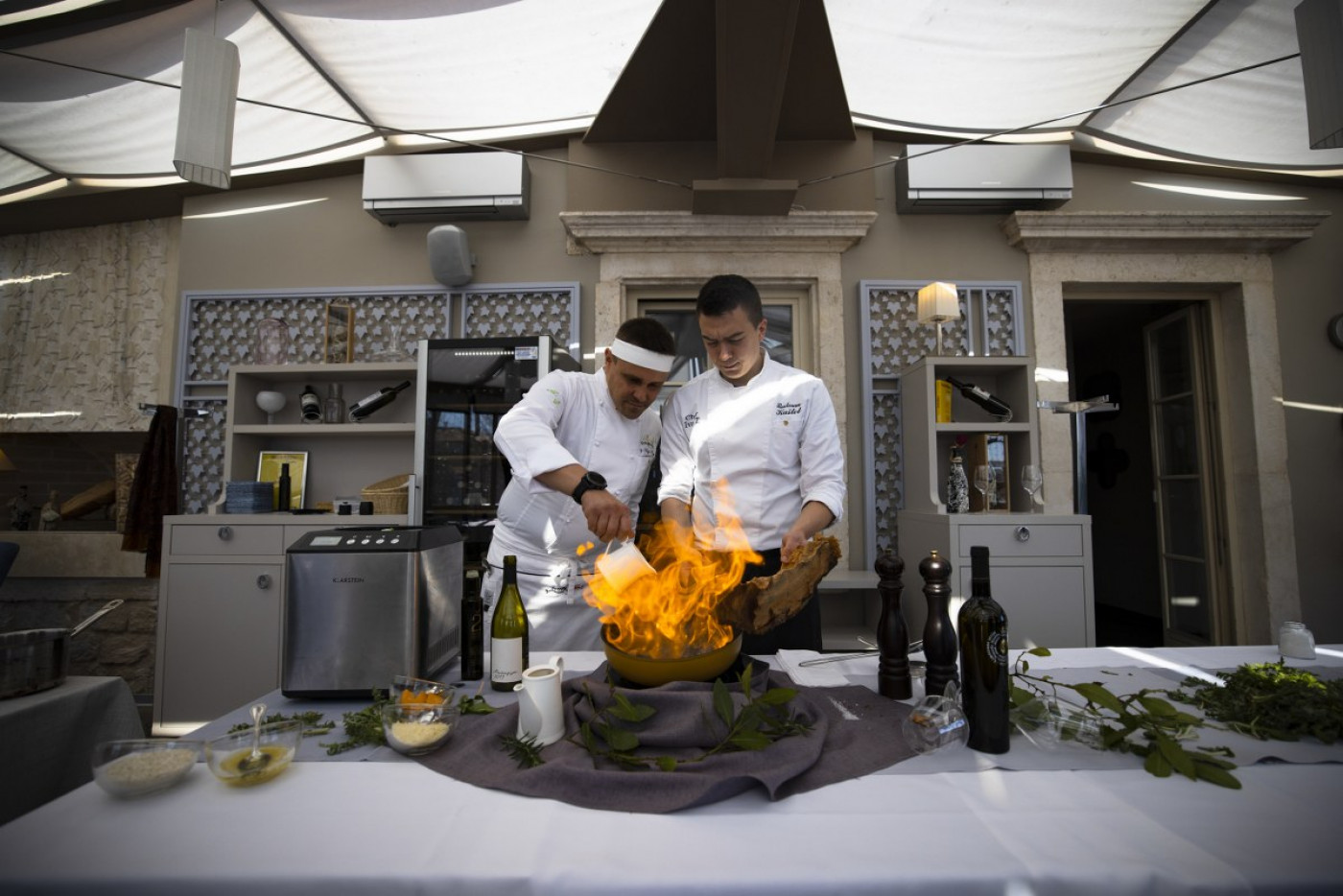
In the meat dish with mišanca, the main ingredient is lamb, in fact a cube of confit meat of a young Dalmatian sheep, and the mixture of about ten types of wild herbs is a seasonal side dish, because the young chef Ivan prepares lamb in this way almost all year round, only changing the side dishes. Anyway, the chef duo first separated the whole lamb meat from the bones, then confit it at a low temperature in its own juices and fat for a full 12 hours, chopped it, and put it under weight to get a compact meat assembly, from which the cubes would be cut before serving.
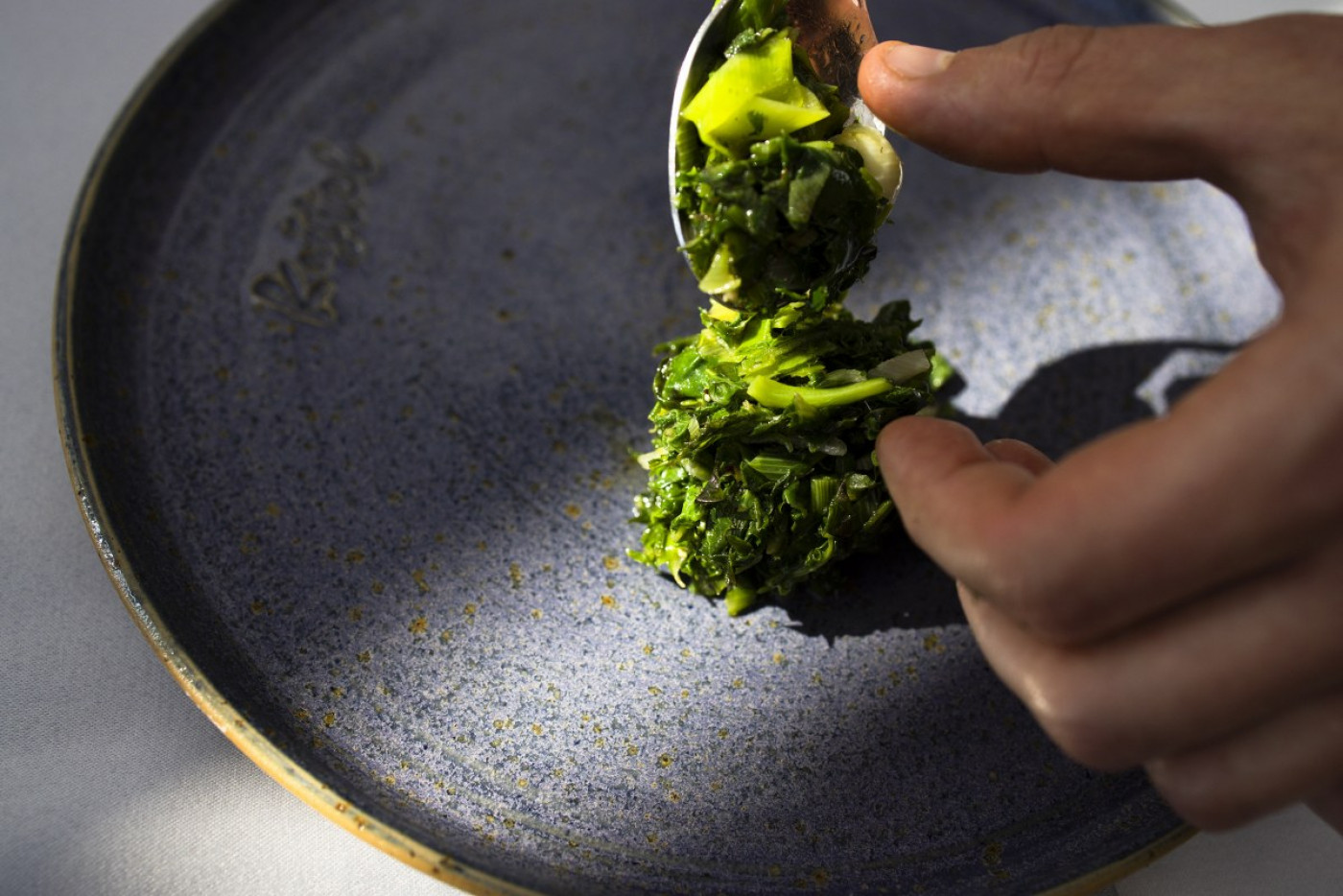
From the remaining bones, a powerful demi-glace sauce was created after as much as 48 hours of slow heat treatment, which will then be poured over the previously short-baked cube before serving. In the eight minutes it took for the cube to get a brittle crust and for the heat to intensify all the aromas of young lamb, our chefs blanched in a pan, and in a little lamb stock, a bunch of mišanca grabbed from a large basket, freshly arrived from a nearby market with a dozen species of wild herbs. This refreshing and aromatic, slightly bitter side dish, was enriched with a few grains of flower of salt from Nin and a brief drizzle of local extra virgin olive oil.
This great combination of intense aromas and flavours has actually been transformed by the imagination of the chefs Marijo and Ivan into an archetypal pastoral scene on a plate - a flock of sheep grazing on a Dalmatian pasture full of all kinds of herbs.
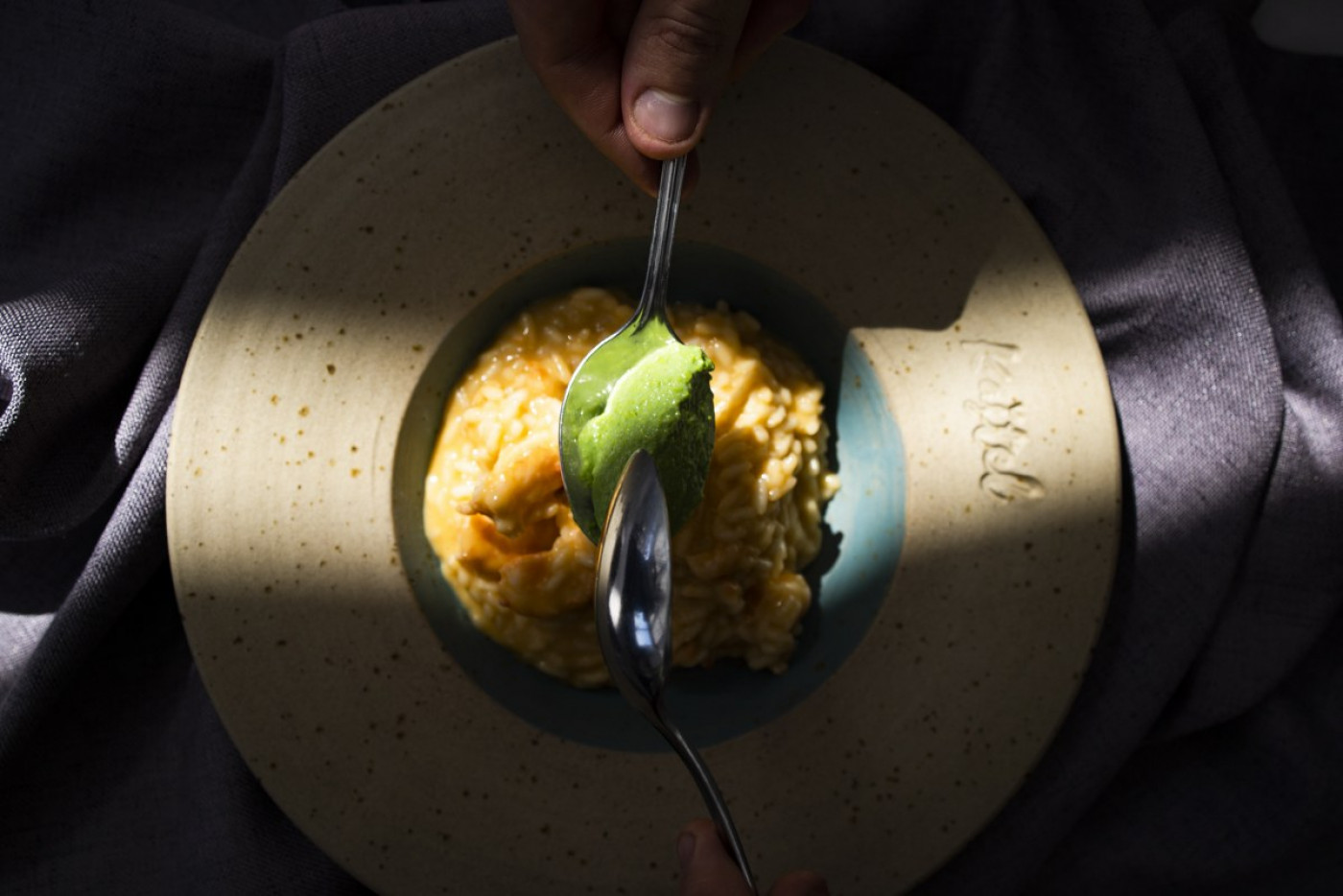
In the second dish, a typical mare e monti concept, our mišanca got a new, surprising form, an unexpected role. It found itself in - ice cream. Although, not sweet but only lightly salted, and in company with the original Pag ricotta, with a subtle taste, and cream. Chef Čepek combined pesto from mišanca with only these two ingredients and got a perfect and refreshing appetizer in a classic way. Or dessert, if you will. However, he did not stop there. Mišanca and ricotta ice cream ended up on a freshly finished, warm Adriatic scampi risotto prepared by the chefs in a more or less familiar way: they briefly fried the meat of the scampi tails and lit them on fire with a few drops of good cognac.
After that, they toasted rice on a frying pan, added onions, olive oil, white wine and drizzled it with a powerful stock of heads and shells of scampi, shrimp and fish. Towards the end of cooking the risotto, the tails were returned to the dish, and when the rice was cooked, they poured a little olive oil, grated a little hard Pag cheese and added a cube of cardinal butter, the one that had previously picked up the smell of the strong scampi stock by using a special technique.
And finally, a surprise arrived: ice cream made of mišanca, which gave new value to this classic dish of Dalmatian cuisine.
That is how the two chefs, the already established Čepek and the young and talented Turković, brought some of the most valuable and indigenous foods of Zadar and its region to the tables of “Kaštel” Restaurant in only two dishes. You will surely remember this city by some of these flavours: young lamb from Dalmatian pastures, unique Pag ricotta, the best scampi in the world that live in the sea of the Velebit Channel and, of course, the unique mišanca from the meadows of the Zadar area, which, in its new versions, consistently follows the powerful taste of the rustic “pick all” (svakober) from the cauldron - the food of the poor. Luckily enough, today available for enjoyment of the wealthiest as well.
Schau das Video an
.
Möchtest du gern mehr wissen?
Vorschläge

Neuheit
Diesen Winter ist Zadar per Fluglinie mit München verbunden
26.11.2025.
Gastronomie
Pag Cheese has won over World Gourmets and you can best find it in Zadar
11.04.2021.
History
The Turbulent Past of Zadar's Green Island, Part 2
01.05.2025.

Neuheit
The Zadar Tourist Board Destination Film Won Another Award
31.10.2022.