
26.01.2022.
“With a Spoon” Tavern: That Is What We Call Real Food
A large group of dishes from the so-called homemade gastronomy of Zadar and Dalmatia has been domesticated in the local restaurant offer in the last few decades. The common name of this group is dishes eaten "with a spoon", and it is difficult to explain it to people without Mediterranean roots. It becomes clearer when we say that this group has, in fact, simple features, because it includes all dishes that are primarily served hot, with all ingredients cooked in one pot, served as a complete meal on one plate, and is eaten with only one utensil – a spoon.
One Big Delicious Family of "Real Food"
Therefore, his large culinary society includes rich thick soups, mostly stews and minestrone soups (minestre), some types of brodetto with potatoes, but also meat goulash soups, steamed and boiled dishes… Spoon dishes are prepared here in combinations of hundreds of types of ingredients, mostly fresh green vegetables, cereals, legumes, mostly beans, pasta, fresh or dried meat, as well as offal, musky octopus (Eledone moschata) and fish, basically from all that is, in our case, offered by the land and sea of the diverse Zadar region. It is similar to that group of dishes called camangiari in Italy or estouffat in Provence, France. Here, dishes eaten “with a spoon” (or literally “on a spoon” in Croatia, because this charming "incorrect name" has become common) are a much more serious story because they imply "real food", one that refreshes and fills a person up, whether it is winter when we need more calories, or in the summer when we eat lighter and refreshing vegetable minestrone soups.
In modern gastronomic terminology, all of these dishes could be termed comfort food, because the first thing that comes to the mind of a hungry Zadar citizen in the critical moments of a late morning or early afternoon is: “If only I could eat something with a spoon". His or her palate and nose, in a moment of hunger, first recalls the aromas and flavours coming from their mother's or grandmother's kitchen and that pot in which something irresistibly appealing was simmering. Another thing is that many will, unfortunately, because of their daily chores and errands, and the rhythm of life in general, look for an unhealthy snack in the nearest bakery as a completely inappropriate substitute for "real food".
Here is an interesting example of a typical spoon dish that suddenly gets a different face with a few modifications. Dried beans with pasta and some dry meat in this part of the Mediterranean is a typical dish eaten "with a spoon", which we call "pasta and beans" (Italian pasta e fasule), a dish to which the famous Massimo Bottura is especially dedicated, so he has created his own creative version of this traditional plate at his restaurant "Osteria Franescana" in Modena. In Zadar, on the other hand, we often prepare dried beans only, without the pasta, so the name "pasta and beans" loses its meaning. But when we add sour cabbage (sauerkraut) to the beans, a beloved and healthy winter food of the area, we get a new dish with an altered flavour, which we call - jota.
Octopus, Cuttlefish, Three Types of Meat, Ten Types of Legumes
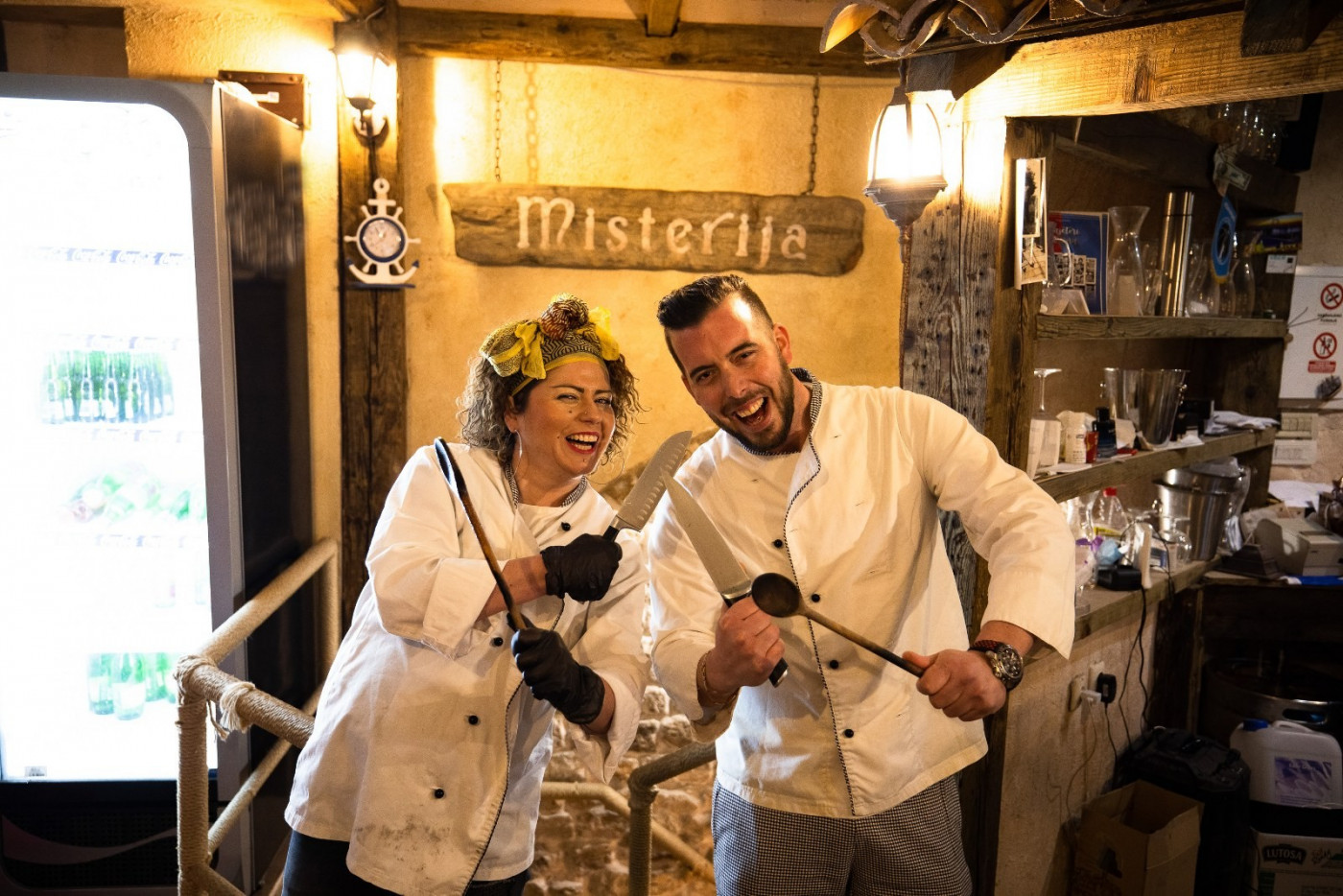
A tourist guide, Sanda Marnika, and a caterer, Dino Bašić, both from Zadar, have joint their love of cooking and together they have created a new concept at their tavern (konoba) in the very centre of the old part of Zadar, and gave it a name that speaks volumes about the concept, their idea and culinary commitment - "With a spoon." Although in the summer you will get good meat or grilled fish (gradela) at this tavern, in the winter they attracted their guests, mostly locals from Zadar, with hot cooked dishes. The selection of dishes they came up with on their menu from the rich tradition of the Zadar region is large, and so is the group of spoon dishes, but they prepare and offer about three to four dishes a day. That is plenty enough.
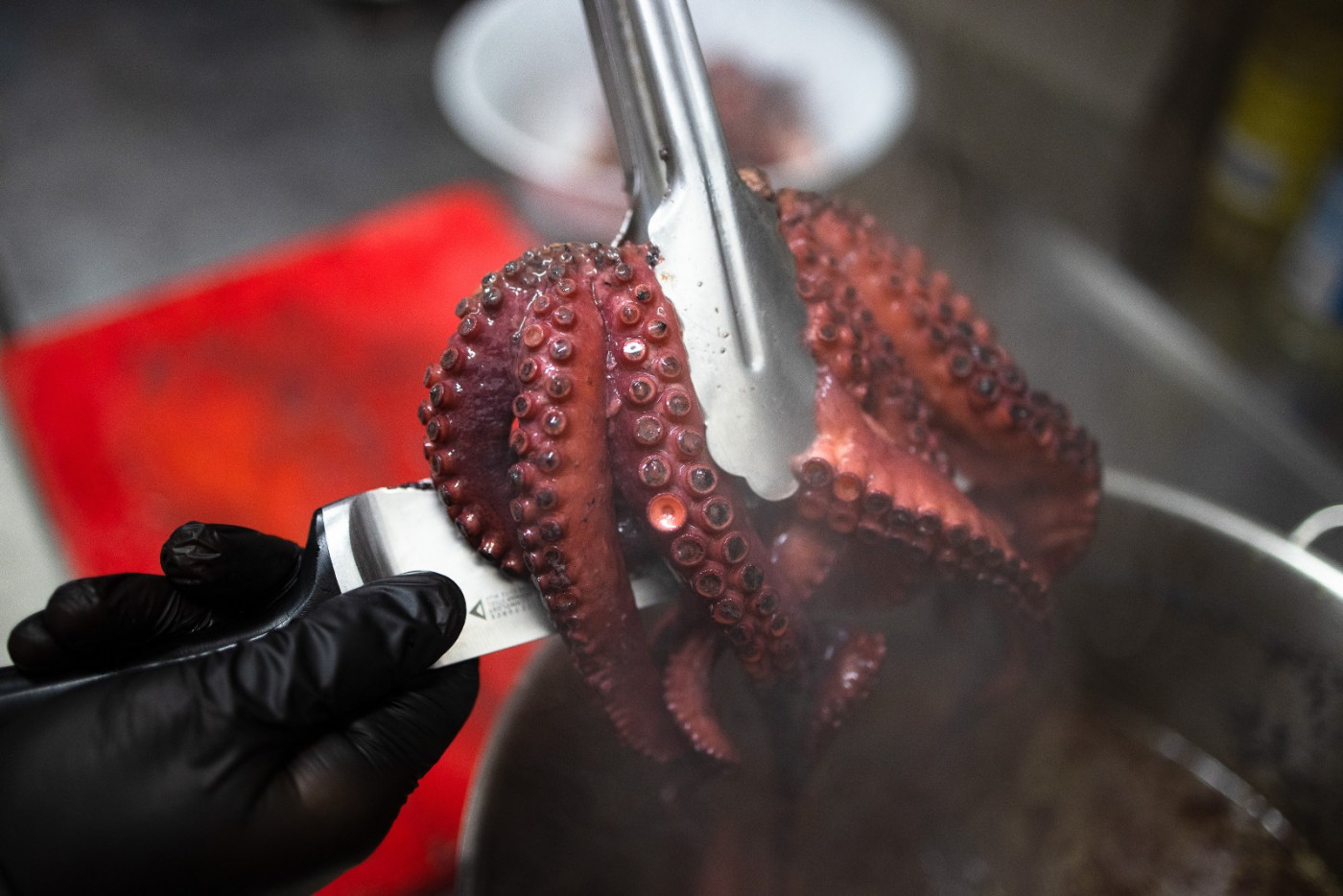
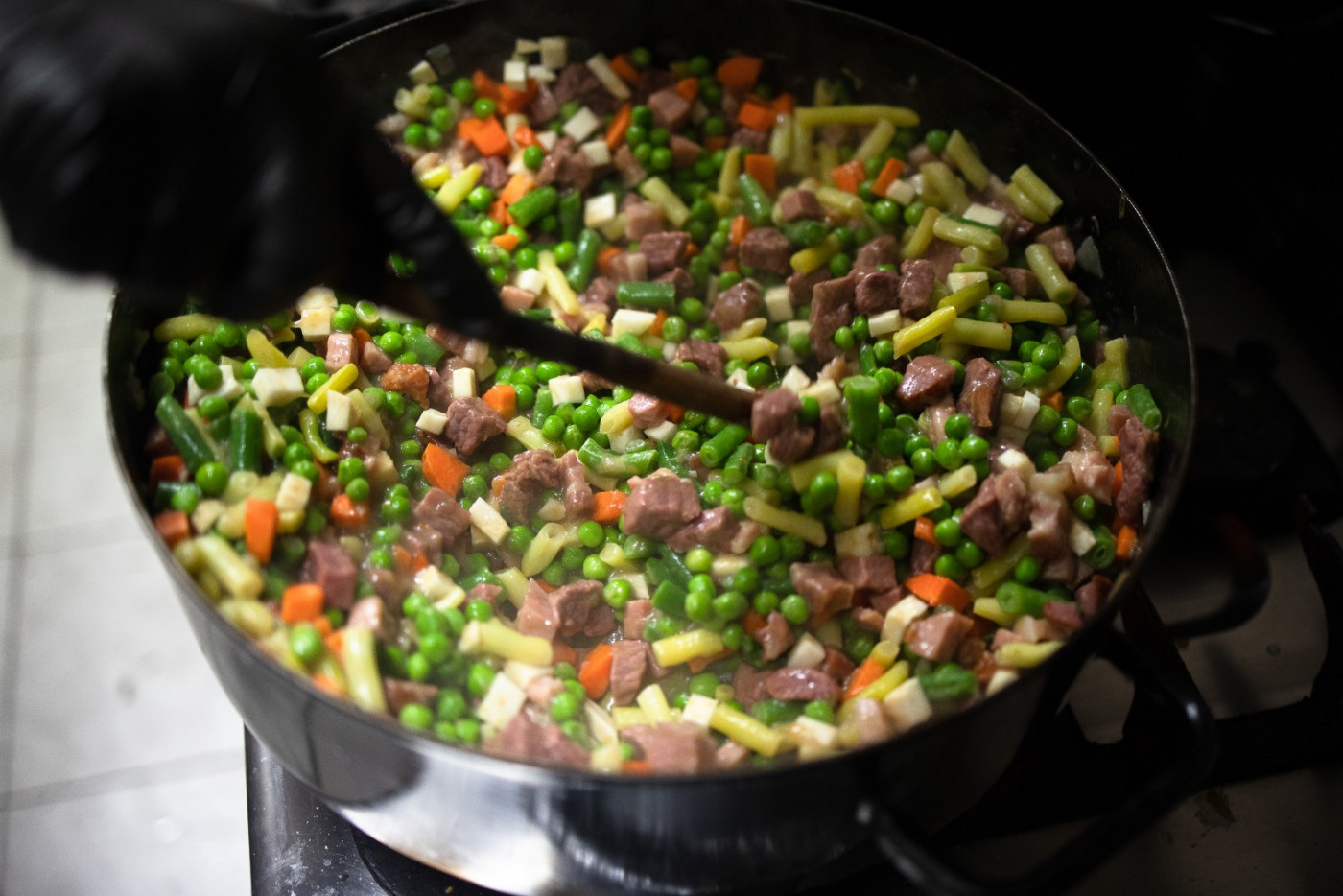
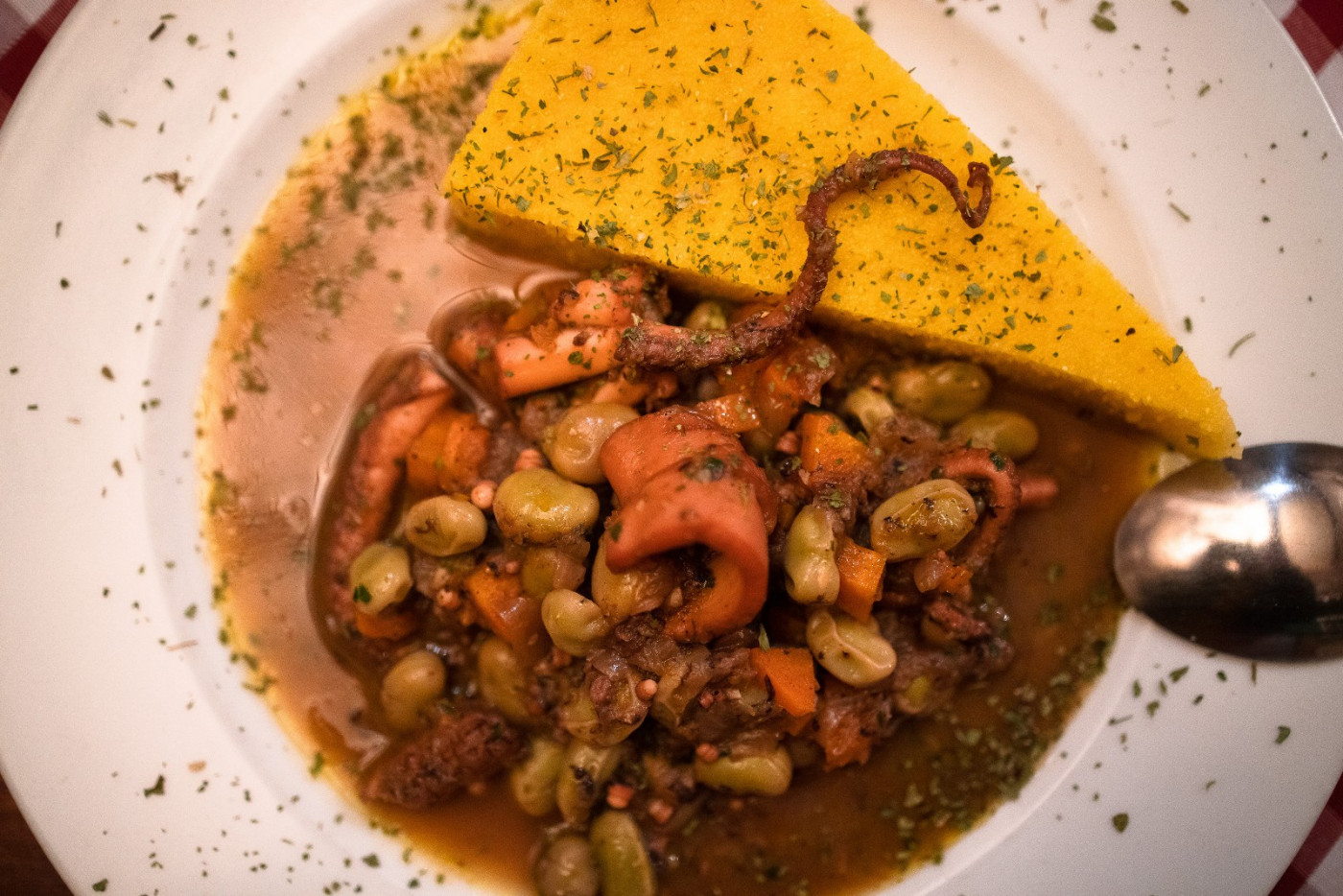
On the same day, Sanda and Dino always try to offer those dishes whose roots are somewhere in the rural part of the Zadar hinterland, as well as a typical dish for the cuisine of the Zadar islands. That was also the case on the days when paid them our two visits. We arrived at the right time because the four dishes we tasted, and before had followed their preparation, are typical representatives of dishes eaten “with a spoon”. On one stove there was a pot from which ragout with octopus and beans could be smelled, and on the other a maneštrun with three kinds of meat, green and yellow beans, and peas. The only thing these dishes have in common is the beginning – the frying of kapula (yellow onion), and later each dish takes its own course. Firstly, Dino boiled the octopus, then added it to the fried onion, and while the octopus was softening and releasing aromas, he added a little stock from the first cooking and some white wine. Broad beans and carrots with other spices (parsley, salt, pepper) rounded out the dish, which was then served on a plate with a piece of polenta with a pudding texture. Needless to say, that in this story as well, olive oil is an unavoidable fat and spice.
During that time, on a base of onions, leeks and carrots, Sanda fried (frižiti) three types of meat: bacon (panceta), dried pork shoulder and baby beef. Later, she added legumes, thyme and/or rosemary, water, a little white wine and a few drops of vinegar (kvasina) to the pot, to keep the vegetables fresh in colour and the food with a rounded out, full flavour. The author of this text was lucky and skilful enough to be the first to grab the plate prepared to be photographed, and to finish it, quite rudely and selfishly, to the last pea. And who wouldn't? It was noon, lunch time in Zadar, and the aromas and flavours alluring…
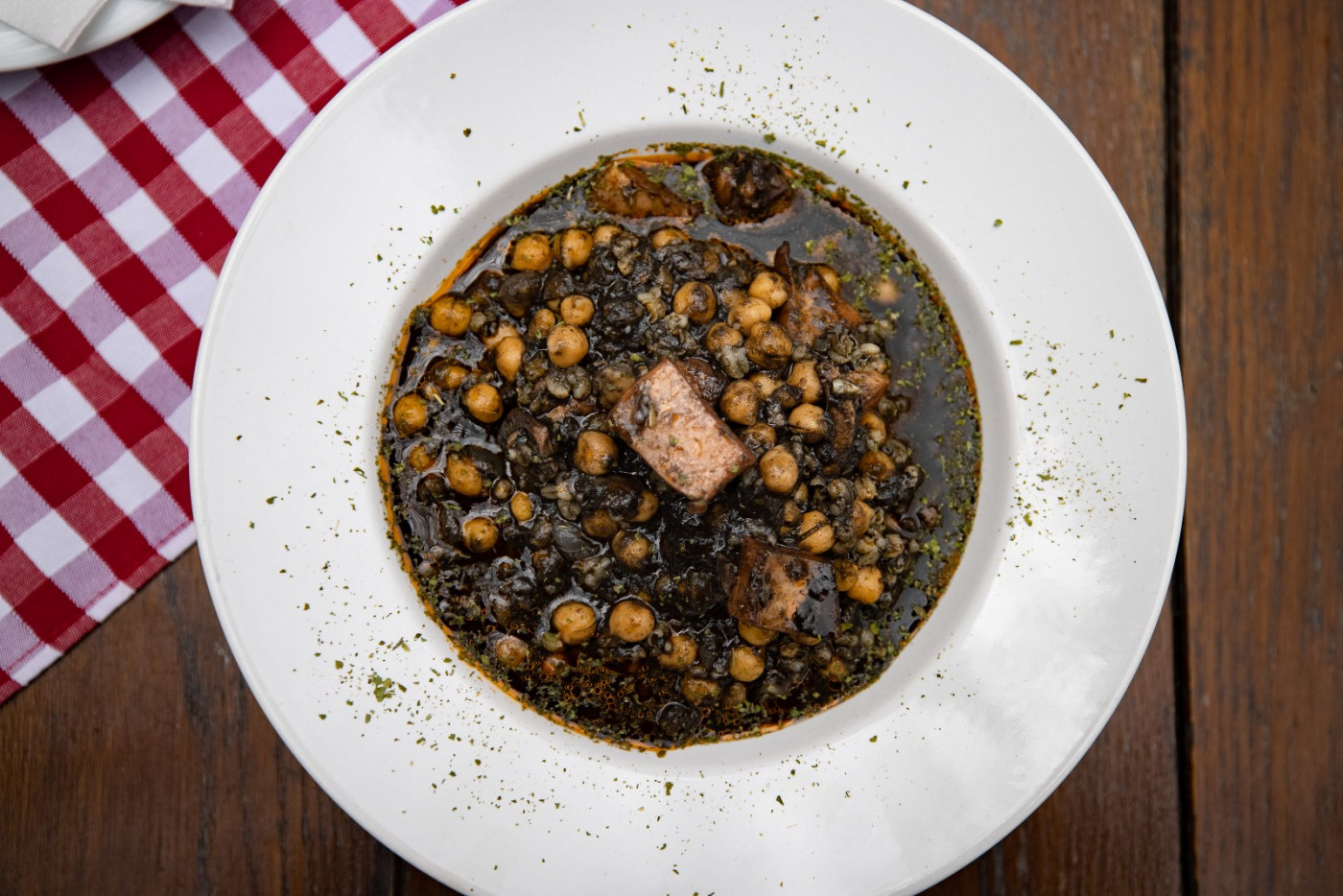
On the second day, Sanda and Dino combined a typical dish from Ravni kotari, Benkovačka vara (Benkovac is the "capital" town of Ravni Kotari) and cuttlefish with chickpeas (čičvarda), a common dish on the islands of Pašman and Ugljan, right across from Zadar. Vara (stew) from Benkovac is a mixture of several types of dried beans, such as white beans, chickpeas and lentils, but also cereals such as barley (orzo). The meaty ingredients of the dish are usually pancetta cut into pieces, but a piece of bacon or dried meat and fine pork head fat (guanciale) will also come in handy.
In another pot cuttlefish was cooking, once an underestimated cephalopod that local fishermen used to return to the sea in the days of good catch, because it was not profitable on the market. In the hungrier days and the homes of the poor, Miss Cuttlefish, however, became a usable and tasty food, and in winter, in combination with one of the legumes like nutritious chickpeas, it saved the hungry mouths of the island population. So, fortunately, cuttlefish dishes have been preserved up to this day.
Of course, the menu of Sanda’s and Dino’s “Na žlicu” Tavern is much bigger and we cannot even list all the dishes they prepare. They explained that they had decided on this concept of authentic dishes, because the tourists with whom they had been in daily contact for years during summer, asked exactly for that, something that was homemade and local and where they could eat it. And usually the reactions would be great, and comments like: "Thank you, we don’t have anything like this at home, it was extraordinary!"
So, it is up to you to decide when you come to Zadar: will you choose a bakery with some thawed, puff pastry that just looks nice, or will you opt for a plate of warm, genuine, aromatic food!
Schau das Video an
.
Möchtest du gern mehr wissen?
Vorschläge

Lifestyle, Neuheit
European Mobility Week 2020
17.09.2020.
Veranstaltungen, Gastronomie
Gastro Advent: This Year's Main Specialties, Part 1
03.12.2022.
Gastronomie
Gastro-Tour durch die Adventshüttchen in Zadar | Teil 4
02.12.2025.

Veranstaltungen
Exhibition Of The Most Controversial Artist In The World | Zadar Does Banksy
06.06.2023.