

02.02.2022.
Peka, the Baking Lid, and the First Oven That Has Survived on Today's Hearths
When the famous Dutch chef Jeroen Sportel, who has earned Michelin stars cooking at two different restaurants and who travelled “half the world” to meet local gastronomies, stayed in Zadar in 2018, he was fascinated by the taste of veal with potatoes baked “under peka”, with which he was treated by his hosts. That was the first time he encountered a dish prepared under the baking lid, and he is just one of the many guests of Zadar, who are delighted with dishes prepared in this rustic way.
Hermetically Sealed Oven
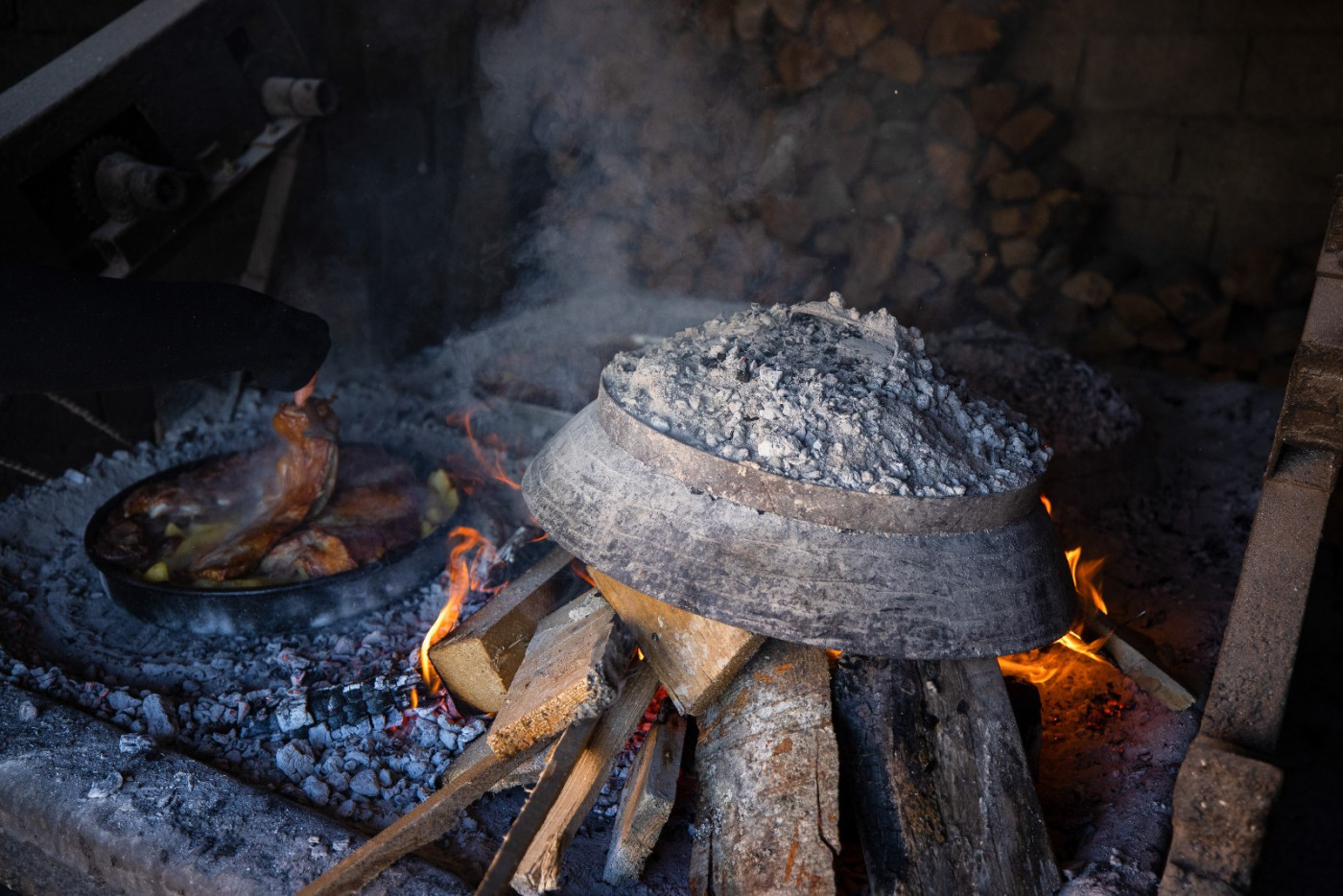
Peka (cripnja, čripnja) is an ancient bakeware that looks like a bell-shaped dome under which, on a suitable hearth, a shallow and wide baking tray with food that needs thermal treatment is placed. Before use, peka should be heated over the fire of the hearth, in order to achieve an even temperature of the base and lid, optimal for baking dishes. After the baking lid is placed over the food, it is buried under embers and ashes, which should completely cover the edges of the baking lid adhering to the base as well. Therein lies one of the most important secrets why food prepared in this way is tastier and more fragrant, and why their taste is so complete. Namely, that is how the entry of outside air into the baking area is prevented, and the food is cooked and baked all at once in its own steam, flavors and aromas, at a relatively high temperature, and in a hermetically sealed space.
One could also define this bakeware and technique as the oldest oven, marking the beginning of the development of food processing by baking. The oldest ceramic baking lids were found in Croatia on sites as old as 800 BC. The way that preceded the discovery of peka was to wrap the food, a piece of meat for example, in a thin layer of clay so that the roll could be pushed into a hole in the ground and covered with embers and hot ashes.
Originally, peka was made of clay, in moulds or on a potter's wheel, which is typical for all of the islands in the Zadar archipelago. The most famous potters of the area and the entire Adriatic are those from the island of Iž, and even today at the only souvenir- and workshop on that island, the Petrović family produces clay čripnje, along with other traditional ceramic handicrafts. The other variant of peka is made of metal, and it allegedly arrived to this area with the breakthrough of the Turkish conquerors. Today, the metal baking lid is more commonly used than the clay one: it is more suitable for occasional use, because it heats up much faster. The ceramic lid heats up more slowly, but in rural areas it was an integral part of the hearth, where a fire was always burning, so the baking lid was always warm and ready to be used.
The Only Old Way of Baking Bread
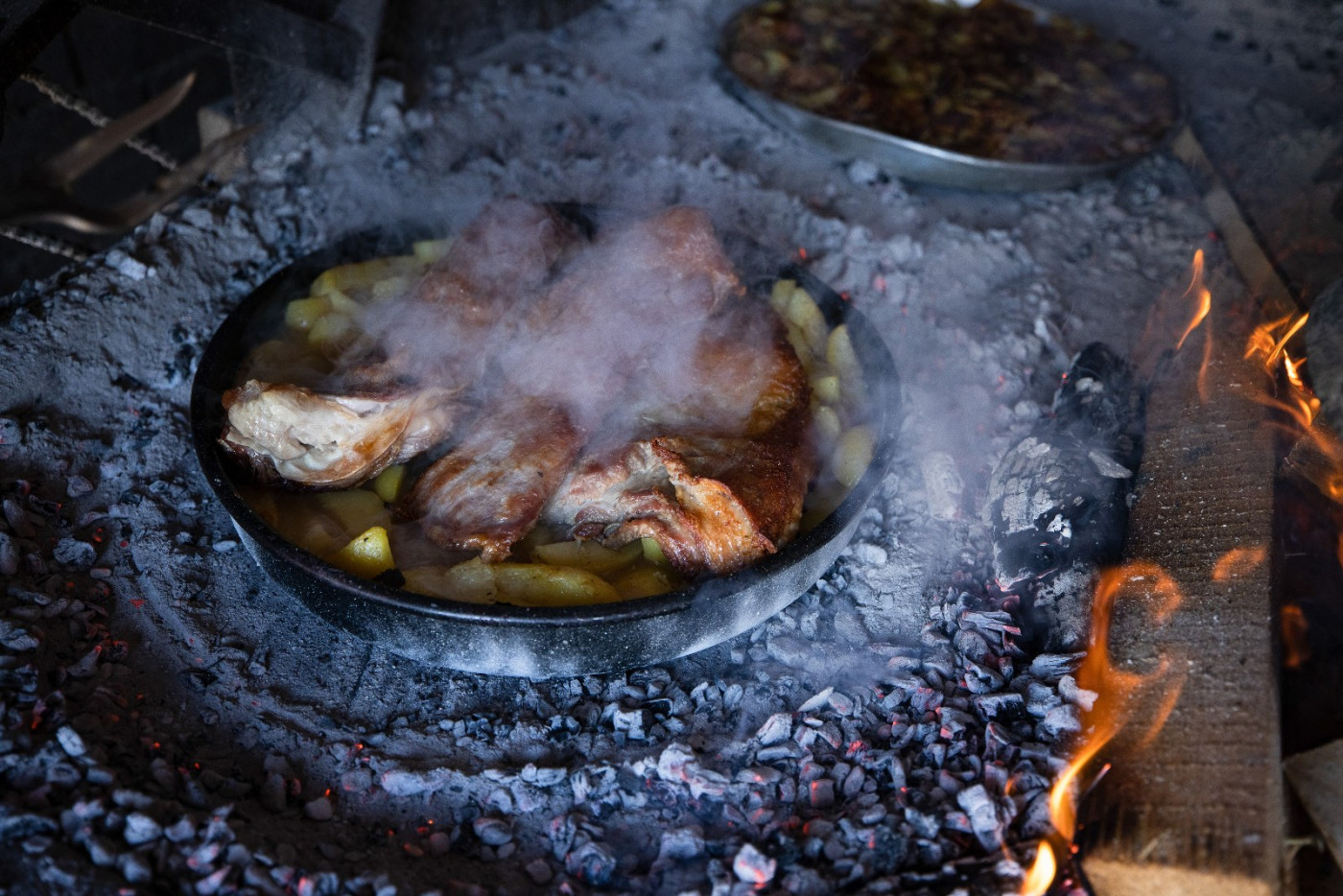
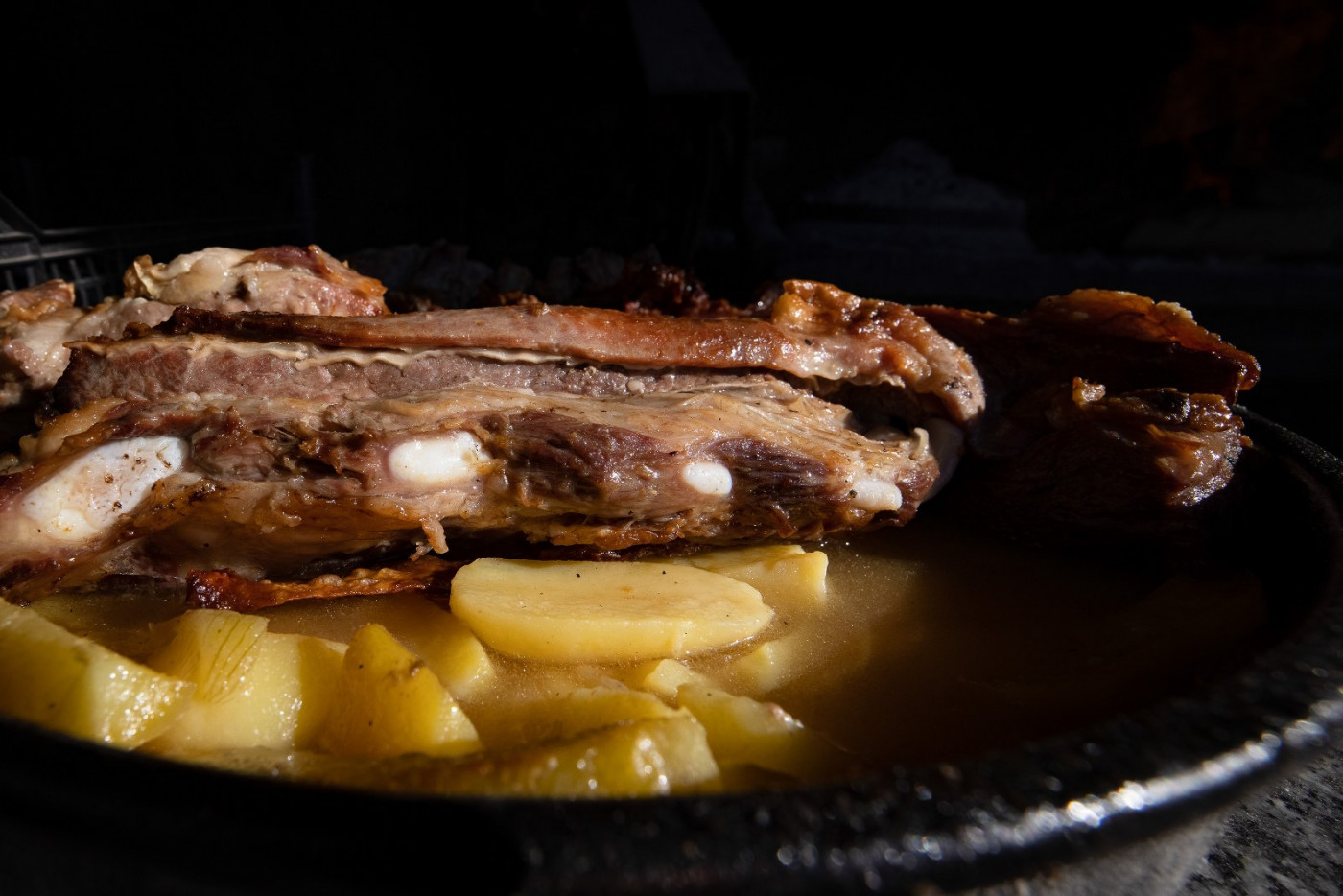
This bakeware was equally present in the entire Zadar region, on the islands and in the hinterland alike. Dishes from various ingredients are prepared under peka: meat - veal, lamb, mutton, young roosters (pulastar), turkey (tuka) and other poultry..., sea food - octopus, squid, cuttlefish, even fish, and once that was the only way to bake bread that would retain freshness and texture up to five to six days after preparation. And the famous cake from this area, prisnac from Benkovac, made of young cheese, eggs and clotted cream, was originally baked under the baking lid. Meat and fish ingredients are usually baked with potatoes, more recently with other vegetables, with relatively little fat, lard or olive oil, with minimal use of spices, only salt and pepper. Thus, the original flavour of the ingredient is retained, which should not be altered by anything.
It might seem that one does not need greater culinary knowledge to prepare a dish under peka. However, that is not the case. The skills of preparing adequate fire and embers, the experience of adding salt and rarely other seasonings, and culinary intuition are crucial, because during the preparation, the food is checked on once, maybe twice at the most. And not all foods are prepared for the same length of time, meat takes more time, up to two hours, and fish less, one hour at the most.
Even today, this method of food preparation is very popular and beloved in Zadar, and dishes under peka can be obtained at several Zadar restaurants. Although, in the development of Zadar after World War II, at the time of the new settlement of the city when the population from the immediate vicinity arrived from the islands and hinterland, peka was briefly forgotten, and for many it was only an integral part of the rural environment, and by no means the city life. However, as early as the 70s and 80s of the last century, new generations of Zadar citizens discovered that dishes prepared under the baking lid are tastier than those prepared in electric ovens or in other way. Peka then started to slowly return to the new backyard fireplaces (komini) in the city, but to catering facilities as well.
Unique Codfish Prepared Under Peka at the Cult “Sabunjar”
Among the first restaurants in Zadar to include dishes prepared under peka was „Sabunjar”, which has been working continuously since 1983. The restaurant owner and head chef Anka Kurta, especially appreciated by guests and colleagues from the same industry, composed the offer of her restaurant almost exclusively with dishes that are part of the daily, usual diet of the domicile population. Over the past decades, this approach has proven to be a complete success, “Sabunjar” is always full, especially during the plentiful first meal (known in Zadar as marenda) and afternoon lunch, and it has gained almost a cult status of good local food.
The “Sabunjar” Restaurant serves beans with dried meat, beef goulash, tripe, boiled lamb or beef (lešo), sour liver (veneciana), pašticada, stuffed peppers and sarma, patties in sauce and game dishes, octopus and black cuttlefish risotto... Nevertheless, the main specialties of “Sabunjar” are dishes prepared under peka, veal and lamb and young rooster and hen from free range farms. But, in the spacious roastery of “Sabunjar” restaurant, where a larger amount of wood is always burning, a rare specialty from Zadar is prepared too: dried codfish under the baking lid.
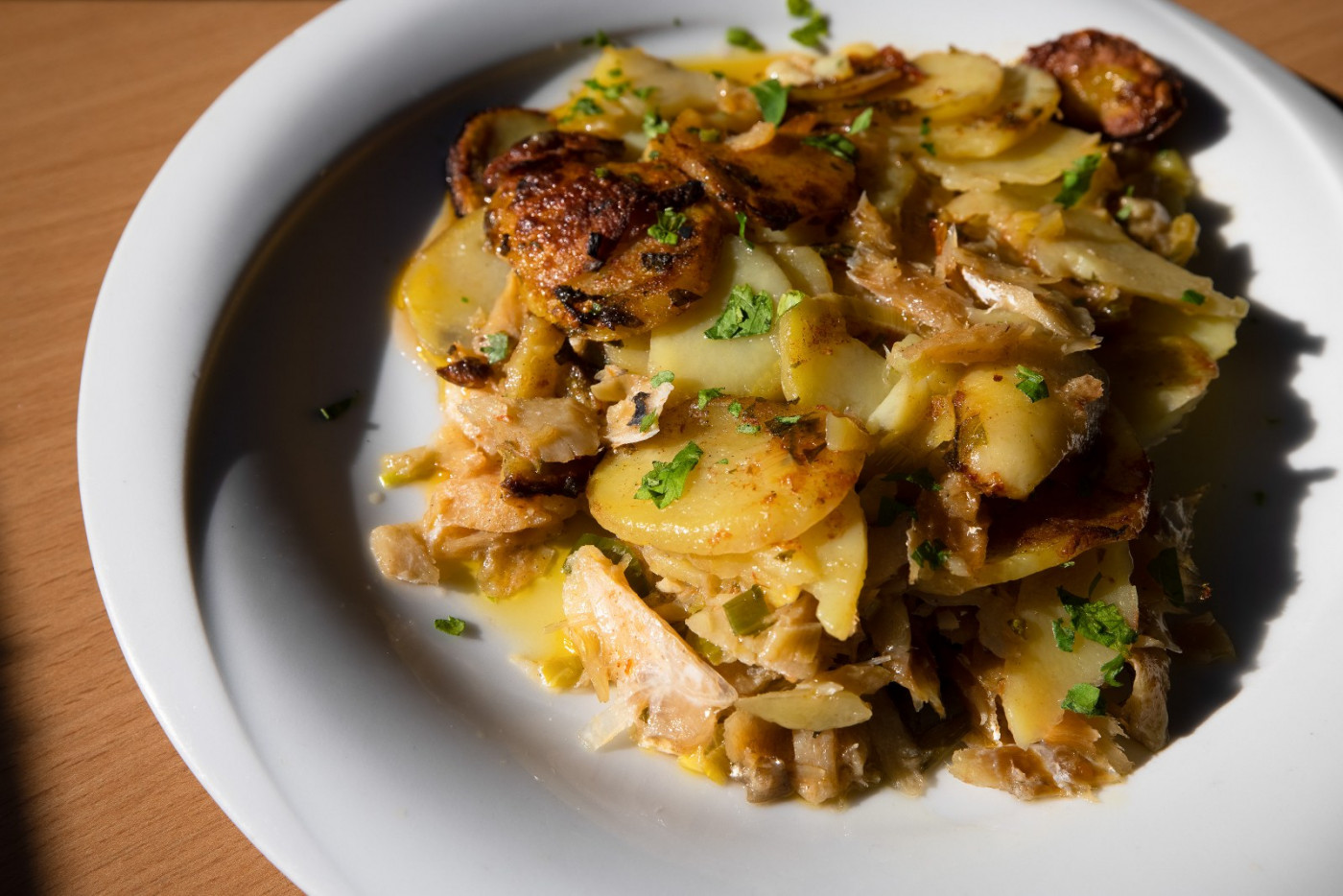
The dish made of this cold sea fish is of a more recent date, but it quickly became a distinct Zadar specialty, probably at a time when the usual ways of preparing codfish became a bit boring. Basically, preparing cod under the baking lid is simple, with potatoes, olive oil, onion, salt and pepper, a little white wine and doused with previously cooked soup of initially soaked dried fish.
Such baked codfish with potatoes is a dish that is hard to find in the usual restaurant offer in Dalmatia, so that makes the one from “Sabunjar” even more valuable – it is the ultimate gourmet experience you simply must try.
Guarda il video
.
Vuoi saperne di più?
Proposte
Gastronomia
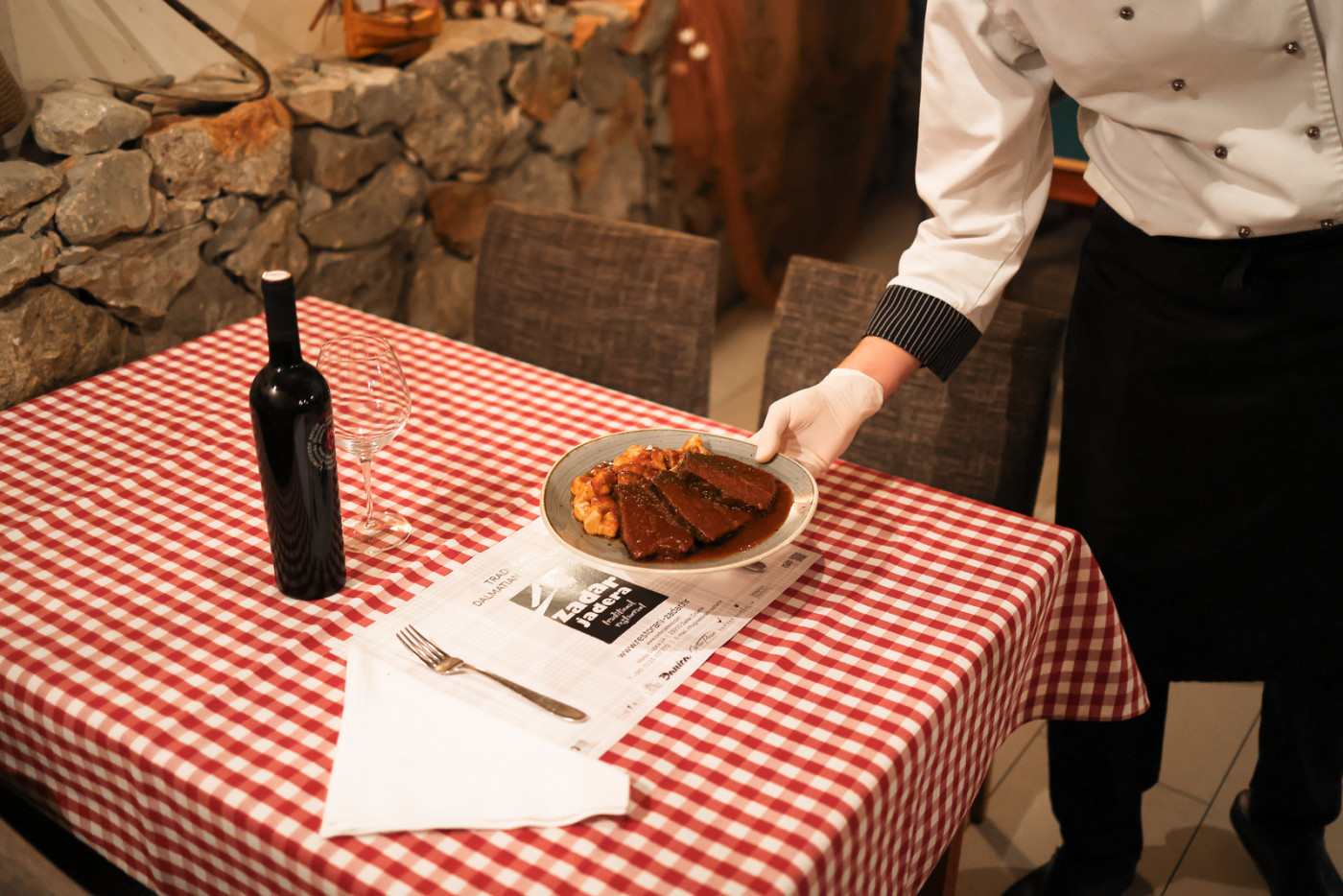
Pašticada, the Most Famous Dish of Zadar and Dalmatian Cuisine
05.01.2022.
Eventi, Gastronomia
The Vinum Association Assessed the Best Dishes and Beverages | Advent Zadar
16.12.2022.

History, Lifestyle
Interesting Facts About Zadar
20.10.2020.
Novità
The Proveditor's Palace “Cultural Attraction of the Year”
24.10.2022.