


01.12.2020.
Dalmatian Turkey – a Feathered Ruler of Christmas Lunch
Very soon after arriving in Europe from its native Americas, sometime in the 16th century via merchant ships of the first Atlantic sailors, a large bird from the family of fowl named turkey (tuka, puran,ćurka) also landed in Dalmatia. It first reached the villages around Zadar, more precisely a sizeable fertile area called Ravni kotari.
In just a few hundred years, the Dalmatian tuka has become the ruler of backyards on large country estates and green fields and pastures where flocks of them roam freely in search of good range and proteins from the soil. It has also been the ruler of festive feasts like at Christmas.
It enjoys free-range farming
Due to its compact and tasty meat, Dalmatian tuka is a particularly prize delicacy in Zadar and places around. It is an inevitable part of the rural setting of this area. The eating habits and traditions of Zadar and its residents have always been closely connected with their rural environment so tuka (deservedly) has entered the circle of top Zadar gastronomic pleasures that it simply cannot be avoided here.
Dalmatian tuka is still not recognized as a special breed, unlike its cousins - Istrian puran and Zagorje purica. However, scientists have found that the Dalmatian tuka differs from these two breeds in several characteristics. Primarily because it is significantly smaller, so even the largest male specimens barely reach a weight of over seven kilograms. It is then different in terms of the ratio of individual body parts, and mostly by the method of breeding and nutrition. The owners only partly feed the Dalmatian tuka with cereals and corn, the rest it provides by itself - enjoying moving around freely and eating naturally rather than being kept in a restricted space. Precisely because of this constant movement, its meat is more delicious and more substantial than that of its fattened relatives from intensive breeding.
Tuka cooked in a way that we will describe later is the main star of the festive lunch for the major Christian holiday - Christmas. And not just because in December its meat is the tastiest. According to tradition, turkey meat should be eaten for Christmas and thus leave everything bad in the disappearing year, just as this black bird (although sometimes wholly white or brown) leaves the searched land behind. And pork should be enjoyed during New Year's Eve celebrations - the pig always routs forward and symbolically opens new paths, new hope.
Tuka ispod peke – the inevitable delicacy of Zadar and its region
In Zadar and its region, we cook turkey meat in several ways. If we boil it, we will get top quality soup and delicious, soft cooked meat. We also prepare it in risotto or in a Dalmatian goulash called tingul, but we roast it either in the oven or, significantly larger male specimens, over an open fire, on a spit.
However, according to many, the best way to prepare tuka is to roast it under the baking lid. Peka is, at the same time, a cooking tool, but also a way of preparing food. It is a large, formerly ceramic, and today mostly metal dome-shaped lid, large enough to cover an oval roasting pan with food which is placed on a previously heated surface. The baking top is then covered with warm ash and live coals so that the ash does not let outside air into the inside of the baking lid. The food is cooked and roasted at the same time in its own aromas and juices, as well as the fat and seasonings we added.
This method of preparation is ideal for Dalmatian turkey meat, which gets slightly softened under the baking lid.
Restaurant "Riva Dalmacija" at the very entrance to Zadar, on the Adriatic Highway, is a place where its owners, the couple Dajana and Ante Mamut with their team have been preparing for years traditional, mostly meat specialities of this region. Their offer is mainly based on conventional foods, and Dalmatian tuka is the main attraction of the menu in November, December and January. Ante explained to us how it is prepared in his restaurant:
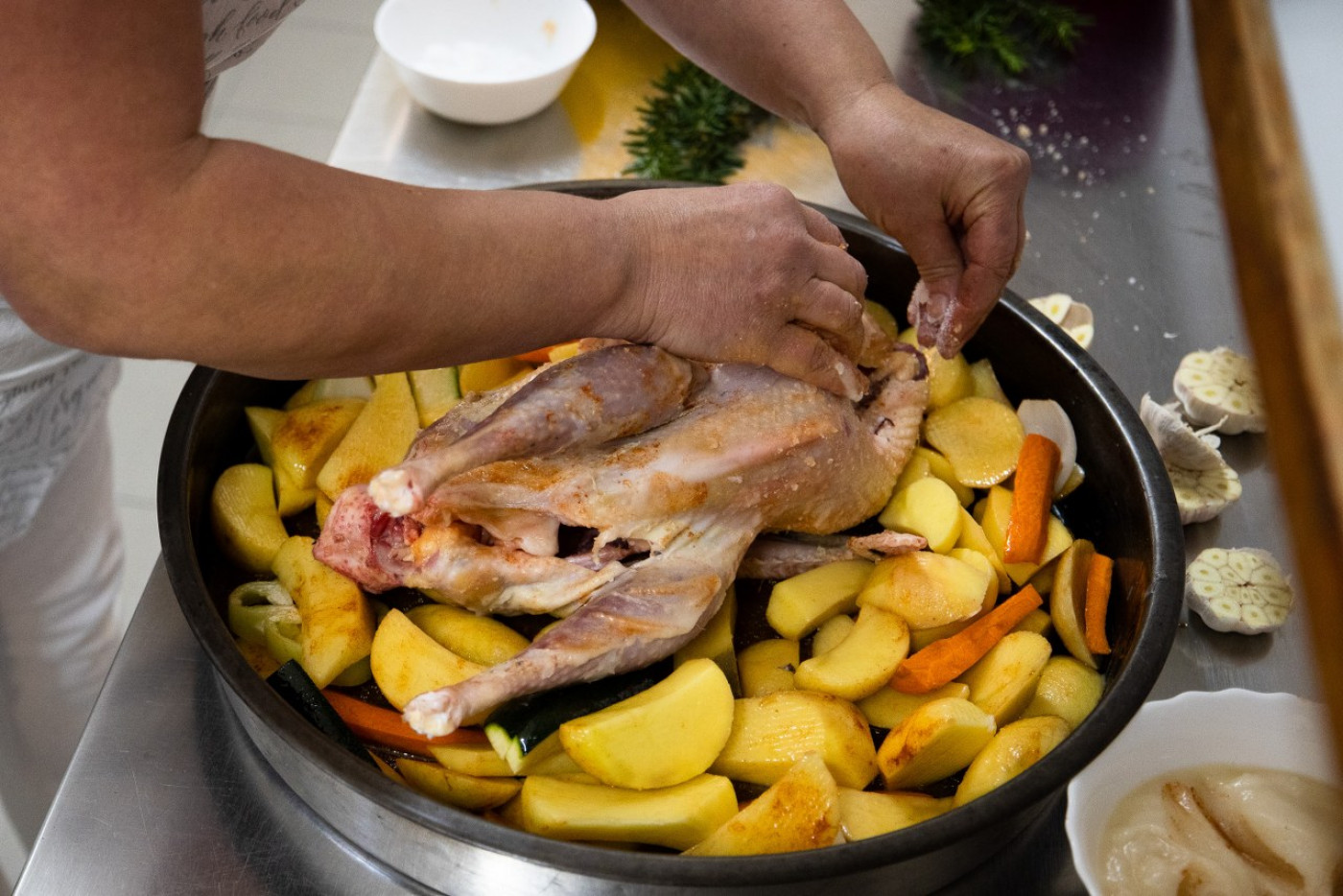
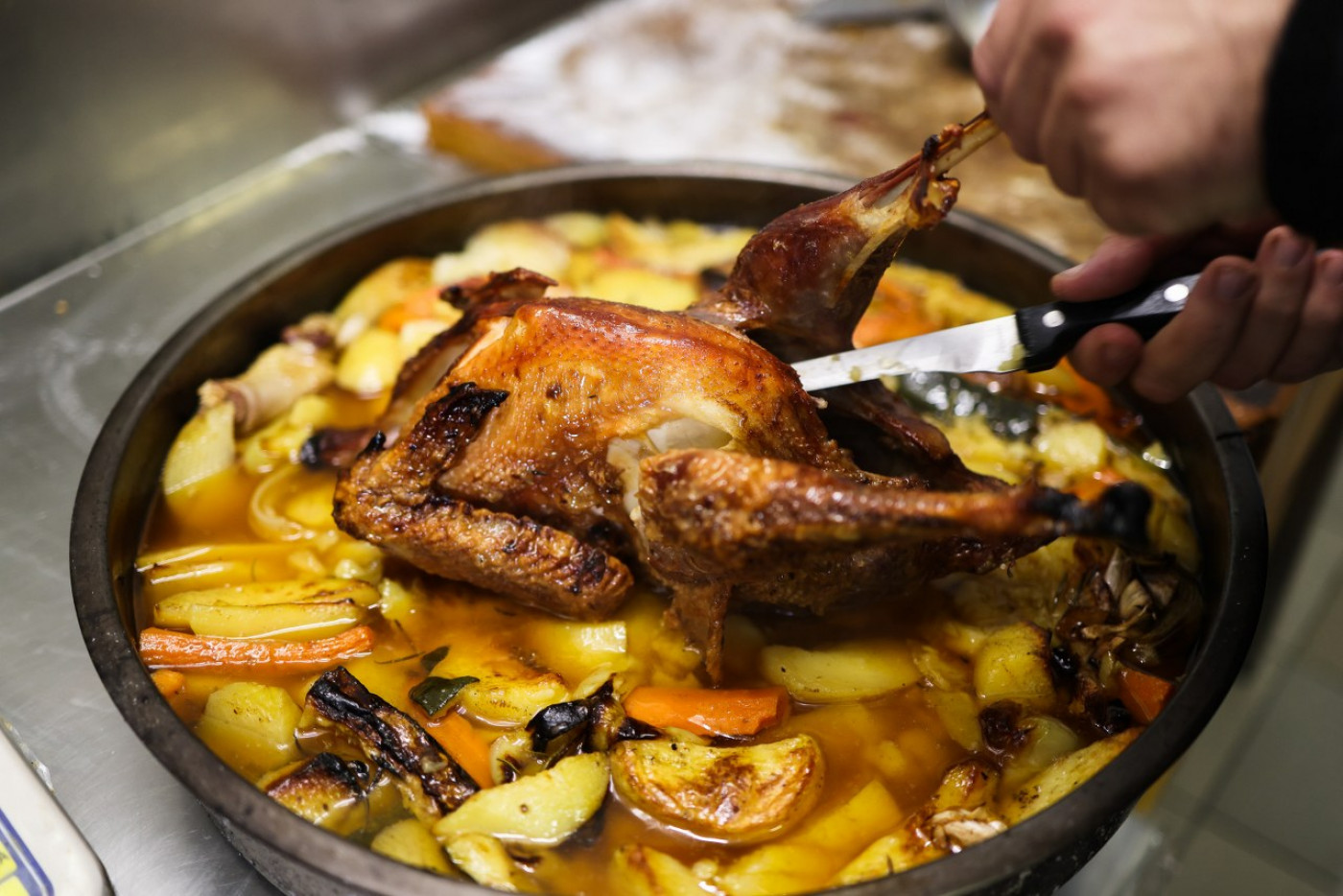
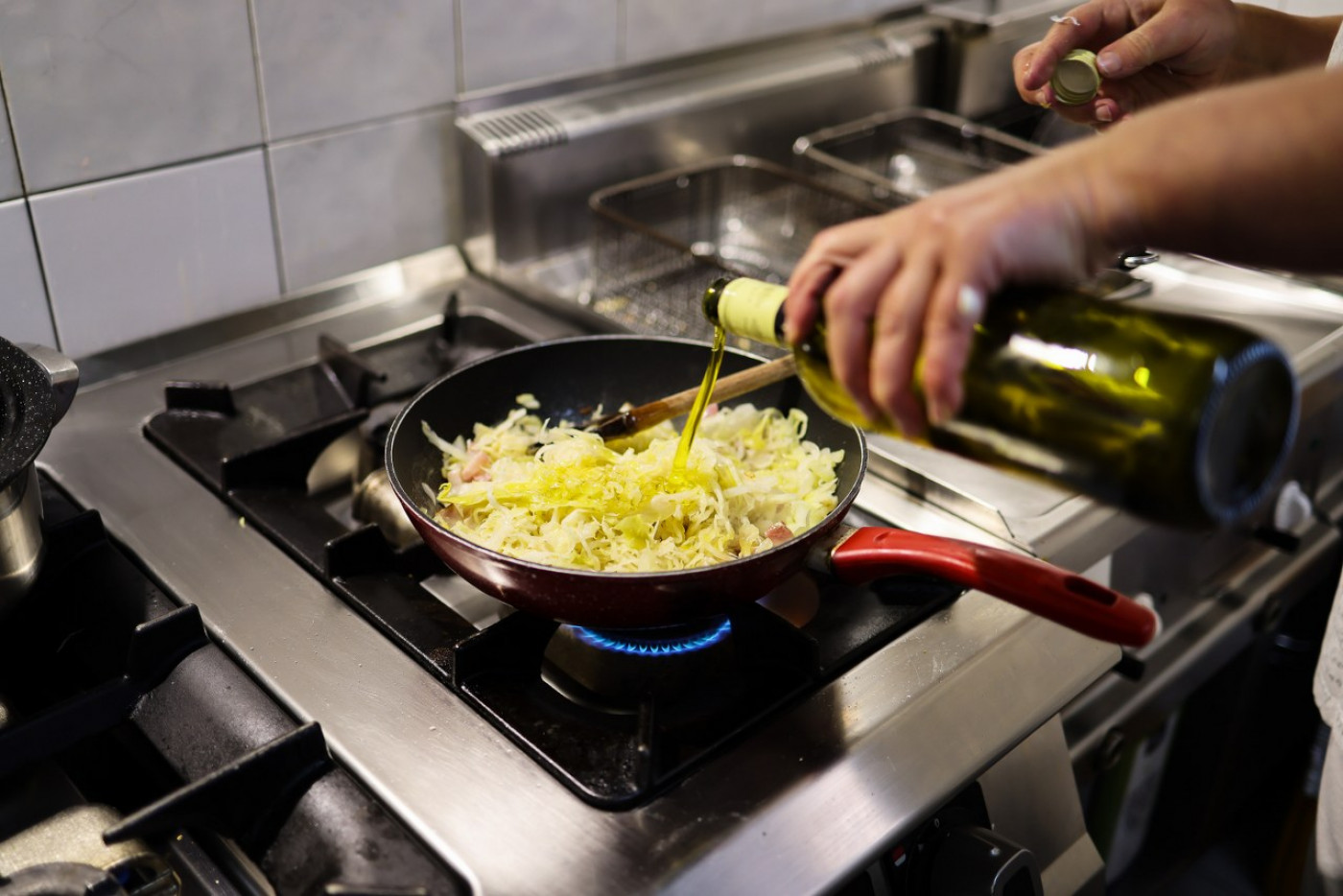
- It is actually straightforward. Place the whole turkey in a roasting pan, season it with salt and pepper, baste it with pig-fat, and place potatoes cut into larger pieces around it, along with vegetables – an onion, zucchini, a green pepper. The turkey is then roasted under the lid for about two, two and a half hours, to be exact, about an hour per a kilo of weight with one to two checks for turning the turkey. Live coals must be neither too weak nor too strong. We serve the carved pieces of tuka with roasted potatoes and vegetables, and our obligatory salad is sauerkraut, which we produce ourselves - said Ante Mamut.
Guarda il video
.
Vuoi saperne di più?
Proposte
History, Lifestyle
UNESCO Zadar City Walls, Not a Closed Museum, But a Place to Gather and Enjoy
04.07.2025.
Eventi, Sport
Wings for Life World Run Returns to Zadar
24.04.2025.

Eventi
Pablo Picasso’s The New Beginnings Exhibited in the II Palaces
20.06.2022.

Eventi, Novità, Sport
Zadar is the best, Zadar is Famous – Song & Video Spot Decicated to Zadar Sport
29.11.2022.