
28.12.2021.
Pork is an Unavoidable Culinary Delicacy in Hundreds of Dishes
Consumption of pork is deeply rooted and common in the daily diet of the population of Zadar and Dalmatia. This food is present in various forms in hundreds of dishes of this area, and winter is the season when this type of meat is used often and abundantly. Roast pork is an almost unavoidable part of the festive New Year's Eve dinner, and customs related to the tradition of pig slaughter (kolinje) are still present in this region.
The custom of preserving almost all parts of a pig for a long time in a way that certain meat parts are salted, smoked and dried, survived in specialized meat curing and prosciutto-making facilities. The past need arising from poverty to preserve, use and keep every part of an adult pig, has left a multitude of culinary delights, of which the Dalmatian prosciutto, salted, smoked and dried hind pig leg, is just one of the most prized.
Lard - healthy fat that you cannot live without
These culinary habits have survived in Zadar as well, regardless of the fact that pig farming has almost completely become non-existent in this area. Pig farming was omnipresent in the entire Zadar region, both in the hinterland and on the islands, on rural family farms, to which several specimens of pigs provided meat meals throughout the year. Lard was the most important fat (along with olive oil) used in cooking, suckling pigs were roasted on particularly festive occasions, and the best pieces of precious cured meat were kept for the most esteemed guests.
Today, in Zadar and its region, pork, even that for the production of cured delicacies, is procured from northern and eastern continental parts of Croatia. Even Dalmatian prosciutto, which bears the mark of Protected Geographical Indication, is mainly produced from the meat of pigs farmed in the continental part of the country. This may seem strange, but it is not - the specificity and special value of this delicacy is not basically related to the breeding place of the animal, but to the method of production. What makes Dalmatian prosciutto different and highly appreciated is the traditional way of its production. Apart from the special way of cutting the pig’s hind leg, what is also specific is that in the process of drying, smoking and maturing only one spice is used, and that is sea salt. The aroma is given by smoke from Mediterranean trees such as spruce (šmrika), and drying in cold and dry Dalmatian wind, bura, ensures safe preservation.
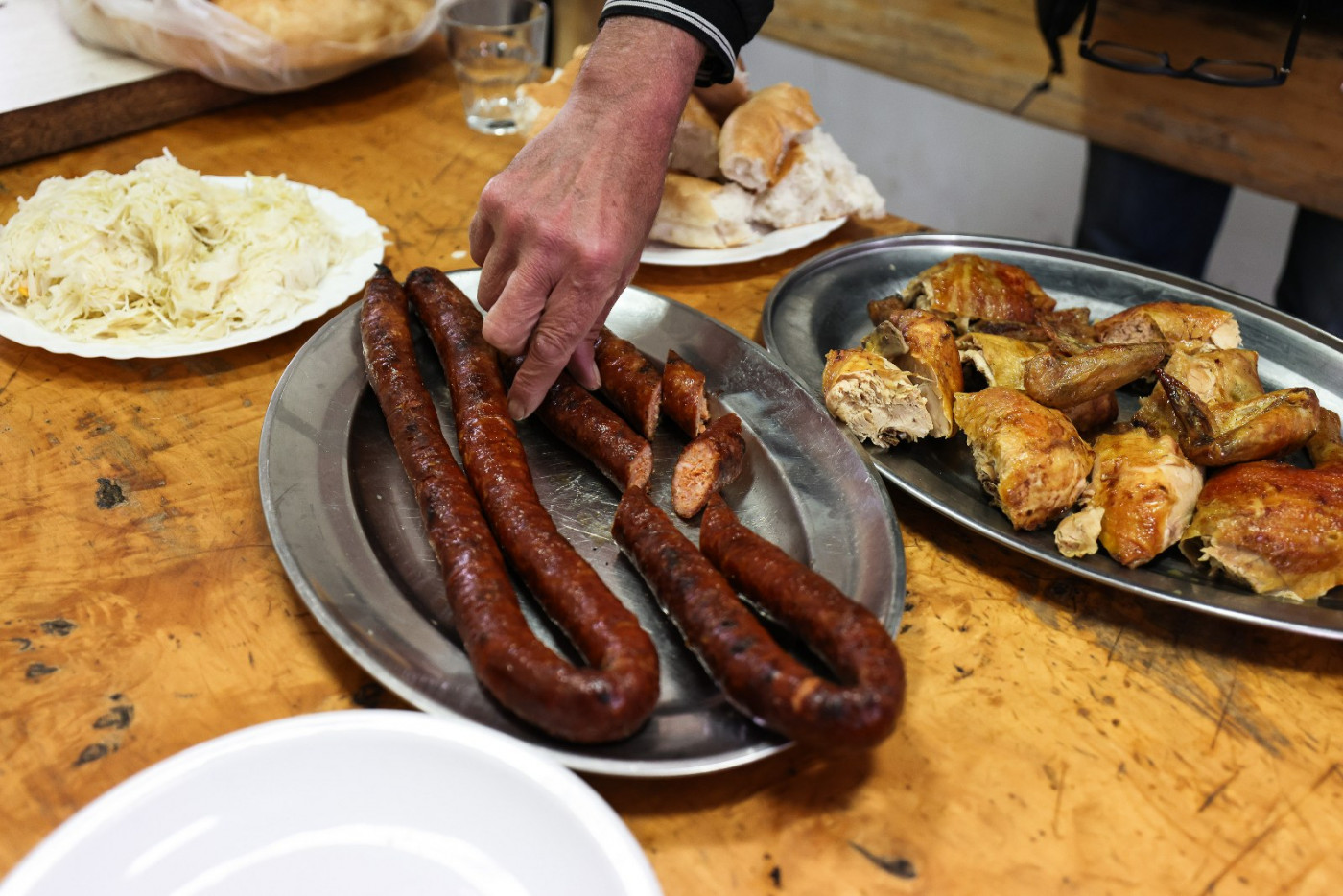
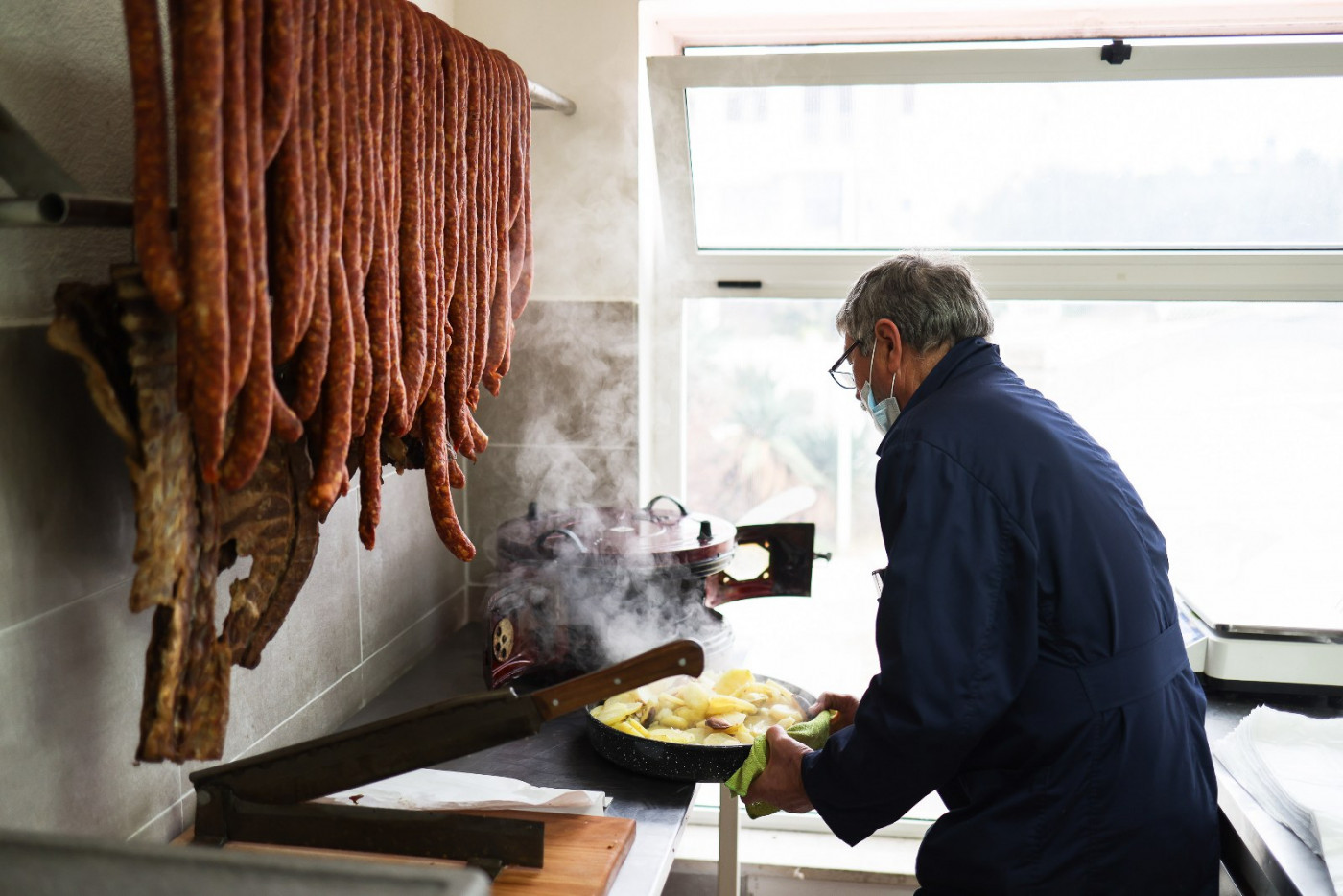
In addition to prosciutto, other pork products are still in demand today. These are primarily pancetta, belly cuts dried like prosciutto, pečenica, shortly smoked and dried pork loin, and divenica, also smoked and shortly dried sausage, for which there are many recipes, but basically it is seasoned only with salt and pepper. Very often, pigs’ head meat and fat, bacon, bones, ribs, feet, etc. are used and dried. These are all parts that will end up in stews and maneštruni, with beans or just boiled potatoes, as a simple meal. Sausage prepared in the way of the Zadar hinterland, from pork blood and corn flour are called krvavice, they are smoked shortly and salty, and they represent a top culinary delicacy for connoisseurs, either cooked or fried. This sausage has its own version on the Zadar islands, which is completely unusual, because it is sweet as a cake and stuffed with raisins.
Spit roast facility owned by a boxer, Dragan Vidaić - a temple of delicious pork snacks
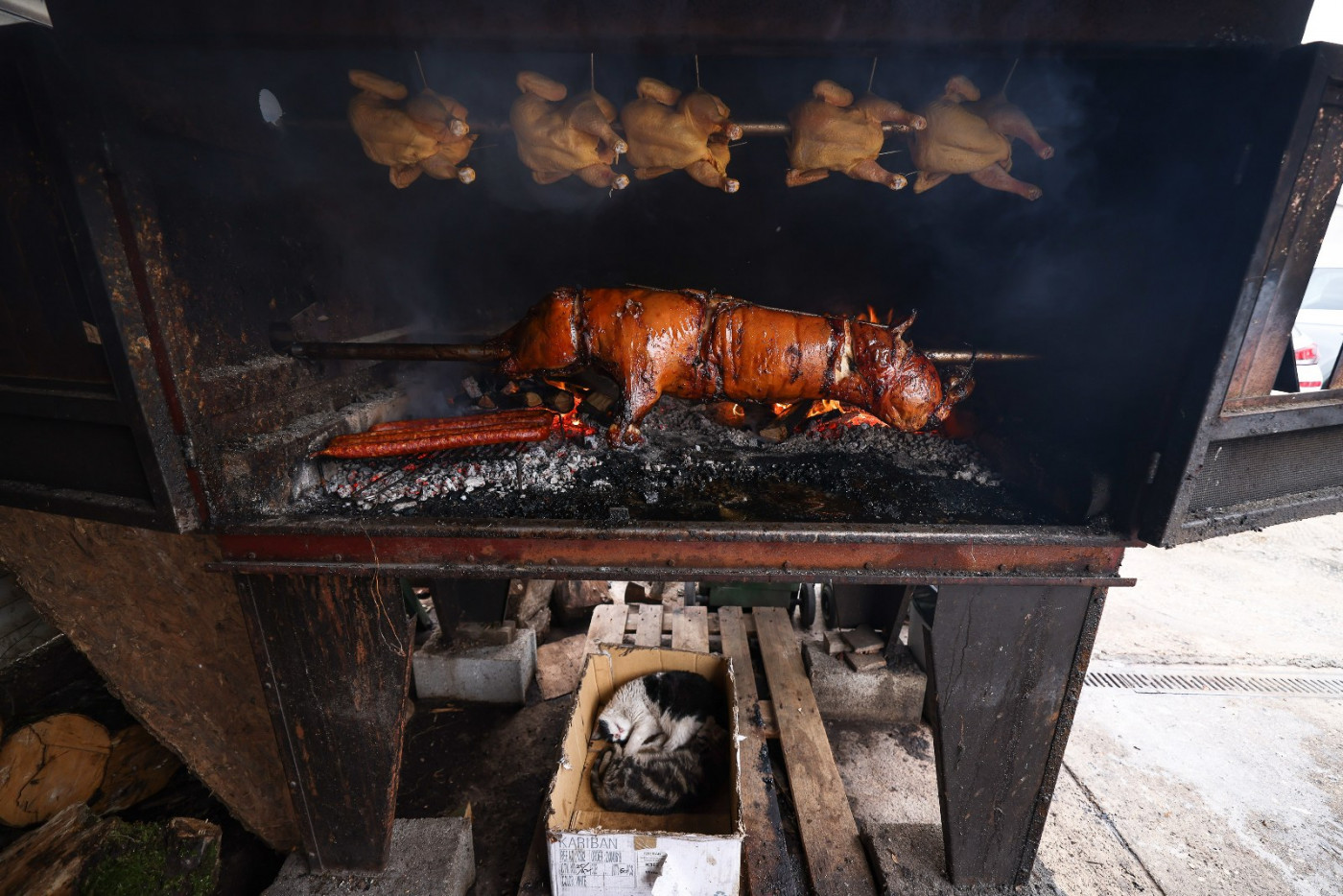
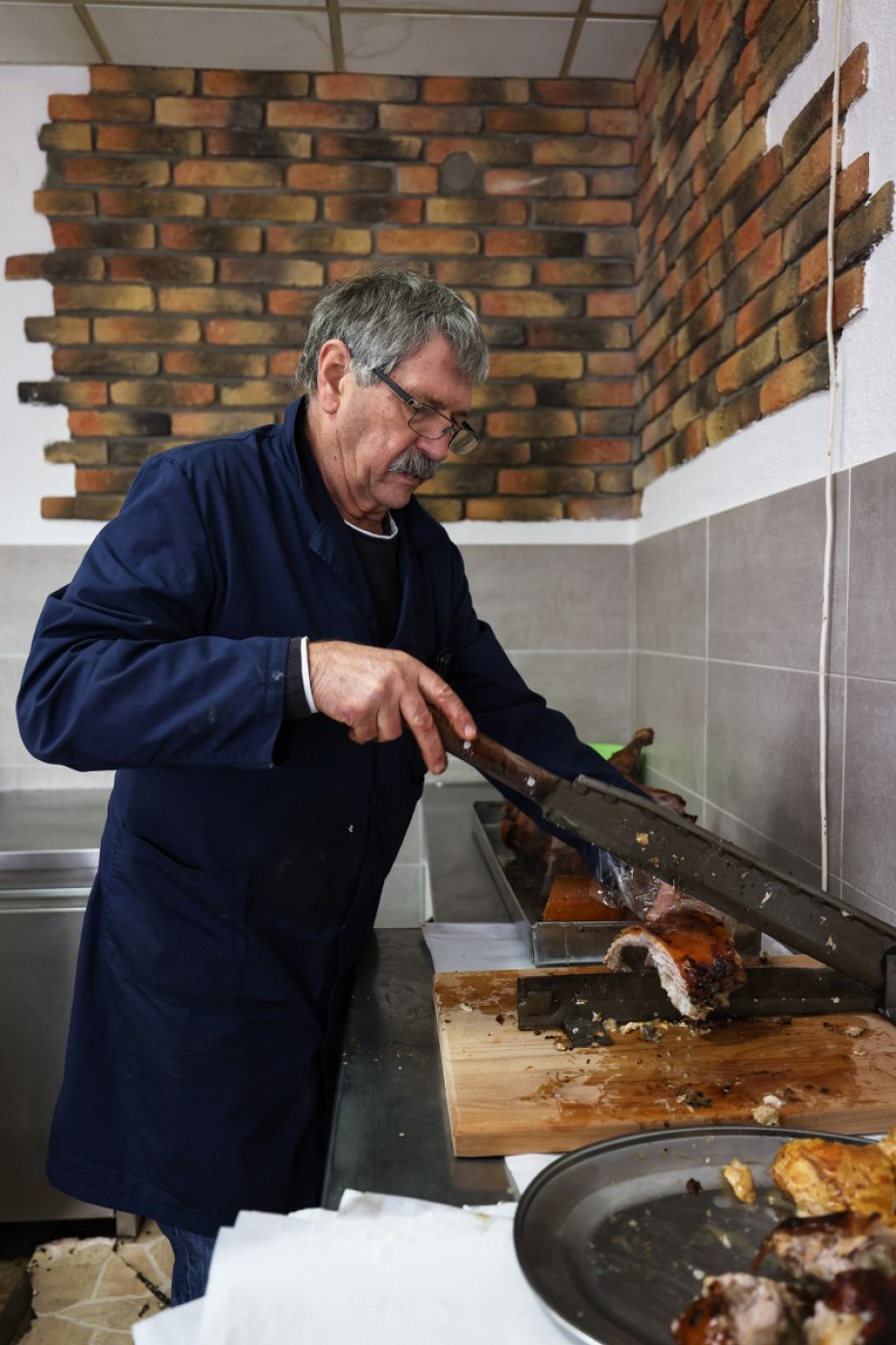
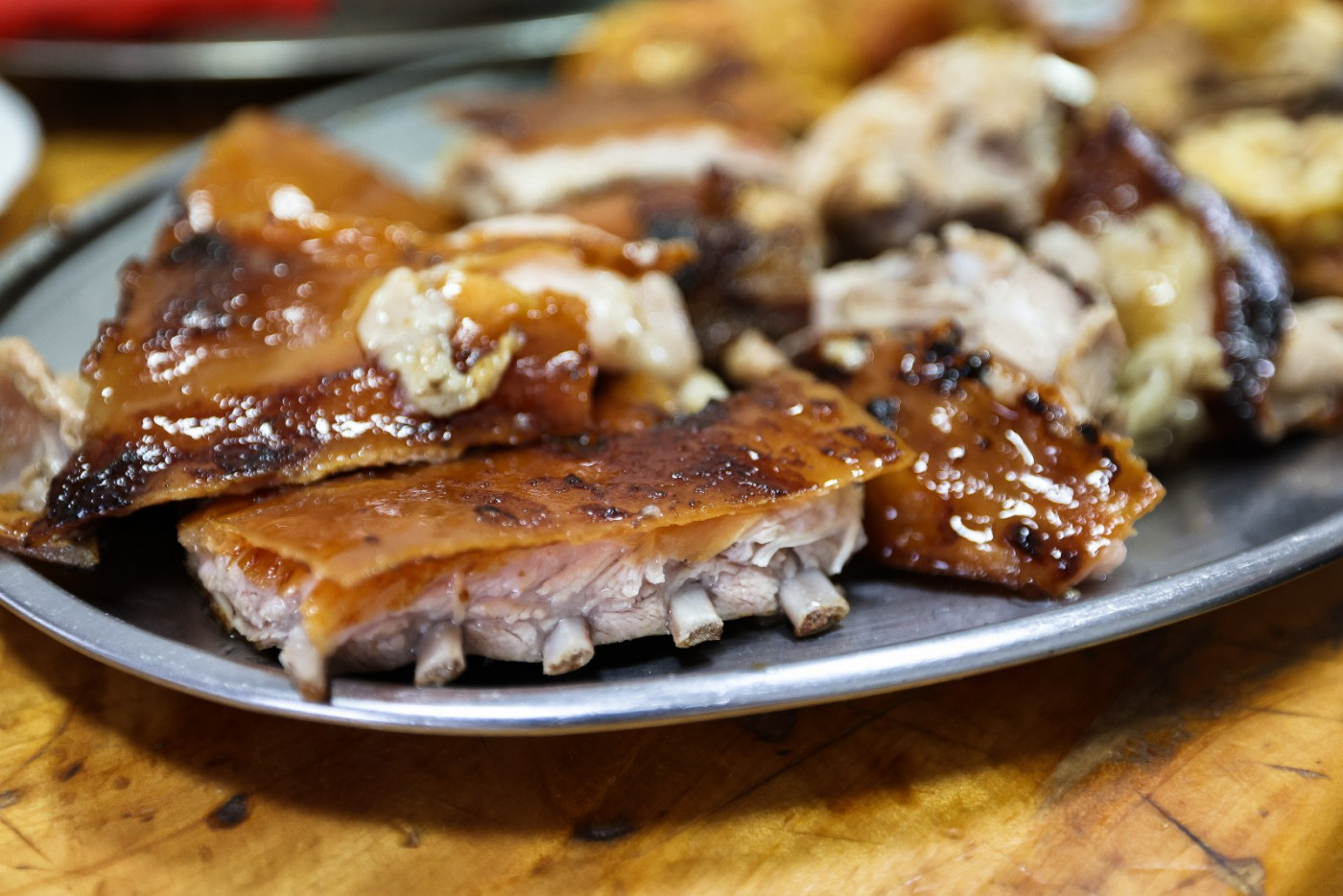
Some of the listed products can be found on the menus of Zadar restaurants, and some only in specialized places, like the butcher’s or small delicatessens. There are a number of such places in Zadar that we call pečenjara (spit roast facility). These are small neighbourhood shops where whole specimens of a young pig, a suckling pig, are roasted. Similar to a lamb, a young specimen of the Dalmatian sheep, pramenka, the cleaned animal is placed on a long thick spit, seasoned only with sea salt and roasted over an open fire for about two hours. Once roasted, the pig is cut into smaller, consumable pieces, and the customer will buy the desired amount, take and consume it at home or elsewhere.
The famous boxing coach and a former butcher, Dragan Vidaić, has had such a facility at Put Bokanjca in Zadar for years. Pečenjara Vidaić is conceived as a neighbourhood shop, but tourists often come here eager for gastronomic pleasures, which they will not find in restaurants from the first line of the tourist offer. In addition to spit roasting and selling piglets, but as part of the facility, he opened a small shop with dried pork delicacies such as sausages, bacon and blood sausages. Every day Vidaić cannot even offer the entire planned range of products, because the demand is greater than the supply he can provide. He procures top-quality pork from small farmers around Bjelovar, Koprivnica, Ludbreg and Čakovec, in the north of Croatia, who promise quality, but the production and curing are organized in cooperation with butchers and small curing facilities in the vicinity of Zadar. Around New Year’s and later in the winter, Vidaić's pečenjara and shop have their hands full, many passers-by will be attracted simply by the sight of a suckling pig roasting by the fire and the smells of dried delicacies spreading from the shop.
For tourists looking for original local delicacies and a place open primarily for the locals, pečenjara like Vidaić's is a real little culinary gem.
And in another part of Zadar called Bili brig, a "Crispy" Grill was opened, which, like the spit roast facility, is based on "take away" meals. Among other things, "Crispy" includes pork roast on the menu as one of the main trump cards, which is a favourite at feasts prepared for New Year's Eve. They do not spit roast the whole suckling pig, but bake it in the oven, slowly and carefully, and only the pork belly, the skinless imperial meat in a large piece. Regardless of the fact that "Crispy" has moved a little away from the custom of preparing pork in the olden ways, here you can also get a top-notch meal, almost as tasty as if it was spit roasted on an open fire.
Guarda il video
.
Vuoi saperne di più?
Proposte

Novità
Free Guided Tour of Zadar as Part of the SUSTOURISMO Project
17.08.2021.

Gastronomia
Dalmatian Turkey – a Feathered Ruler of Christmas Lunch
01.12.2020.

Lifestyle, Novità
The Favourite Zadar Strolling and Outing Site Shines in All Its New Glory
22.02.2022.
History, Lifestyle
Zadar Barkajoli Boatmen Are A Symbol Of The City
11.05.2022.