Attractions
Teatro Verdi: The Glory and Fall of the Largest Theatre in Dalmatia
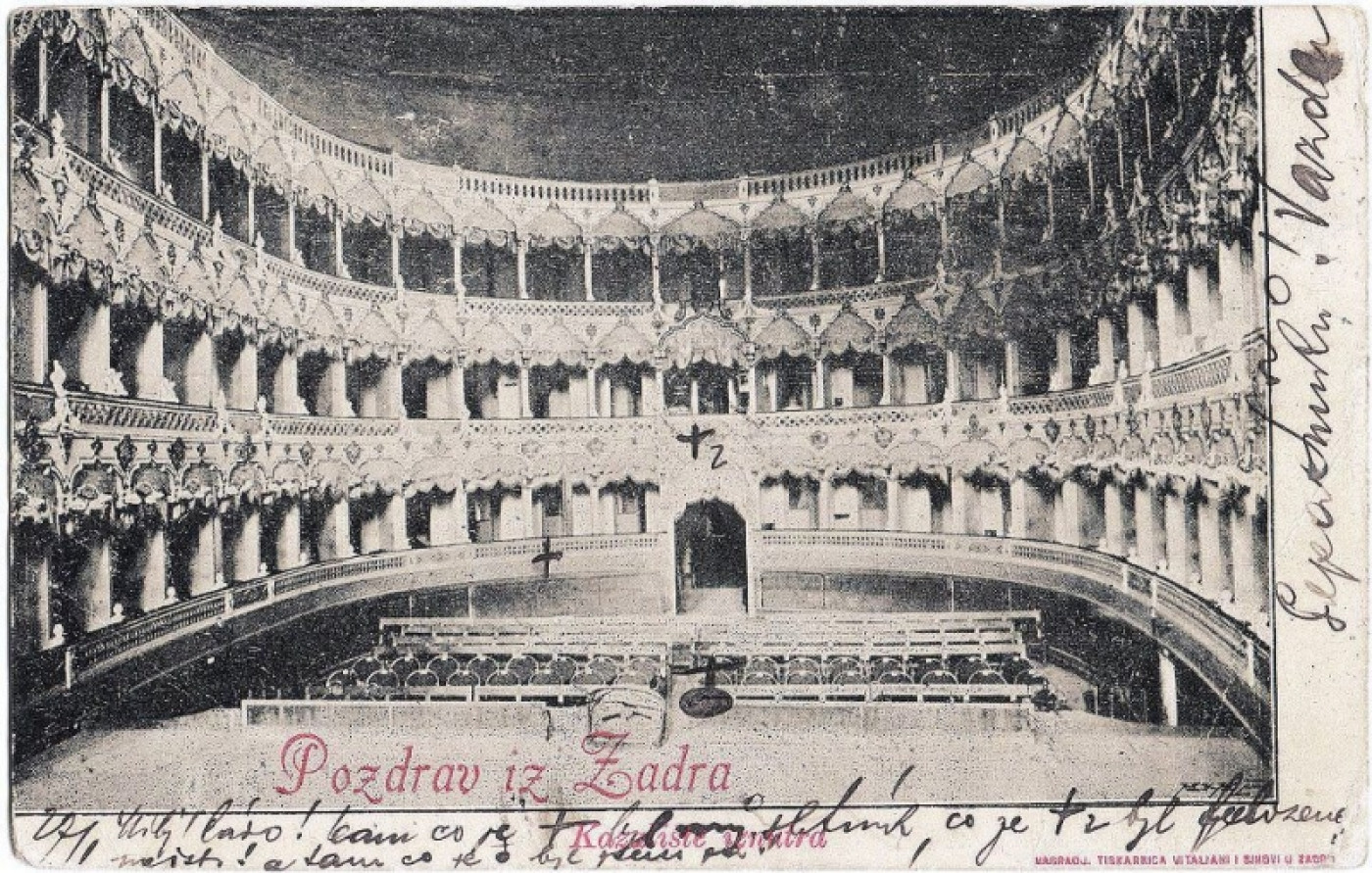
The first Zadar theatre building, Teatro Nobile or Noble Theatre, was built as early as 1783, on the site of today's Croatian National Theatre in the city centre, and the future Verdi theatre building was built as the Teatro Nuovo (New Theatre), which opened on 7th October 1865 with the performance of Giuseppe Verdi's opera A Masked Ball (Un Ballo in maschera), reflecting the magnificence, splendour, wealth and political power of Zadar of the time, as the capital of Austrian Dalmatia. The initiators of its construction were Dr Šimun Katić, Dr Anton Stermić (Antonio de Stermich) and the President of the Commission Dr Natale Filippi, who, in 1863, bought the building of the Lantana family on the Square of Our Lady of the Castle (Trg Gospe od Kaštela). The theatre was really luxurious: it could accommodate as many as 1,500 spectators at the time when the city had between seven and ten thousand souls at most, and it had three halls – the theatre, concert and dance hall.
The theatre was finally ceremonially opened on 7th October 1865 as Teatro Nuovo, although a little earlier, on 10th September, it was also open for the farewell party of the Governor Baron Lazarus Mamula. Decades later, the Zadar theatre was the centre of the city's cultural and artistic life, and it hosted operas, operettas, ballets, comedies, dramas, silent and sound films, dances and balls. In 1901, the Zadar theatre was renamed Teatro Verdi after the famous composer Giuseppe Verdi. During the Allied bombing of Zadar in the Second World War during December of 1943 and February of 1944, the building of this most beautiful and largest theatre on the east coast of the Adriatic, was badly damaged. After the liberation of the city, the Yugoslav authorities did not show excessive sensitivity for the Italian cultural heritage in Zadar, so the damaged theatre was left to deteriorate and was completely razed to the ground.
.
Location
Want to find more?
Suggested