


Info.
Lifestyle
Zadar City Market
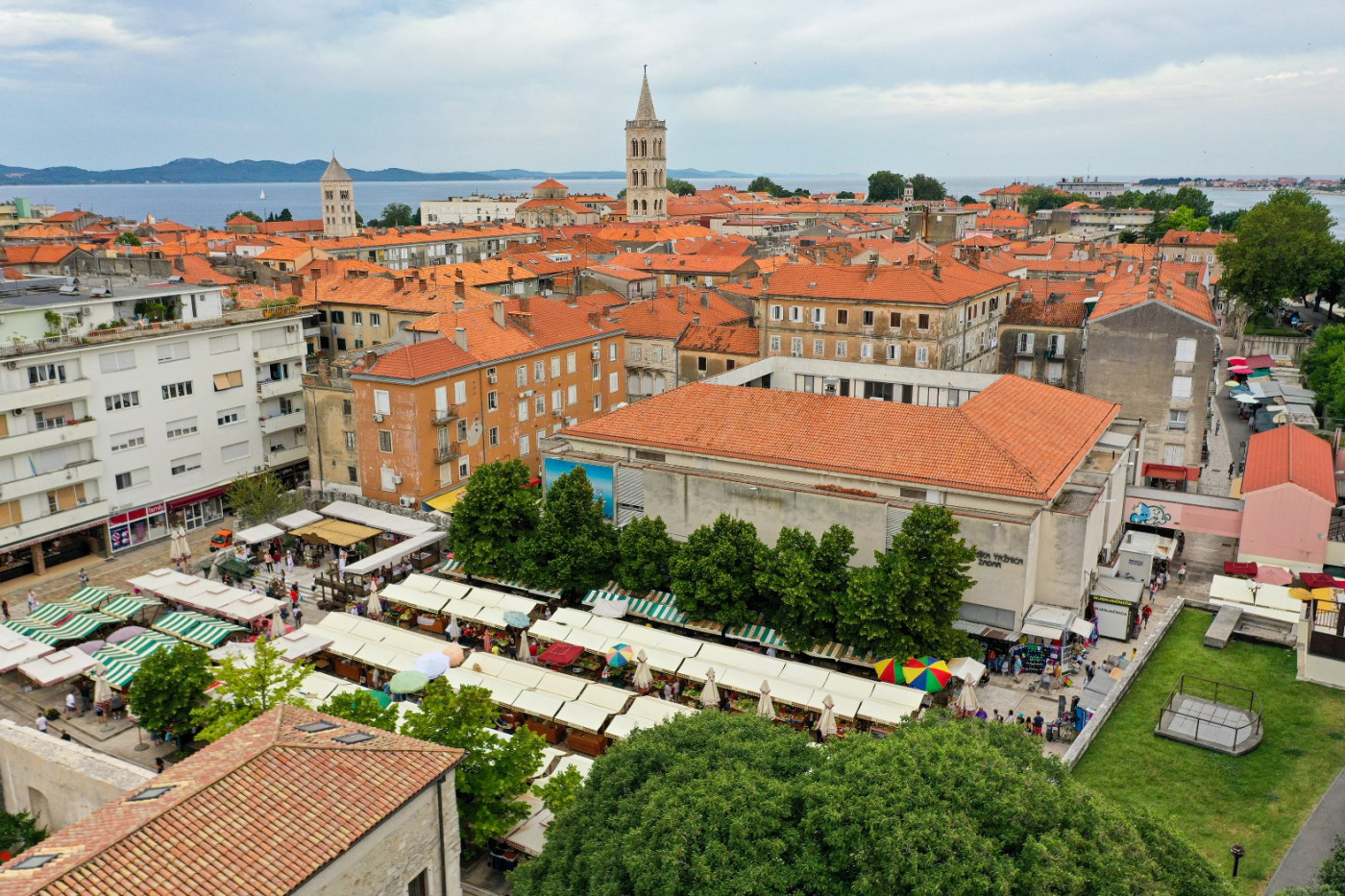
Zadar's main green Market, located in the old part of the City on the peninsula, together with the indoor Fish Market, is one of the most important and traditional places of urban life in Zadar. The Market, or Pijaca as the people of Zadar prefer to call it, has surely been the place with the longest uninterrupted history in Zadar.
For thousands of years, it has been one of the most important parts of the city’s identity, regardless of the fact that it has changed locations on the Zadar peninsula throughout history or that trade in green produce, meat, cheese, eggs, fish and other products has been thematically separated in several locations. In newer parts of Zadar, several smaller markets were set in the past few decades, but when someone from Zadar says: “I'm going to Pijaca”, we know exactly which one they mean. The one that can be reached from the ring of narrow streets of the peninsula or, the easiest, from the City Port (at Liburnska obala), through the Gates of St Roch, built a long time ago together with the defensive walls of the city, the Ramparts or Muraj, which were included in the World Heritage Site list in 2017 as part of the UNESCO cultural heritage.
Sometimes, as a term of endearment, the people of Zadar call their Market the “breadbasket of the City”, but it is much more than that. After all, today's trade and daily procurement of produce has taken on more modern and simpler forms, but the old Pijaca has endured and persisted. Someone once compared this vibrant, loud and colourful place of social life in Zadar to today's social networks, or better yet, as their forerunner. Yes, people trade, sell and buy, pick and bargain at the market, but it is also a meeting point for friends, acquaintances who rarely see each other, a place for exchanging news, casual chatter, gossip or simply having a look around. How could it not, when people from the entire Zadar region, its vast hinterland and numerous islands, all meet at the Market, and at the Market only.
The urban pulse of the city and the entire Zadar region can be felt at the Pijaca, and some leisurely pensioners, as well as many tourists, will be more than happy to “make a tour” of the Pijaca without shopping, simply out of curiosity and need to feel this urban, typically Mediterranean pulse.
Although the Zadar Market is open all year round, it is most colourful in spring, summer and autumn. Saleswomen, also known as Piljarice, from many villages in the Zadar region and even the islands, as well as fish and other seafood traders sell their goods here even on the coldest, rainiest and windiest winter days, but when the winter drab passes and the first wild asparagus appear on the food stalls and announce the arrival of spring, the Pijaca takes on new, more cheerful colours. During the summer, the food stalls are bursting: dozens of varieties of ripe tomatoes, peppers of all colours, onions, cucumbers and eggplants, early grapes, plums, late cherries, Marasca cherries, and juicy peaches, melons and watermelons, but also young or aged cow or sheep milk cheese, honey, walnuts and almonds, home-produced eggs, etc.
And just a few steps away, the Pijaca is full of freshly caught sardines, mackerel, as well as more expensive dentex fish, rascasse and Peter’s fish, shrimps and lobsters, Novigrad mussels, warty venus and Noah’s Ark shell... Around the market, there is also a ring of small butcher’s shops that offer fresh meat, delicatessens, and small bakeries where you can always buy “on the go” meals.
Although the main Zadar Market has been in its current location “only” since 1952, it used to be at the spacious Ancient Roman Forum, this place is an uninterrupted exhibition that constantly changes its display, a museum of local customs, traditions, fruits of labour of farmers and fishermen, the collective Zadar memory and a strong common desire of the City to remain a City, one in which life flourishes in both happy and hard times, which Zadar has had many, perhaps too many, in its 3,000-year history.
.
Location
Want to find more?
Suggested