

19.02.2025.
The Greatest Operetta Composer, Franz Von Suppè, Spent His Youth in Zadar
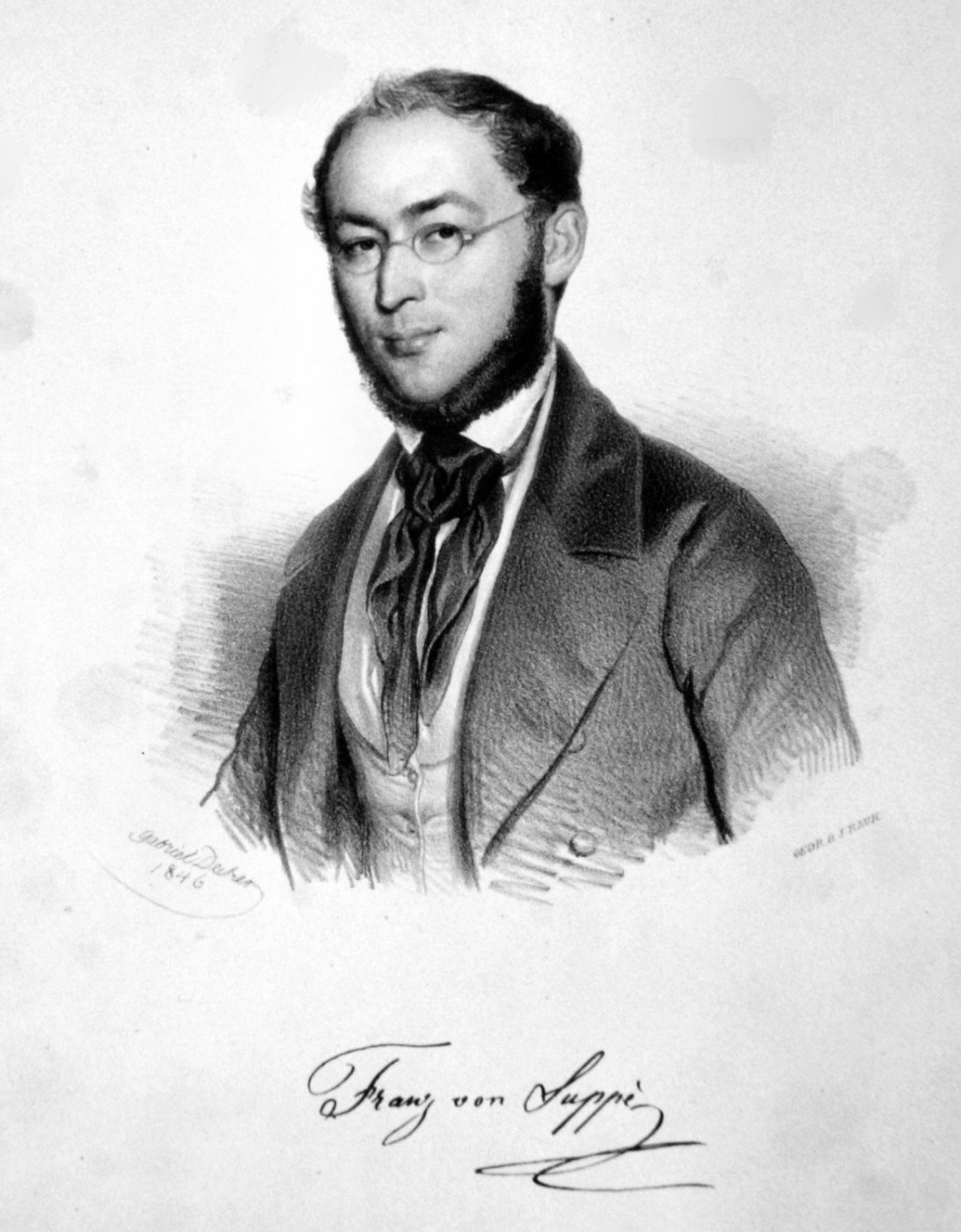
Did you know that the most important operetta composer in history and one of the greats of world music, the Viennese composer Franz von Suppè, spent his childhood and youth in Zadar? And not only that: Suppè is known as the author of Missa Dalmatica, which he composed at the Zadar Monastery of St Francis, and he left behind a truly fascinating music legacy: hundreds of stage and concert works, operettas, songs, marches, waltzes and polkas.
His famous Leichte Kavallerie (Light Cavalry) is standardly performed at New Year's Concerts in Austria; Suppè's music was also used in Disney cartoons (Mickey Mouse), and even the song by the cult rock musician Frank Zappa, Jesus Thinks You're a J**k, was musically inspired by Light Cavalry, as Zappa testified himself. There is more: The Metropolitan Opera House in New York hosted Suppè's operettas Boccaccio and Donna Juanita, and this prolific Viennese and Dalmatian composer, whose O, du mein Österreich is considered the second Austrian anthem, is also mentioned in the Austrian biographical film Hab 'ich nur Deine Liebe (I Only Have Your Love). And even that is not all, since the fans of the German Bundesliga football club Eintracht Frankfurt open home games at the Commerzbank-Arena with the overture from Light Cavalry, and back in 1935 the famous and dissolute Popeye the Sailor played Suppè in the episode The Spinach Overture.
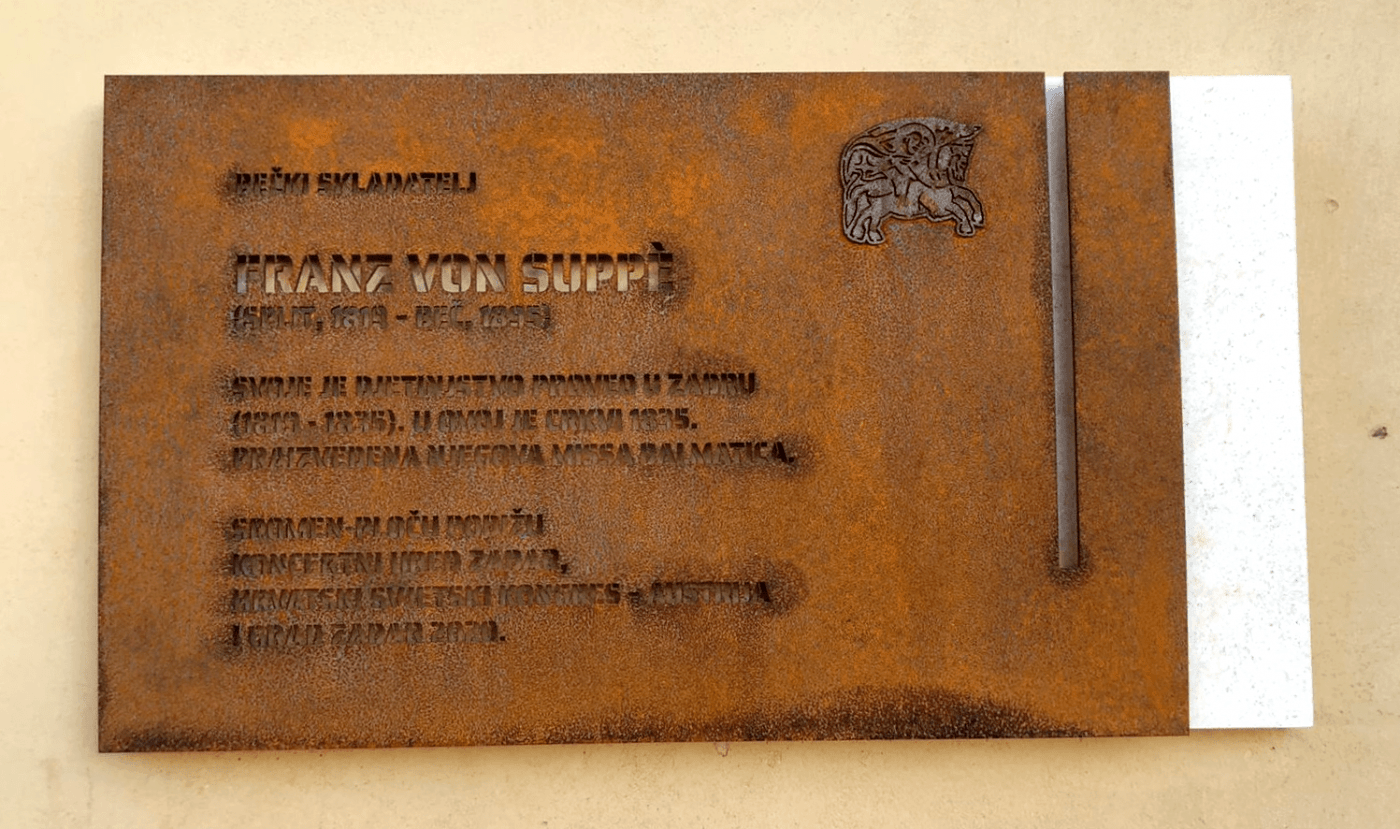
On the occasion of the 200th anniversary of the birth of Franz von Suppè, a memorial plaque was set up on the west wall of the Monastery of St Francis in Zadar in October 2020, so Zadar paid tribute to its composer in full right, recalling his life in the city, the inevitable Missa Dalmatica composed in Zadar, and his musical legacy that was an inspiration to many. Von Suppè was born in 1819 in Split, but as a five-month-old baby he moved with his parents to Zadar, where he spent the first 16 years of his life. It is known that Suppè sang in the church choir of the Zadar Cathedral of St Anastasia at the age of eight, where the choirmaster Giovanni Cigalla gave him his first musical education, whereas he learned to play the flute from the conductor, Giuseppe Ferrari. He wrote his first mass in Zadar as a thirteen-year-old boy, which he later rewrote and published in Vienna in 1877 under the title Missa Dalmatica. He also began to write his first operetta, Il Pomo, in Zadar, but this work remained unfinished. He dedicated several compositions to the Zadar Philharmonic Society, and in 1860, the oratorio Ex-tremum Juditium for solo, choir, orchestra and organ, was premiered in Zadar. The opera Das Matrosen Heimkehr (The Sailors’ Return), with its story located on the island of Hvar, as well as the Overture to Dalmatian Folklore Themes in F Minor, are both permeated with Dalmatia.
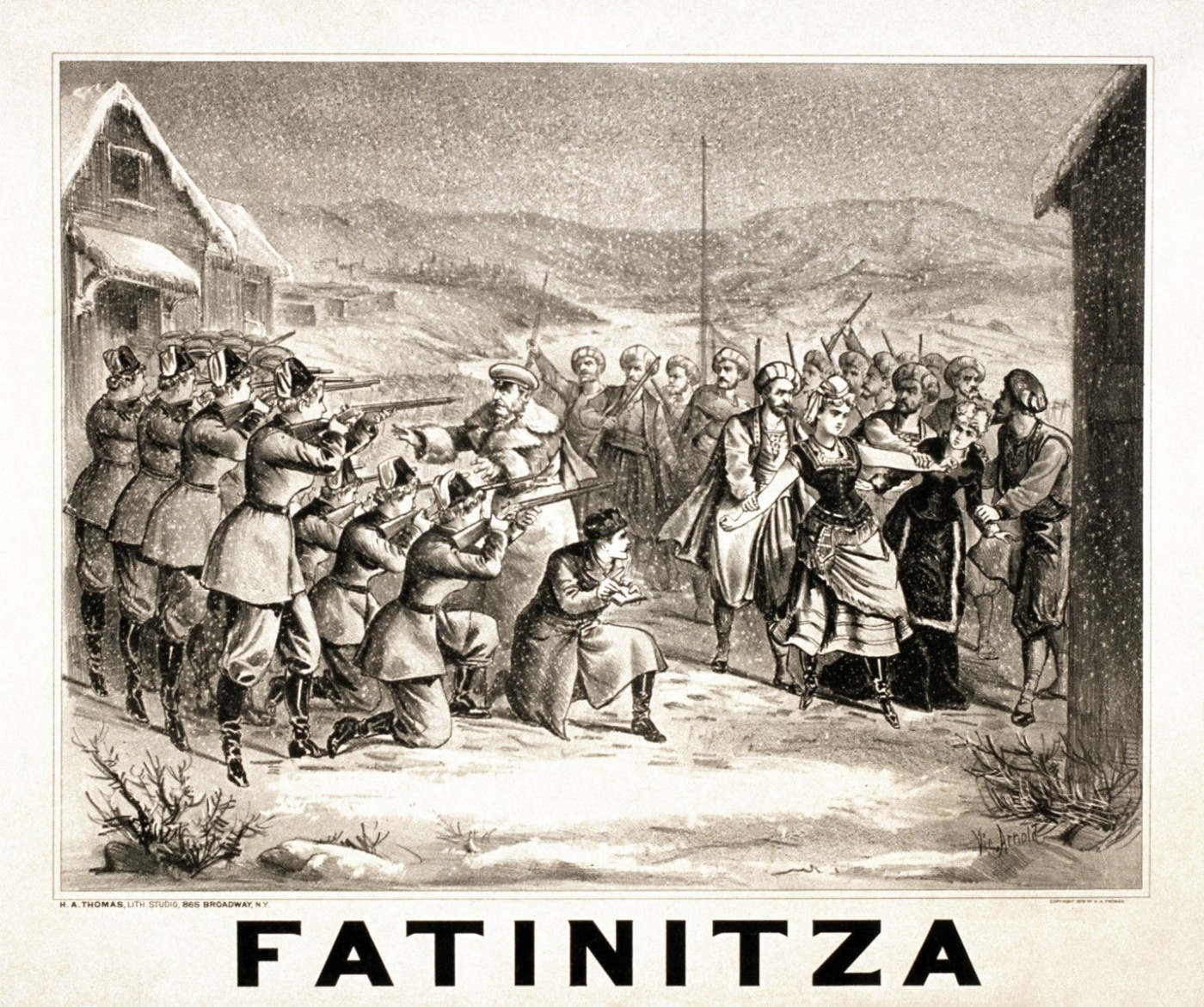
After the early death of his father, he and his mother moved to her native Vienna, namely Alsergrund, where he polished his musical talent, and in the second half of the 19th century he gained fame as an Austrian and Viennese author and leading composer of Viennese operetta. Suppè's first full-length operetta in three acts from 1876, Fatinitza, was based on the libretto of La Cirassienne (Circus) by Eugène Scribe, set to music by Daniel Auber, but in Suppè’s version there was a subtle parody change: the character of a young Russian lieutenant Vladimir who had to be disguised as a woman, was played by a woman, who pretended to be a man, pretending to be a woman. The Viennese operetta, whose most important representative was von Suppè, was created in an attempt by Viennese composers to imitate the works of the French composer of Jewish roots, Jacques Jakub Offenbach, the genre's founder and author of large parody operettas imbued with appealing melody, dashing rhythm of the scandalous cancan, gallop, the quadrille dance and waltz. Suppè's Das Pensionat (The Boarding School) from 1860 was the first successful attempt at Viennese operetta, followed by shorter works of Flotte Bursche and Die schöne Galathèe, but only Fatinitza was the first complete operetta and the international success of the Dalmatian-Austrian composer, whose descent, in fact, has still not been fully clarified.
The composer's real name was Francesco Ezechiele Ermenegildo de Suppe, which he later Germanized into Franz von Suppè when he moved to Vienna. His mother was a Viennese by birth, but of Czech origin, Jandrowsky from Brno, and his father was a civil servant in the Dalmatian part of the Austrian Empire. It is interesting that his name still appears outside Austrian sources as Suppe Demelli, which indicates a connection with the popular immigrant and later patrician family from Senj, Demelli (or Demeli), which we can trace in the sources as early as the end of the 17th century. Demelli, as shipowners and prominent merchants, acquired the nobility of the town of Senj in 1727 by the decision of Charles VI, the last male descendant of the Habsburg Dynasty. The Demelli family has lived in Karlobag since the 19th century, and today their surname does not appear anywhere else in Croatia. The Austrian biographers of the famous composer have established that the surname Suppè comes from the same area as well (his great-grandfather was born in Grobnik), but it can also be found in the coastal belt from Rijeka to Makarska. At present, most people with the surname Suppe can be found in the United States and Germany, then India, Peru and Russia, but the Croatian form Šupe (as well as Supe, Shupe, Schuppe) is far more numerous and present in as many as 55 countries in the world. Originally, this surname belongs to the Šibenik region (Šibenik, Lozovac), and a small number of them now live in Zadar, Zagreb and Split.
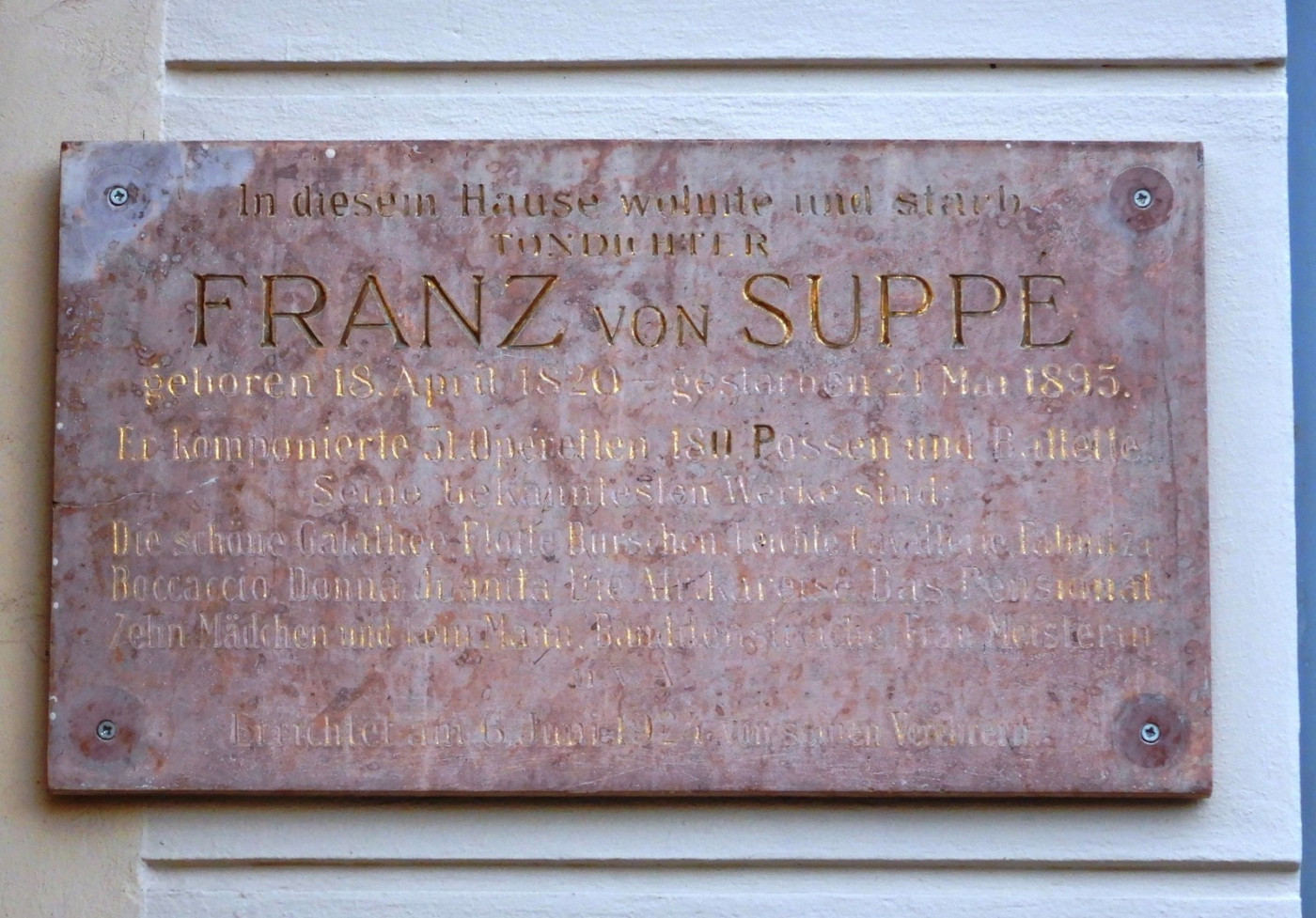
During his career and life, Suppè maintained ties with his native Dalmatia, occasionally visiting Split, Zadar and Šibenik. After retiring as a conductor, Suppè continued to write stage works, but turned his interest to sacred music. So only recently has Missa Dalmatica received the attention it undoubtedly deserves; one of the largest German choirs Kölner-Männer-Gesang-Verein rehearsed it under the direction of Bernhard Steiner, and performed it in August of 2006 at the Altenberg Cathedral. Franz von Suppè died in Vienna on 21st May 1895, and was buried in a place of honour in Vienna's central cemetery.
Watch the video
.
Want to find more?
Suggested

News
Zadar Travel App For Direct Booking Of Private Accommodation
23.07.2020.
Gastronomy
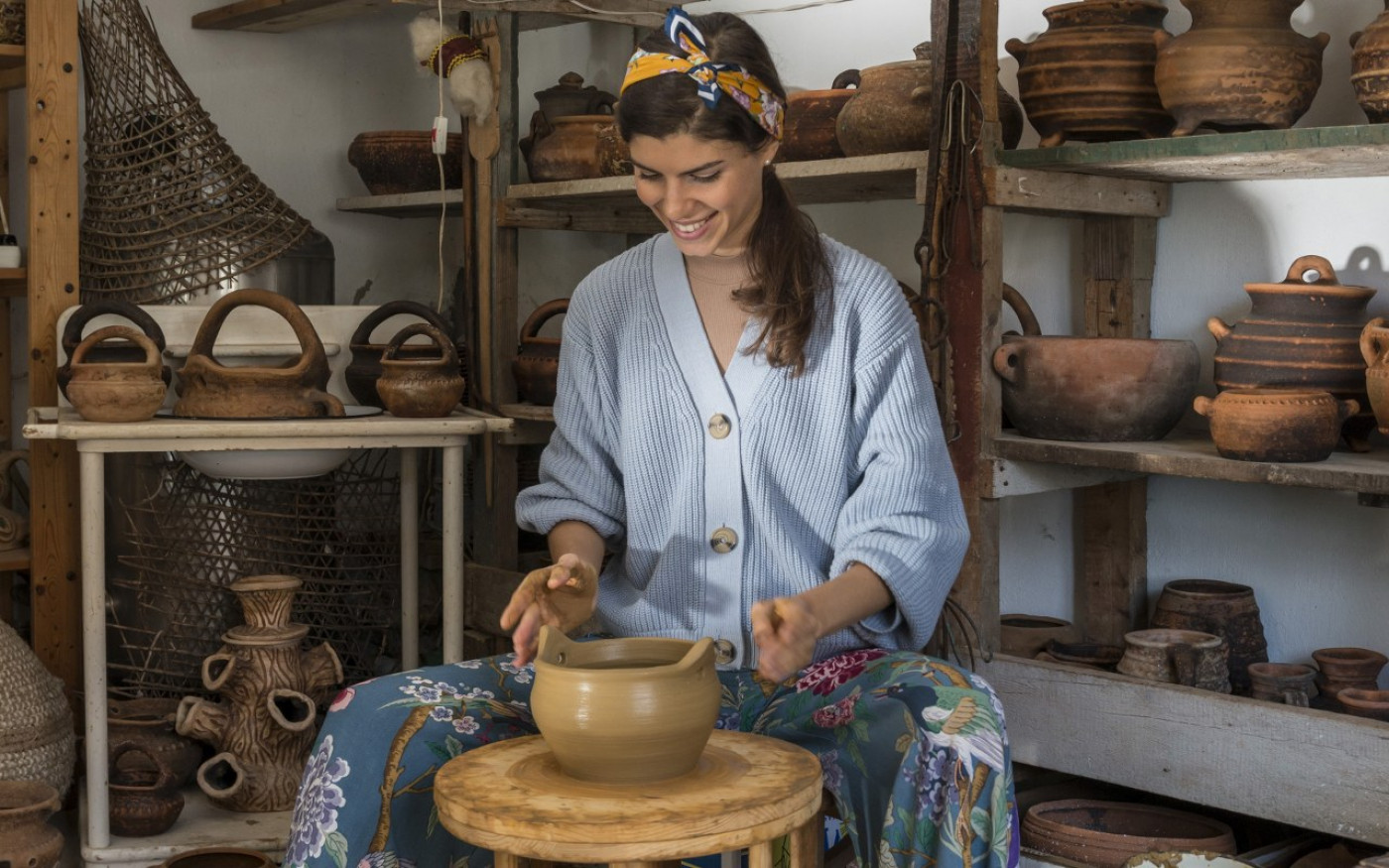
Brudet Cooked in a Lopiž With a Taste of the Historical Glory of Iž Pottery
17.07.2024.

Events, Gastronomy
Five Days of Enjoying in the Best Meat Dishes at the Meat Me Festival
03.10.2023.
Events, Gastronomy
Upcoming Meat Me Festival | Butcheries Biloglav
27.09.2024.