
01.05.2025.
The Turbulent Past of Zadar's Green Island, Part 2
Around the mid 16th century, the government of the Venetian Republic had decided to demolish the then eastern Zadar suburb of Varoš. The obtained space was used to construct military facilities under the name Forte, which we still find today in the area of Vladimir Nazor Park. These are buildings of smaller barracks that serve the Nasadi company, while in the once large building constructed on the site of the previous smaller barracks, there is a secondary school.
A cistern built in 1659 is also very well preserved. It has a well crown with a winged lion. Over the centuries, in numerous major and minor interventions, the Forte fortification gained an underground part, i.e. a series of connected corridors along the entire perimeter. The park itself was created in 1888 thanks to the governor Karel Dragutin Blažeković. After retirement, he moved to Klagenfurt, where he died in 1893. Today's appearance and attractions of the park have essentially existed since his time, and gradual interventions led to the opening of the northern gate, the construction of a small pond and the putting up of Blažeković's bust removed during the Italian occupation. There were some other interventions in the Second World War, but the park was well preserved. After the war in the Yugoslav socialist period, the park was included in the category of a monument of garden architecture in 1968 and has been very well maintained, especially after Croatia's independence.
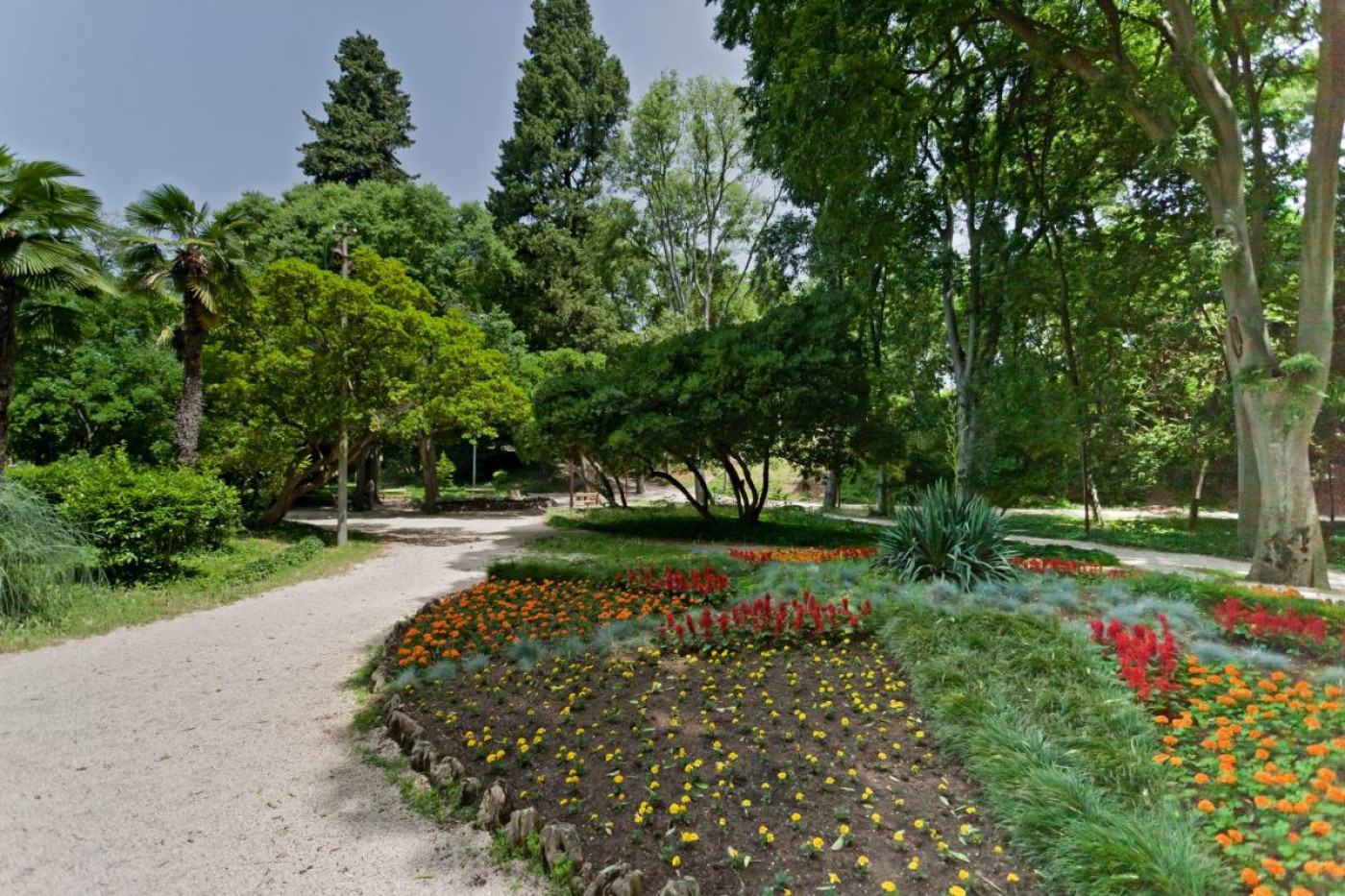
Vladimir Nazor Park marks the entrance to the old town peninsula in Zadar. Photo by Velid Jakupović Gricko
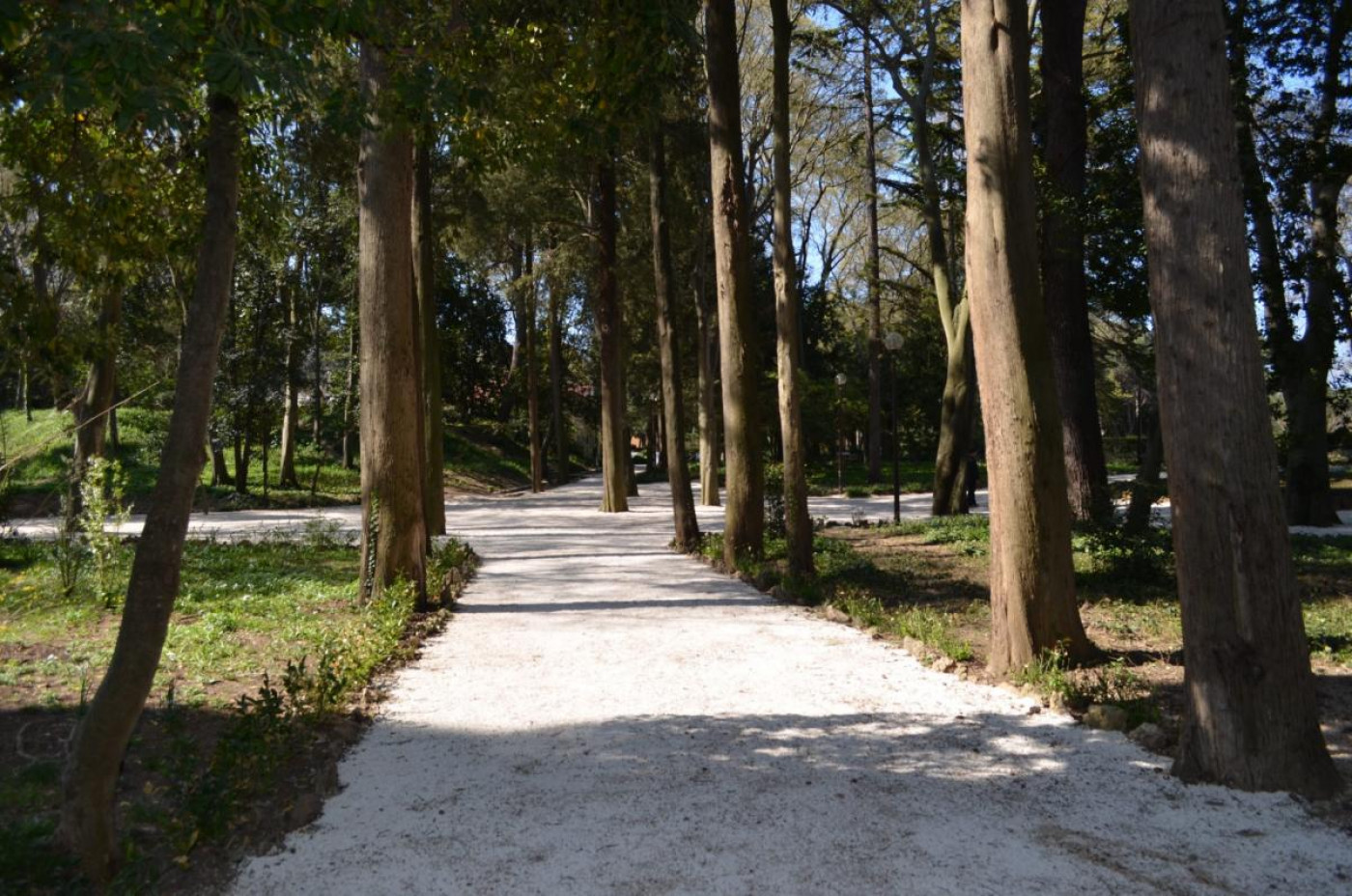
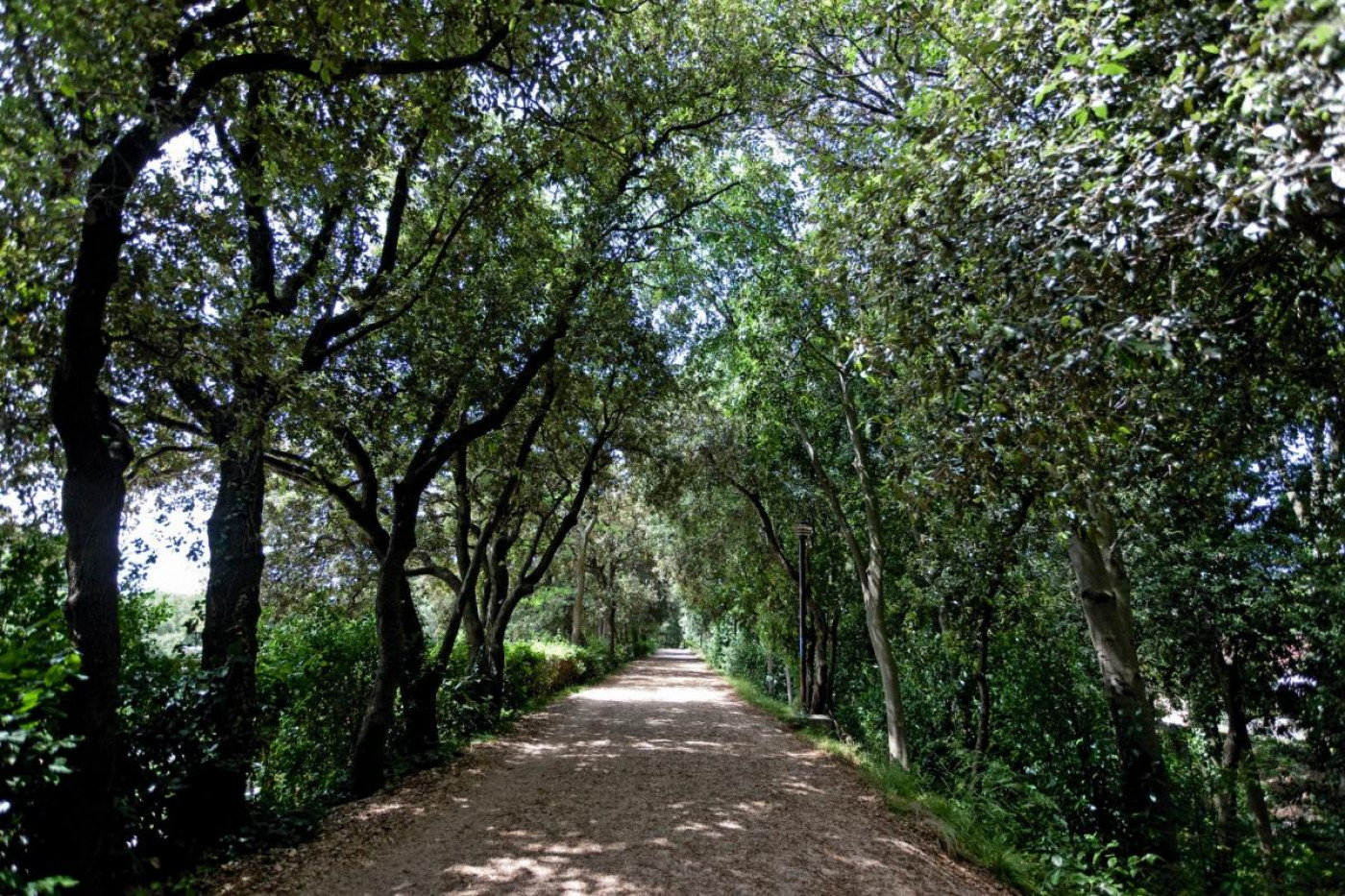
The original park creation is evidenced by a stone slab on which it is recorded that the Park was made by imperial and royal troops (). This slab was initially placed at the bottom of a semicircular enclosure, which we can see in the saved plan. Another memorial was placed at the bottom of the alley in the southern part of the Park. In the Park, there are paths lined with sandstone and butcher’s broom, benches to sit on and light. During the Italian rule, just before the Second World War, a driveway to the barracks was made through the fort so that the southern part of the Park remained cut off. Despite significant damage from bombing during World War II, the Park has remained unchanged to this day thanks to its position on the fort. Today it is called the Park of Vladimir Nazor, named after another famous person from the rule of Austro-Hungary, the Kingdom of Yugoslavia and the SFRY.
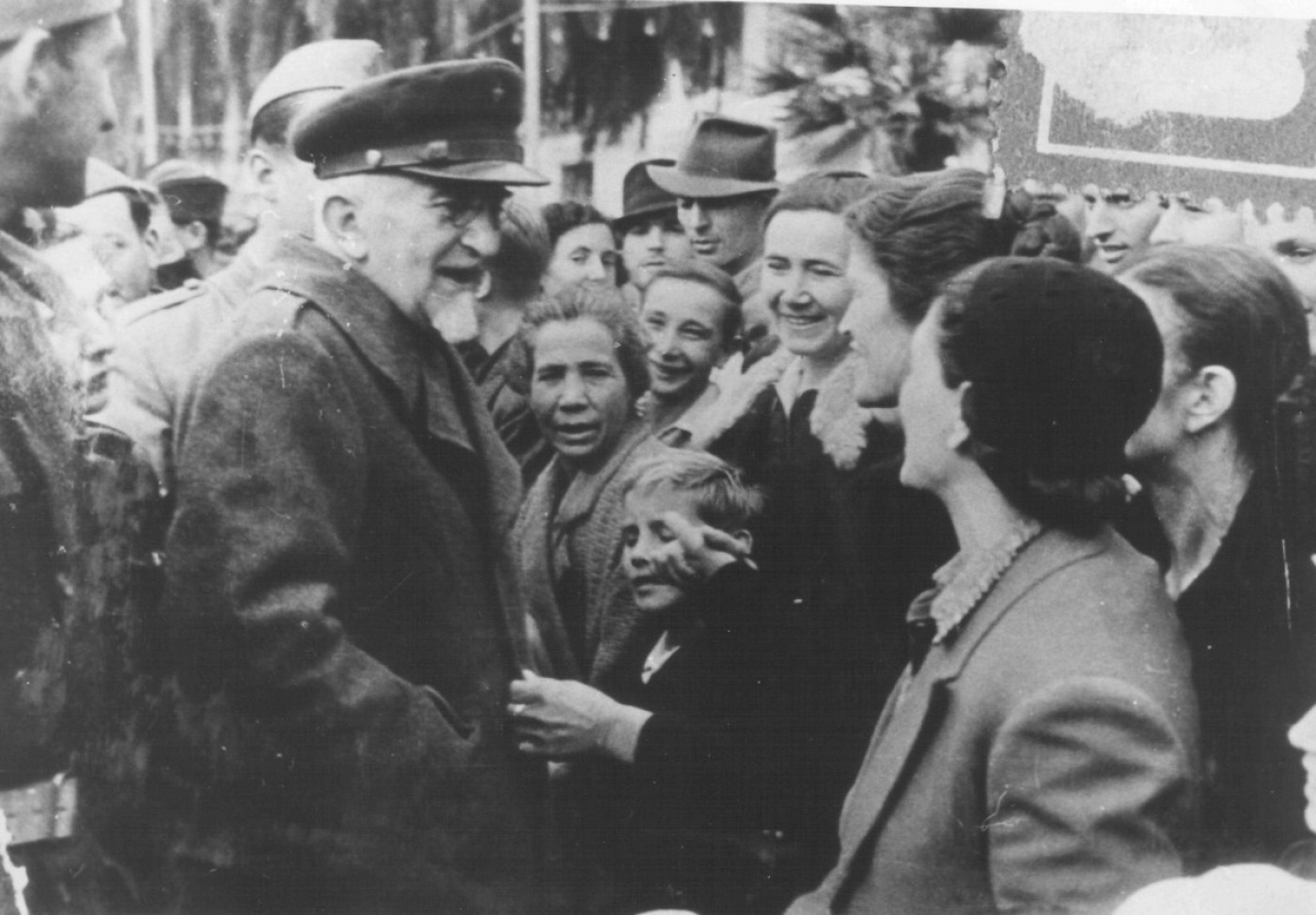
Poet and participant of the Second World War Vladimir Nazor in Split in 1944
Croatian poet, prose writer and translator Vladimir Nazor was born in Postira on the island of Brač in 1876. He wrote poems, short stories, children stories, travelogues, novels, diaries, treatises, and translated Italian and German poets during his fifty-year career. He completed primary school on the island of Brač and attended the grammar school in Split. He studied the sciences, mathematics and physics in Graz and Zagreb, graduated in 1902, after which he taught at the Croatian Grammar School in Zadar. From 1931 he lived in Zagreb, where he retired two years later as the director of a children’s home. His first work was Slavenske legende (Slavic Legends) from 1900 and Knjiga o hrvatskim kraljevima (The Book of Croatian Kings), which he published in 1904 in Zadar. Four years later, he published Veli Joža, a work by which his prose will be recognised, although Nazor himself considered the cult Joža a failure. Nazor is also known for another classic, Medvjed Brundo.
Nazor wrote and published "Croatian Kings" in Zadar
With the poet Ivan Goran Kovačić in 1942, the poet and writer Vladimir Nazor joined the partisans across the Kupa, which even Radio London reported. During the war, Nazor was the president of the Executive Board of ZAVNOH (The State Anti-Fascist Council for the National Liberation of Croatia), and after the war, the first president of the Croatian Parliament. He was a member of the HAZU - Croatian Academy of Arts and Sciences (a corresponding member since 1919, a regular member since 1940 and a confirmed member since 1947). He died in Zagreb on June 19, 1949, and was buried in the Mirogoj cemetery.
Watch the video
.
Want to find more?
Suggested
Gastronomy
Zadar - the City of Premium Natural Liqueurs and Brandies
15.02.2022.

Lifestyle, News
Fortis Club | Ideal Place for Entertainment, Recreation & Business Meetings
13.04.2023.

Events, Gastronomy
Tuna, Sushi & Wine Festival Returns to its
27.03.2025.

Events, Sport
FIVB Volleyball Challenger Cup 2022 in Zadar
20.07.2022.