Attractions
Zadar Barkajoli Boatmen Are A Symbol Of The City
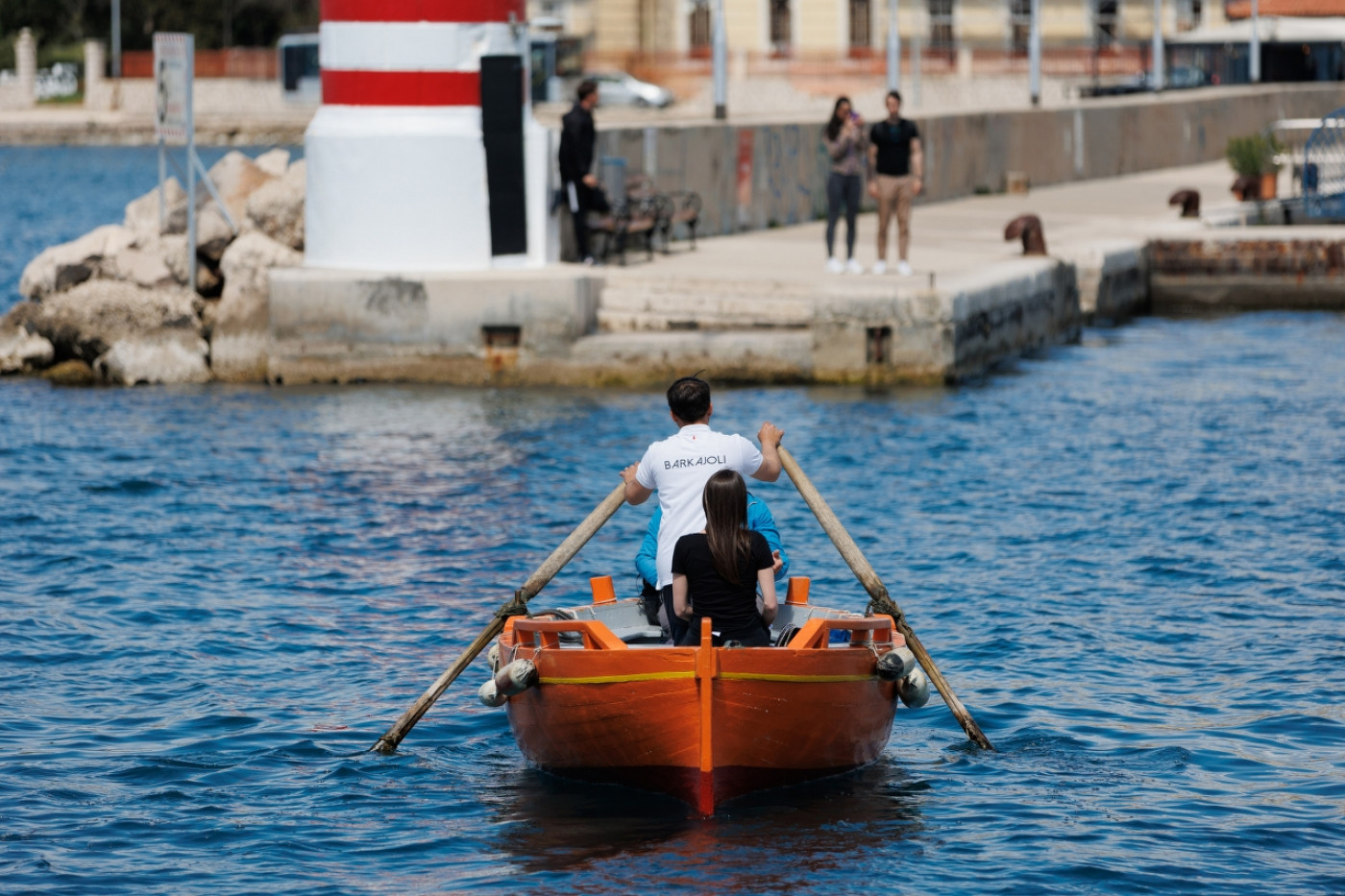
It is the early spring morning hours, the sea is calm, the sun has already started to be slightly warm and our interlocutor Berto Gregov, a Zadar boatman barkajol, in the idyllic two-minute ride transports our locals who wish to reach the city as soon as possible, from Điga to the Peninsula, whether due to work or some other reason.
- This is the most peaceful part of the day – reveals Berto who became a boatman 18 years ago but who had earlier worked with his father who had also been a longstanding boatman barkajol. But the tourist season is on the horizon, Berto tells us, the most active part of the year for us boatmen. Besides, every day, under all weather conditions, this distance of 76 meters is also connected by his colleagues Dino Gajić, Zvonko Gregov, Šime Gregov and Šime Begonja. If needed, Berto’s father jumps in.
Many others before them, even women, connected these two points by boat for the tradition of Zadar boatmen barkajol dates from the 14th century, while others say that it is as old as the city of Zadar itself. They are one of the symbols of Zadar, keepers of the traditions and undoubtedly an important tourist attraction. It is not said for no reason “you have not been to Zadar if you have not experienced a boat ride”.
Berto has been a barkajol since 1993, first as an apprentice, and then time went by and now he has been a part of this tradition for 29 years which is an exceptional honor for the job was transferred from father to son, Berto’s father became a barkajol in 1982, and his uncle and brother-in-law pledged to be barkajol also after having returned from abroad.
- My father was a barkajol and took me along in all his works and he used to say “you will come and take my place on the boat for one hour” and so already at the age of 15 I took my boatmaster’s exam so I could jump in for him. It was the war period and all the others had to serve in the army. I was 18 and not for army service so they agreed that I should replace them and cover the shifts, and there were plenty of shifts and working hours. And thus, little by little, I became a barkajol –Berto tells us.
We shall therefore end with these verses from the song Barkajoli by singer Đani Maršan:
“Born on the stage of the boat, their second mother afloat
They row in pain, all their life without disdain,
Many turns across the port, the sun and salt as cohort,
They are of hard core, our barkajol..."
.
Want to find more?
Suggested