02.08.2021.
A Sprat Fry, Dalmatian Finger Food at the Smallest Konoba in the World
Considering the three-millennia long history of Zadar, the city district of Varoš is a relatively new part of the Peninsula that was formed in its current form "only" during the Venetian rule over this city some 500 years ago. The old Zadar Varoš, named after St. Martin, disappeared with the construction of the town walls sometime in the 16th century and was located southeast of the present-day Varoš, almost entirely outside the Peninsula.
To not stay out of the life-saving new walls, peasant families and other members of the lower classes of that time found their new homes in the southwestern part of the Peninsula. That is why Varoš is still a symbol of the new Zadar and a refuge for the farmhands and the urban poor. Today we can only imagine how many Fellini shots and films could be made in the Varoš as it used to be a long time ago.
Varoš - home of Zadar farm labourers and the poor
Varoš starts at one of the main (pedestrian) intersections of the very city centre, at Četiri kantuna, and the arteries are first Varoška Street leading to Kovačka Street on the left and Stomorica Street on the right. The combination of side streets, Dalmatian kaletas, hidden courtyards, and atriums is a typical Mediterranean urban setting enjoyed by Zadar residents and tourists. This is why it is not unusual that many cafes, taverns (konoba), bistros and restaurants are located in Varoš, and anyone who would like to enjoy an excellent gastronomic and authentic meal should go there first.
For this reason, it is hard to imagine today that until 30-40 years ago, the same area of Zadar was a bit gloomy, depressing and dark place with only a few small taverns or inns. They were gathering places for bohemians, poets, card- players, but also professors and students from the nearby University, all of whom did not like the hustle and bustle and splendour of the central city gathering places, the People's Square, the main town square and the Kalelarga walk, nor the open views of the ancient Roman Forum.
Because of a tiny tavern, if you could call it that, even those who did not belong to the Varoš "permanent line-up" also frequented the place. Today, the already cult place was called "Kod Tovara". No matter how small and inconspicuous this Dalmatian version of a diner "Kod tovara" was, it attracted many because of its top speciality - a sandwich with always the best Dalmatian prosciutto. This delicious snack can be called a pure example of authentic Dalmatian fast food. However, in this case, it lacked the main feature - speed. Namely, Šjor Slavko Radak, the owner and the only employee of the "Tovar", used to cut long slices of prosciutto by hand with incredible precision and equally slowly so that a long line of hungry people would always build up in this tiny tavern.
From "Tovar" to "Stomorica" and back
The tavern "Kod Tovara" was one of the symbols of Varoš in the mid-last century, and when Šjor Slavko retired, the Varoš folks, like many other residents of Zadar, were deeply affected. Fortunately, in the early 80s of the last century, a nearly identical concept of a small Dalmatian tavern continued when Zoran Galošić from Zadar opened "Stomorica". Hand-cut prosciutto in a sandwich was back in Varoš, and Galošić expanded its offer to other Zadar fast and finger food specialities: salted sardines and anchovies, small oily fish fries (frigade), some dishes "na žlicu", etc. "Stomorica" quickly became popular among the Zadar residents both because of the good traditional snacks and brunches and the collective memory of the older inhabitants of this city at the time when Varoš was crowded and full of life. The summer Varoška fešta, first organized by Galošić himself, made more people from Zadar and many more tourists come. Then cafes began to open in Varoš, which attracted young people from Zadar. In the following years, with a boost of tourism, small and medium-size restaurants started to open in the old craft shops, former taverns and woodsheds, shops, in the alleys and hidden courtyards.
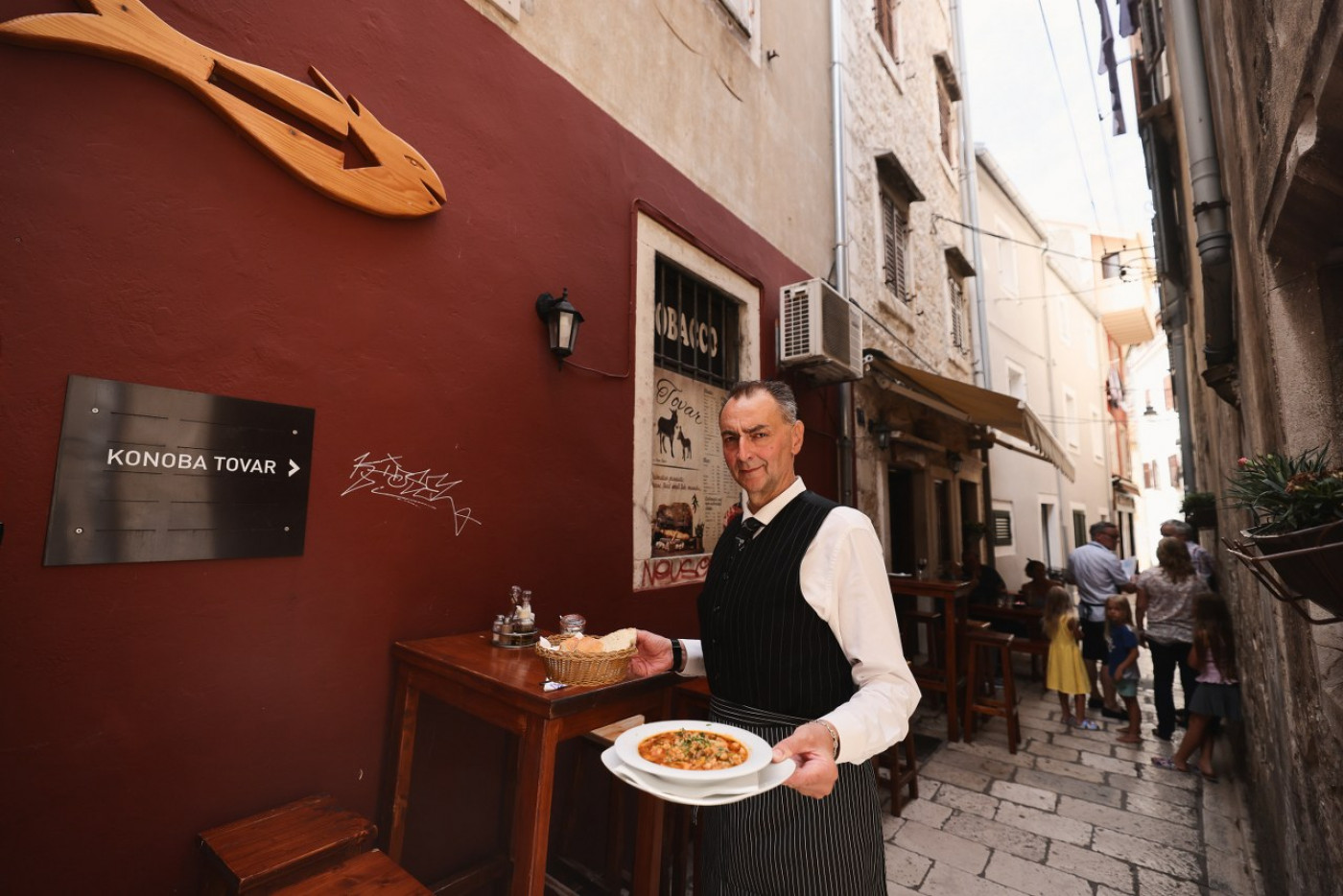
And what happened to Konoba "Stomorica"? It grew into a bigger-size restaurant of the same name, and after a few decades, Father Zoran left running hospitality to the younger ones. His assistant and last manager of the legendary tavern Srđan Čuklin, known to everyone in Zadar by the nickname Ćuća, decided to take over the baton of an archetypal small Dalmatian konoba on his own premises, where "Kod Tovara" and "Stomorica" had existed for more than half a century. As a memory to and in honour of the ancient "Tovar", he called his tavern the same - "Tovar". And it was at the same time honour to the favourite animal (donkey) that has been an auxiliary labour force for Dalmatians throughout history, a pet and a stubborn but dear friend.
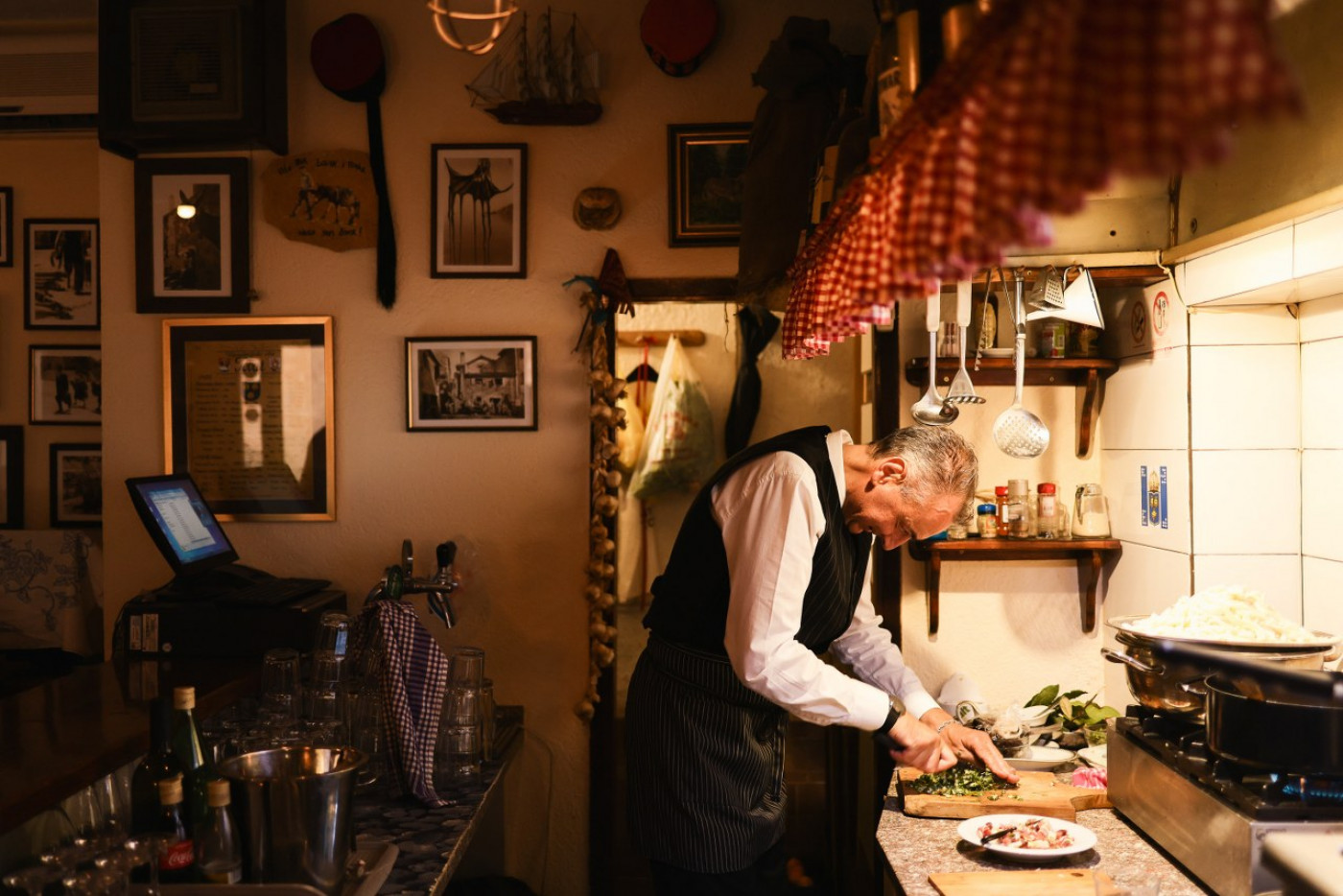
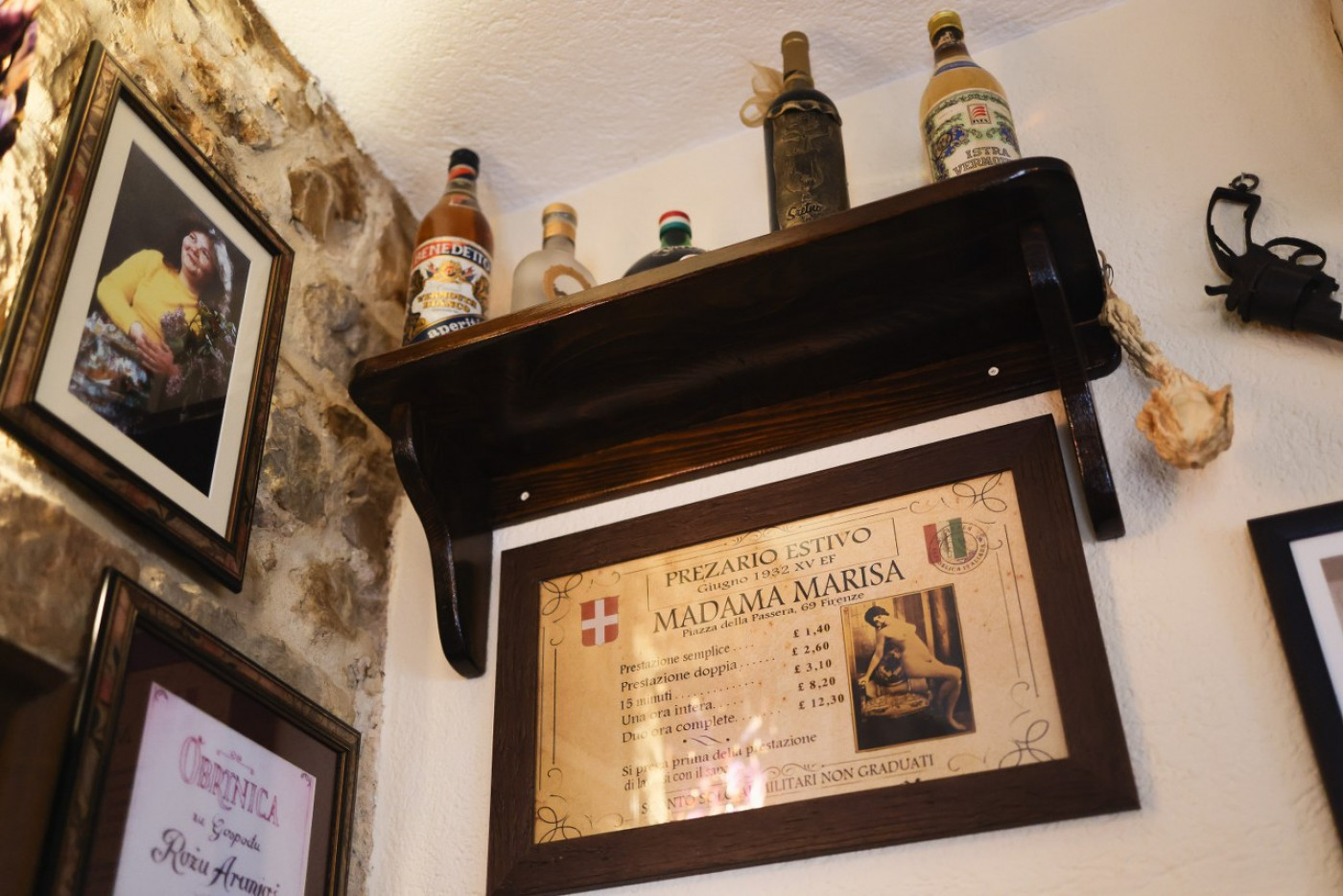
Ćuća built his "Tovar" on the same culinary foundations as his predecessors, though unbelievably, in an even smaller space. Everything fitted in just a dozen square metres of his tavern: a bar counter, an old kitchen cupboard with dishes, a tiny kitchen, a few stools and ledges. Yes, "Tovar" is by far the most little tavern in the world! But in its minimalism and modesty, with an interior adorned with photographs of old Zadar and original handicrafts, artefacts of the Varoš as it once was, "Tovar" convincingly and vividly reconstructs the authentic Varoš taverns, places for storing wine and oil, but also for socializing and sharing sadness and joy of Varoš - farmhands.
From the fish market straight into Ćuća's pan
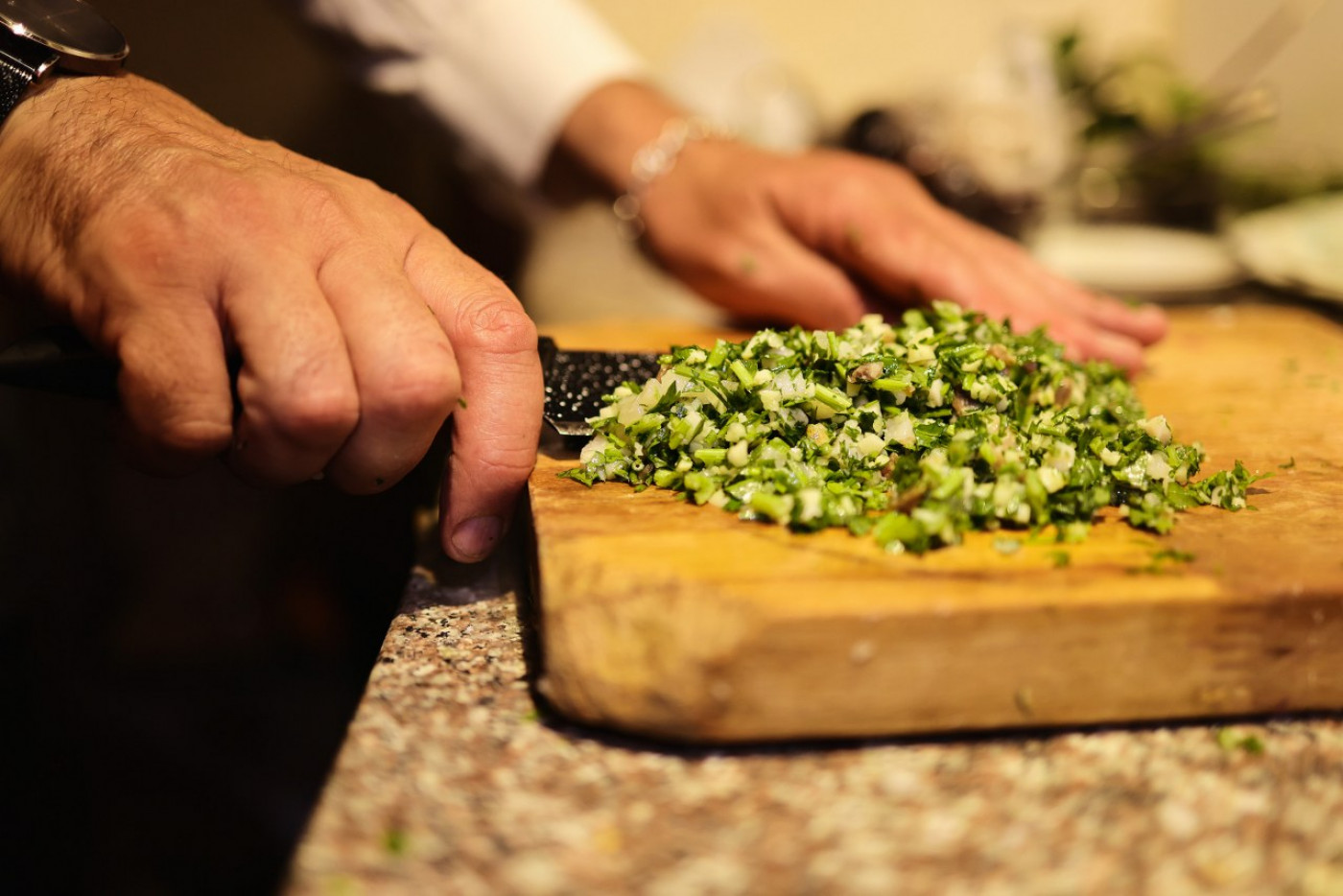
There are no long and tedious menus in "Tovar", yet the food cooked by Ćuća, along with his friend and associate, an excellent chef and waiter, the elegant Ivor Piskulić, is the best part of the story about "Tovar". Top-quality Dalmatian prosciutto is always ready on its stand, which Ćuća, of course, cuts by hand. In a bowl, salted sardines are dipped in olive oil, and on a small stove, something eaten "na žlicu" (with a spoon) is constantly simmering. And there is only one a day.
You can also find good Pag cheese and baked olives, but still the most favourite dish in "Tovar" – is fried small fish. It is often oily fish like sardines, then smelt, picarel and spicara smaris in winter. The fry –frigada can also include shrimps, small scampi and small squid or cuttlefish. Every morning, before opening his small tavern, Ćuća goes to the nearby fish market to buy completely fresh fish and compile a simple menu of the day.
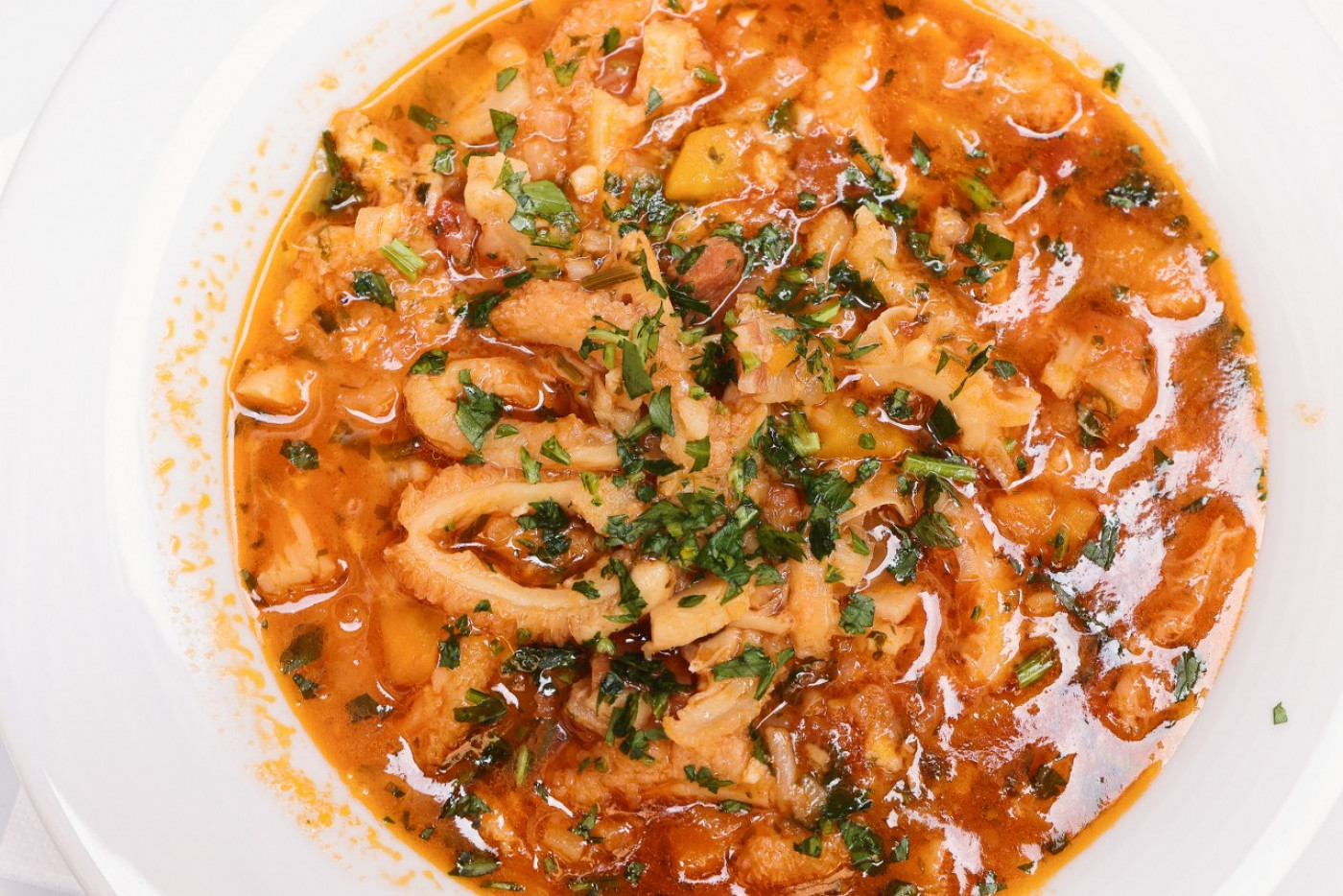
Meanwhile, his assistant Ivor is already preparing a cooked meal. During our visit, this was also the case, and he cooked delicious veal tripe, an adored dish by bonkulovićs in Zadar and Dalmatia, and almost everywhere in the world.
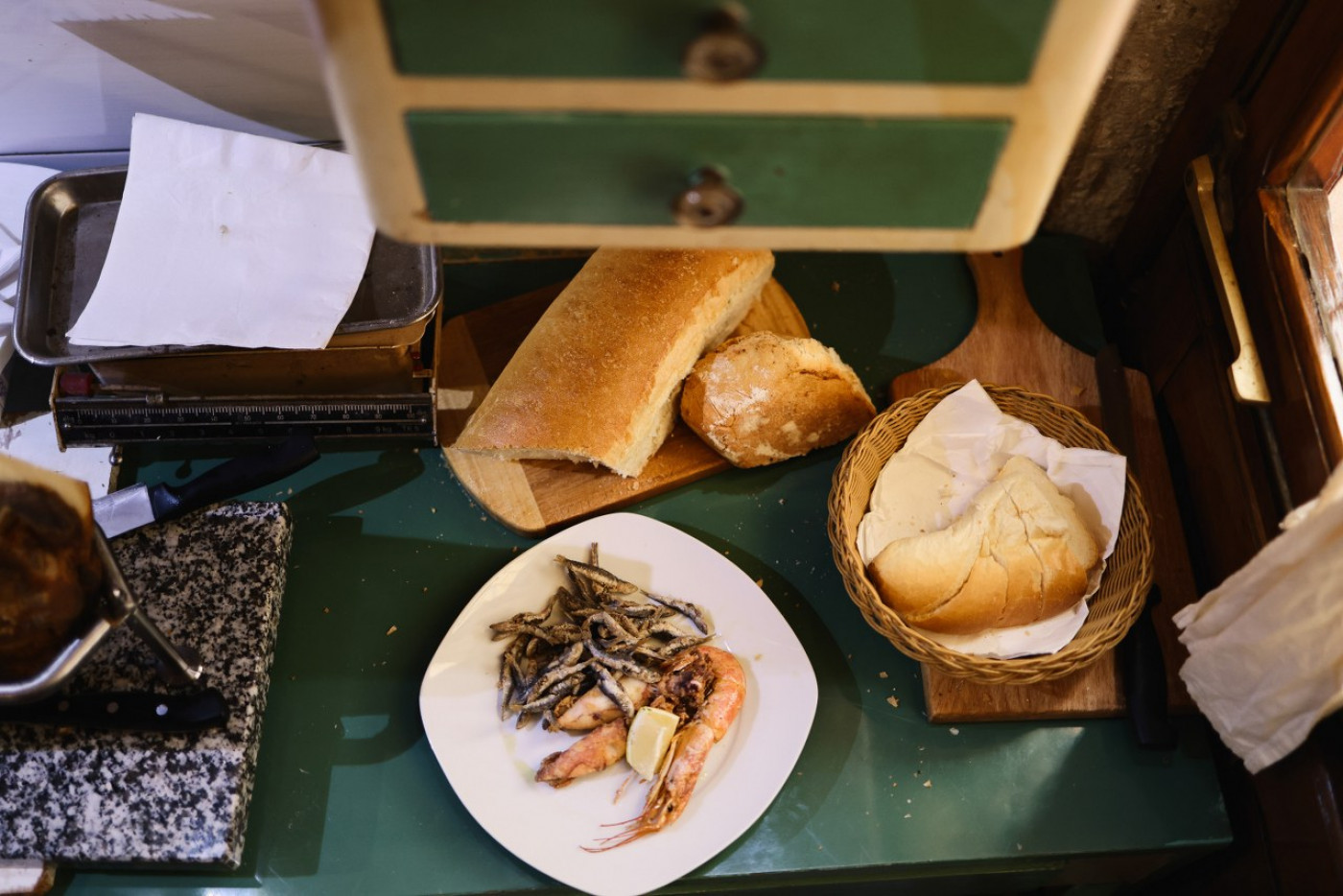
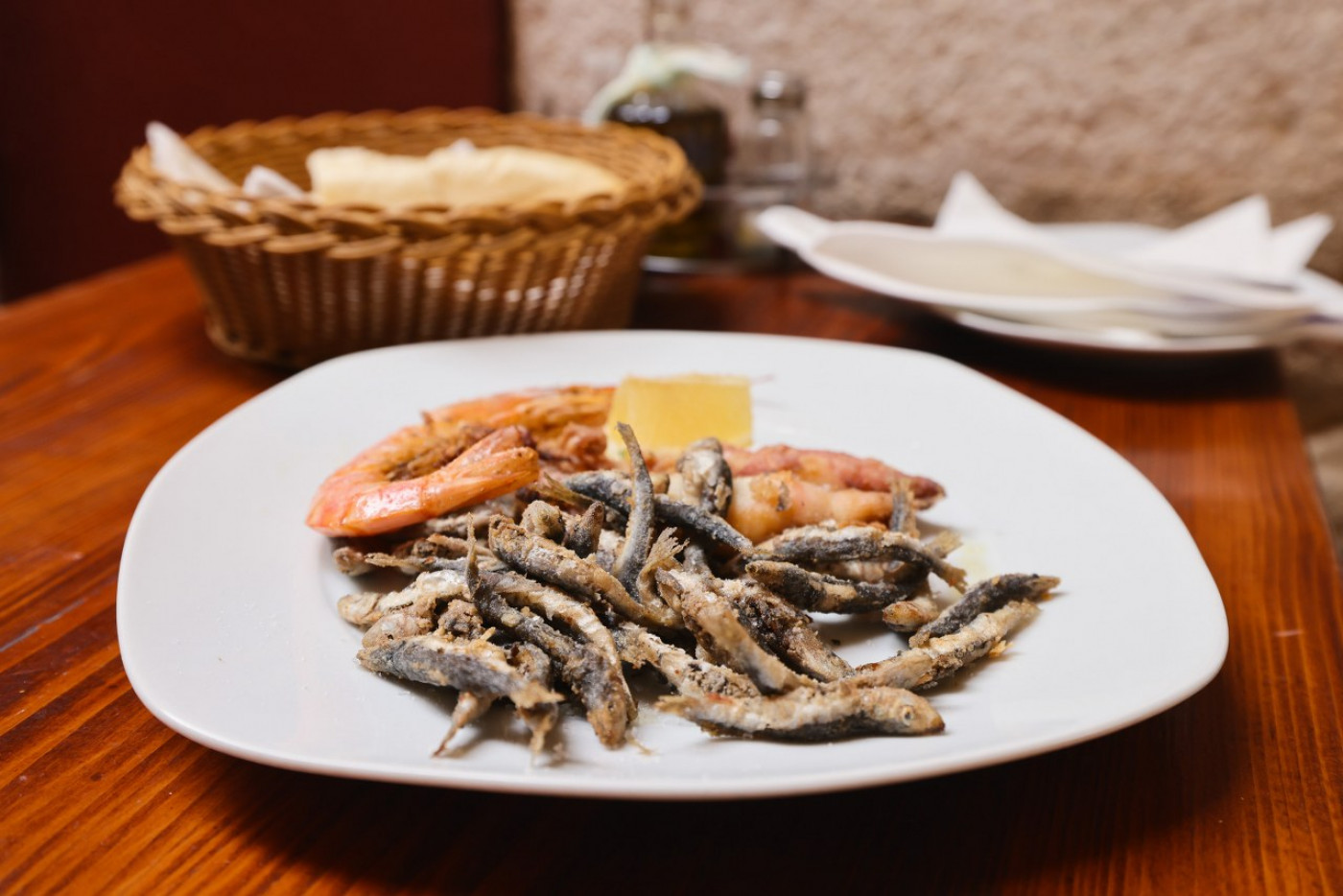
That morning, at the fish market, Ćuća found, which happens very rarely, sprats, a fish related to sardines, more minor, but according to many even tastier. Sprat should hardly be gutted. Its tiny scales will disappear in the deep oil of Ćućina pan, pršura. Sprats, squid and shrimp were first rolled in flour by our chef, and our fry was ready in a few minutes. The fried sprats served in the original simple way are usually eaten only with fingers, without cutlery. That is why this dish is authentic local fast food. Or ćapada, as we call this way of consuming small fish here. There is no special trick here: the most important thing happened before frying - when Ćuća chose the freshest small fish that he could find at the fish market and brought the smell of the sea to "Tovar". And this repeats every day.
For a midmorning snack (marenda) or early lunch, it makes no difference. It is only essential to find an empty seat at "Tovar", the smallest tavern in the world, either at the bar itself or one of the few small tables squeezed into the narrow space of the original kaleta of the famous farm labourers' Varoš.
Watch the video
.
Want to find more?
Suggested