
07.08.2025.
Octopus From the Battleship's Interior Szent Istvan Sunken Off Premuda
The Austro-Hungarian dreadnought battleship "Szent Istvan", built in Rijeka and completed in Pula in 1914, had an overall length of 152 metres, powerful weapons with onboard 1,000 crew, and was the pride of the Austro-Hungarian Navy. She, however, had terrible luck.
After four years of delay, she finally set out on her first serious voyage and the first battle at dawn on June 10, 1918. She was struck at her amidship by two torpedos launched from an Italian torpedo boat, in the most sensitive place, the boiler rooms, deep in the ship's interior.
She sailed for an attack on the Otranto Barrage
"Szent Istvan" was in a group of ships, one of which, "Tegethoff", was her sister, and this group of vessels followed two similar ones that had left the northern Adriatic ports the day before. The task of the entire fleet was to launch an attack on the Otranto Barrage to enable a passage through the Straits of Otranto, which blocked the Austro-Hungarian fleet's exit to the Mediterranean Sea. After the "Szent Istvan", the only one of these Austro-Hungarian ships belonging to the Hungarian part of the Empire sank, the whole fleet returned to their homeports, and the battle for the Otranto Barrage never took place. That event, in reality, heralded the end of World War I, which ended five months later. The "Szent Istvan" sank to a depth of 66 metres with the loss of 89 crew, many of whom were Croats. The rest of the 976 crew were rescued.
Photo: diving-shark.hr
Torpedoing Austro-Hungarian ships was a real naval battle because the crews of two Italian torpedo motorboats almost accidentally spotted the Austro-Hungarian fleet while they were laying anti-submarine mines near the isle of Lutrošnjak. After the strike, they returned to Italy. This war incident happened near the island of Premuda in the Zadar archipelago. Premuda is, in fact, the westernmost and furthest island from Zadar in that group of islands, and due to the sinking of the"Szent Istvan", it entered world historiography. "Saint Istvan" is the largest and most famous ship that lies at the seabed of the Adriatic, and there are many ships that experienced a fate like hers throughout history. Today, "Szent Istvan", which lies upside down and whose highest point is at a depth of 45 meters, is called the "Titanic of the Adriatic" or "Adriatic Mount Everest".
Although it is a real underwater attraction, diving to the protected site of "Szent Istvan" is banned without permission from the Croatian Ministry of Culture. The same Ministry occasionally organizes research dives, so many valuable artefacts, the crew's personal belongings, and other items were taken out from the ship. All of them will one day be presented to the public as a precious collection.
Photo: Wikipedia
Divers who searched "Szent Istvan" in these investigations bear witness to the rich fish life in her interior. Fish, crabs, shellfish and other marine organisms live in the crew cabins and the shared areas. Witnesses say that fish specimens are enormously large: conger eels exceed 20 kg in weight and the common dentex over ten. This is not strange because the ship's wreck, no matter how rich a fish habitat it may be, is an almost impossible fishing position, as evidenced by numerous remains of fishing nets and other fishing equipment found inside the wreck. Fishermen, therefore, avoid "Szent Istvan"..
Octopus - the largest Adriatic octopod
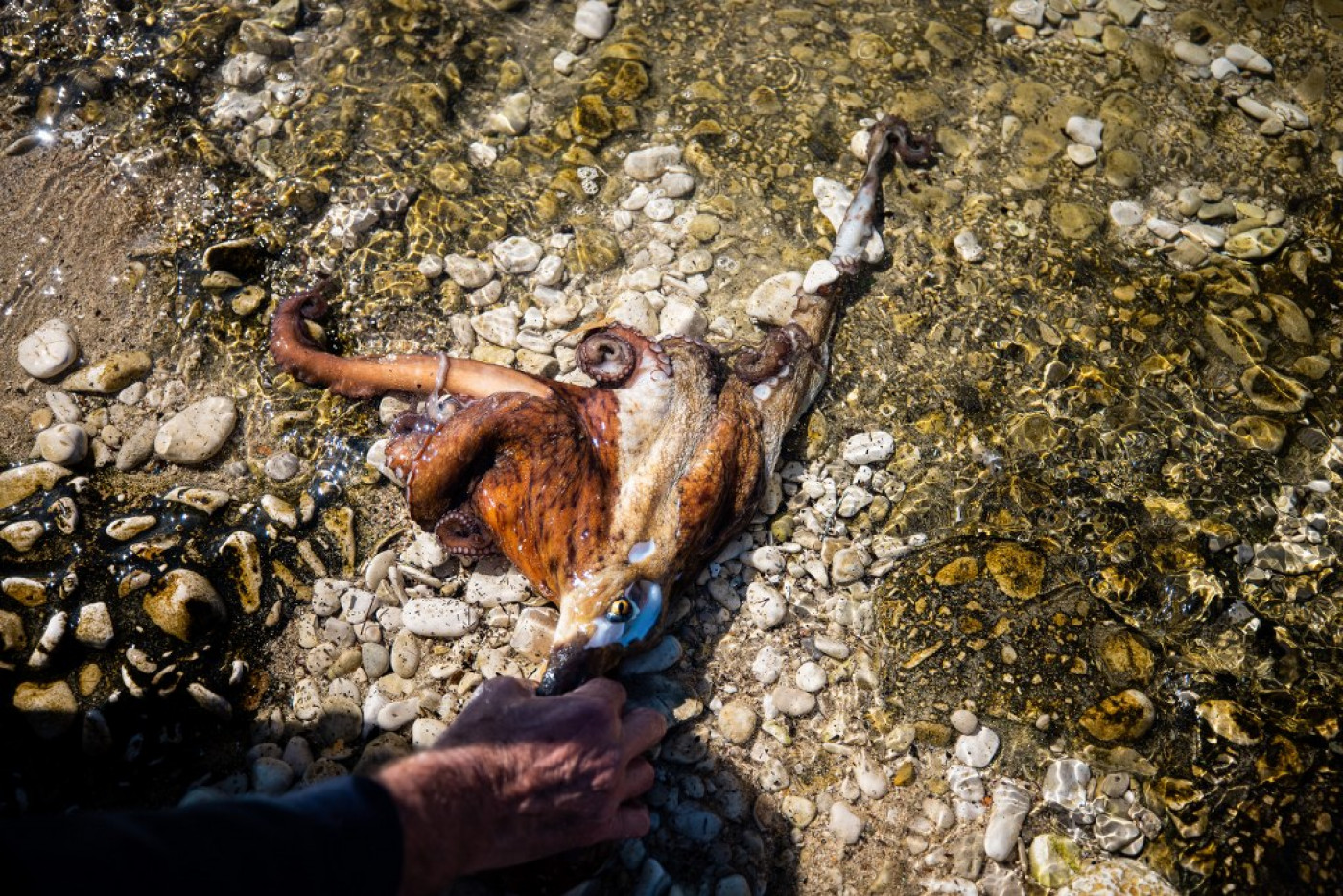
One sea creature especially enjoys living inside the mysterious wreck, and it is a lover of underwater hidden holes and clefts - octopus. The largest Adriatic octopod only rarely reaches the highest recorded weight of 20 kilograms. More frequent octopuses weigh three to seven kilograms, so the Adriatic octopus is not the mythical Kraken that sank ships in sailors' stories. Fishermen in the Zadar littoral catch it by spearfishing at night "by lamplight", looking for it with the help of strong light in the shallow waters where it gets in search of food. This very intelligent sea creature then goes from a hunter to prey.
Octopus is a delicious and sought-after gastronomic delicacy that is prepared in many ways in the Zadar region. You can find a boiled octopus in salads with potatoes and onions. Or you can cook it and then press, freeze and serve it as a thin steak poured over by olive oil. Even today, the custom of drying octopus in the wind and sun has remained in some places because it makes it even more delicious.
We also make octopus stew and other dishes "na žlicu" and grill it even when it is boiled. In any case, because it has hard flesh, the octopus needs cooking to prepare any dish and has to stay in the freezer for a while. It is then softer and tastier.
Octopus under the baking lid in the Tavern "Masarine"
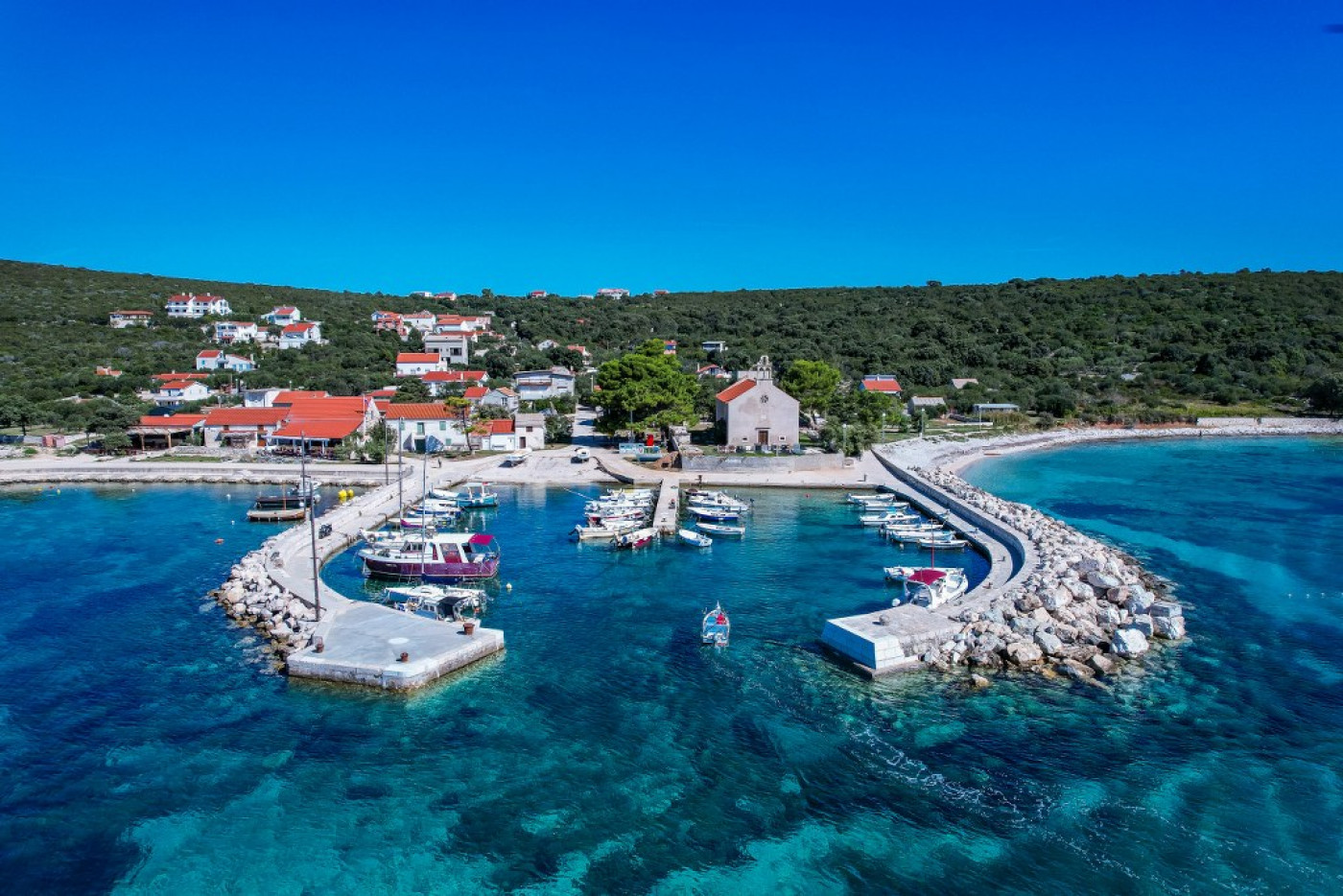
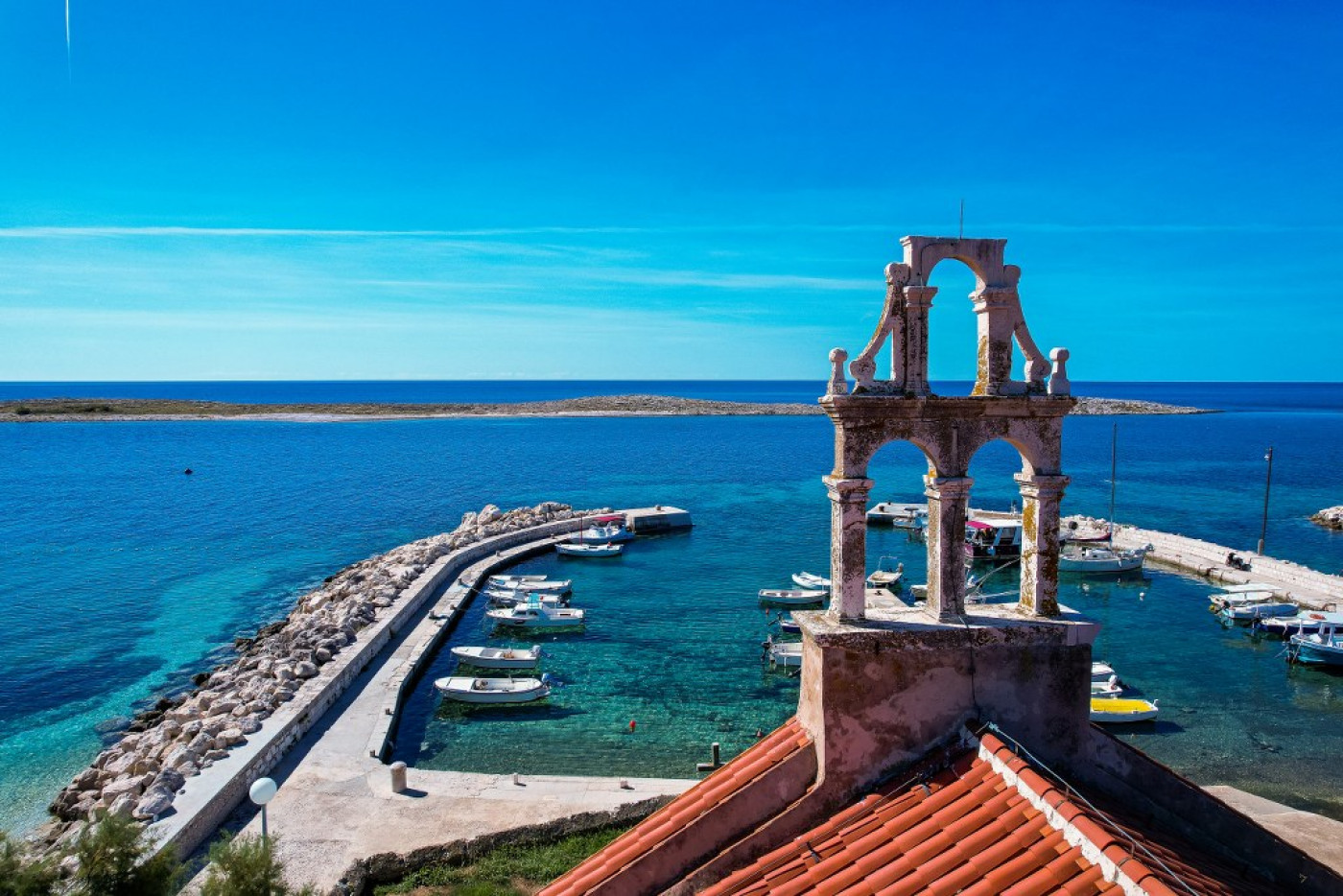
Premuda is a typical island of the Zadar archipelago, not particularly large but adorned with numerous sandy and pebble fairy-tale bays and beaches where the sea has a turquoise colour. The island has only one eponymous settlement at the island's highest point, with about 60 permanent residents. At weekends and in the summer there are many more. It is a real paradise for boaters and people who want a relaxing peace. To the north is port Loza, and to the south of the island, there is port Krijal.
On the coast of that port, Veljko Žuvanić, a local man, has run and prepared meals in his tavern "Masarine", named after a nearby isle for years. Of course, in "Masarine", you can find primarily excellent fresh fish because around Premuda, there are many rich fish habitats, so fishermen regularly bring their rich catches to Žuvanić.
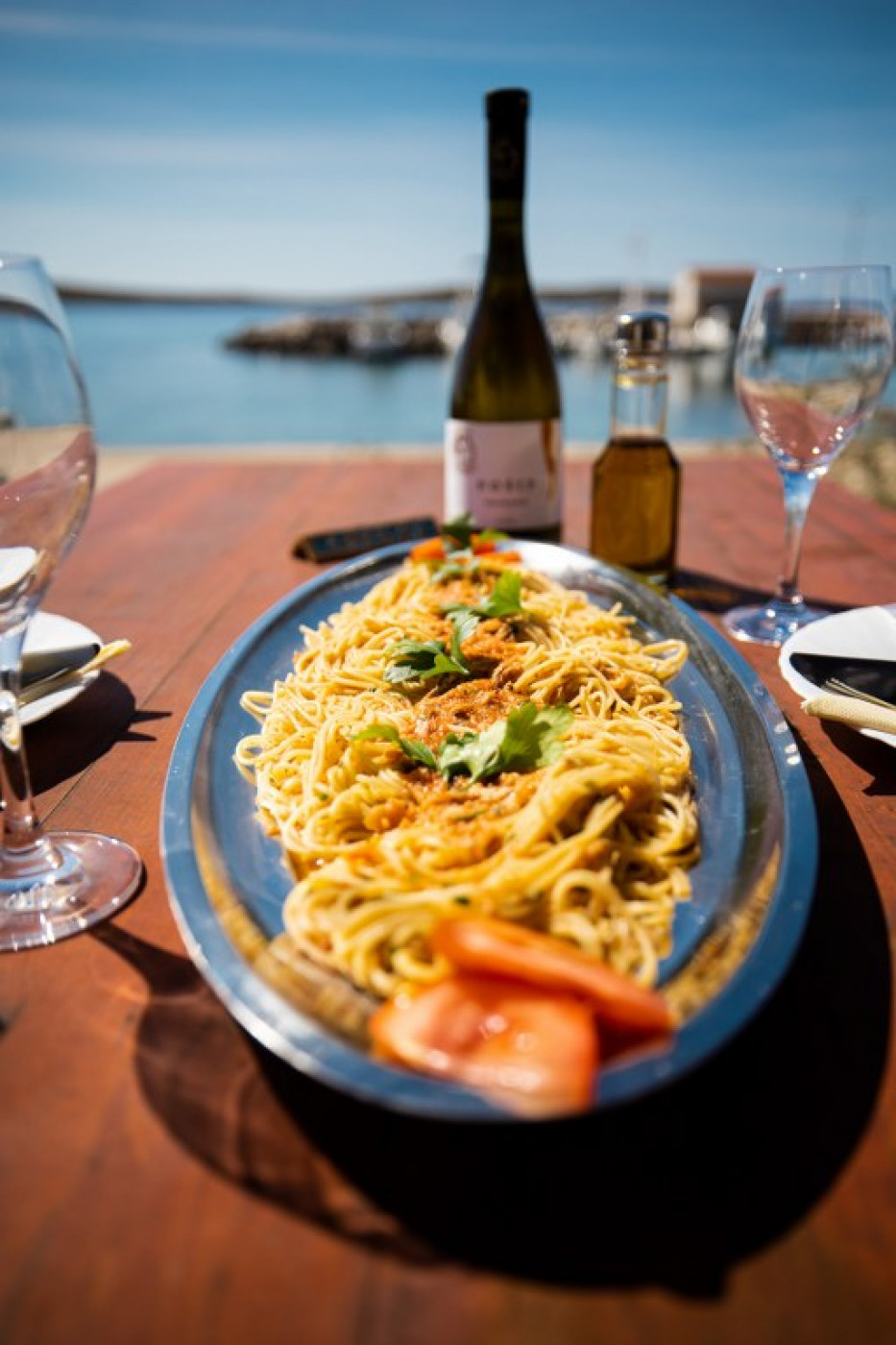
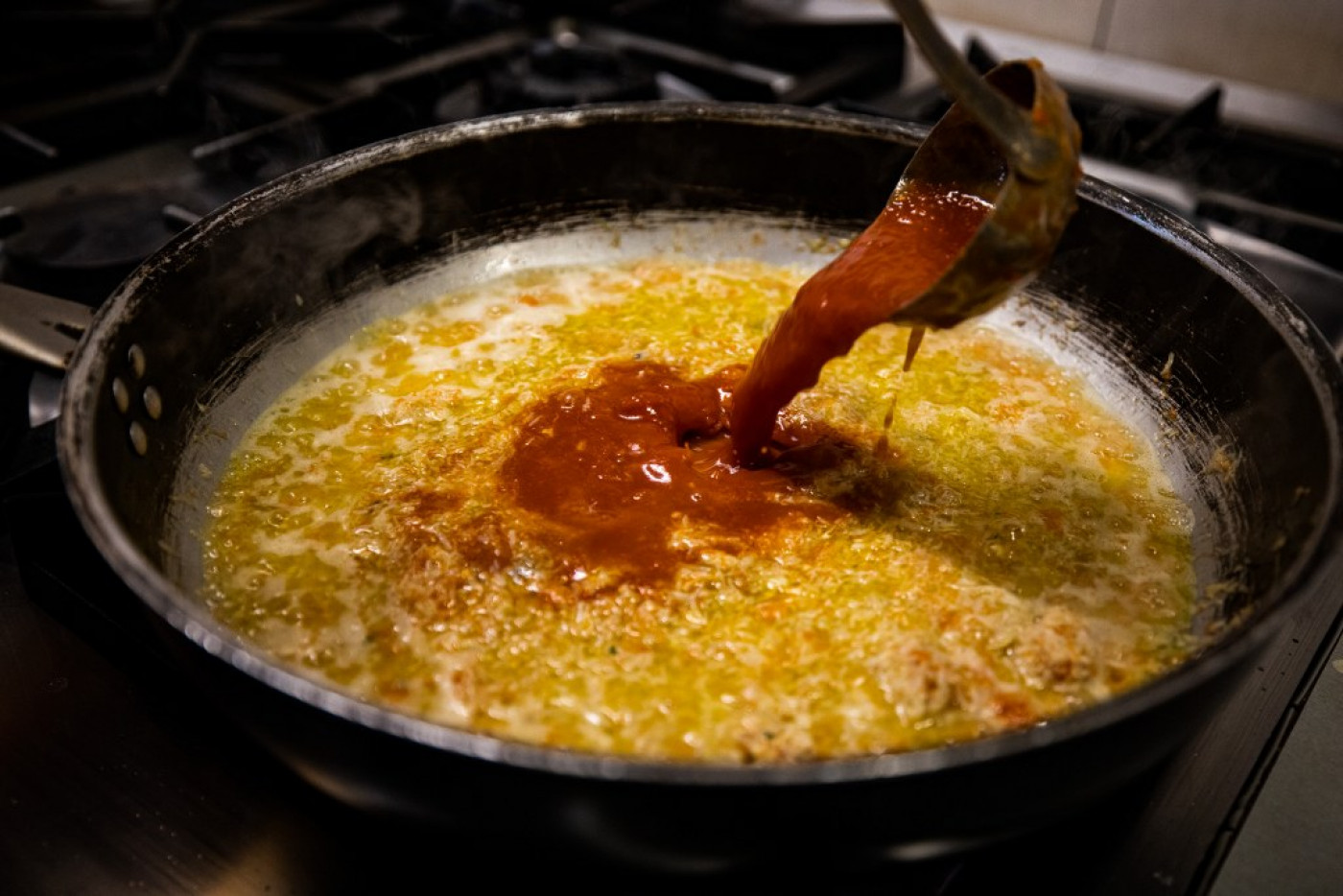
In his offer, you will find even a rare crab (grancigula) from whose meat taken out from its hard shell and long legs chef Veljko prepares a phenomenal sauce which he pours over spaghetti. A quick and straightforward preparation in which he combines garlic, delicate, boiled crab meat, fish stock and wine produces a dish he calls – repete (encore).
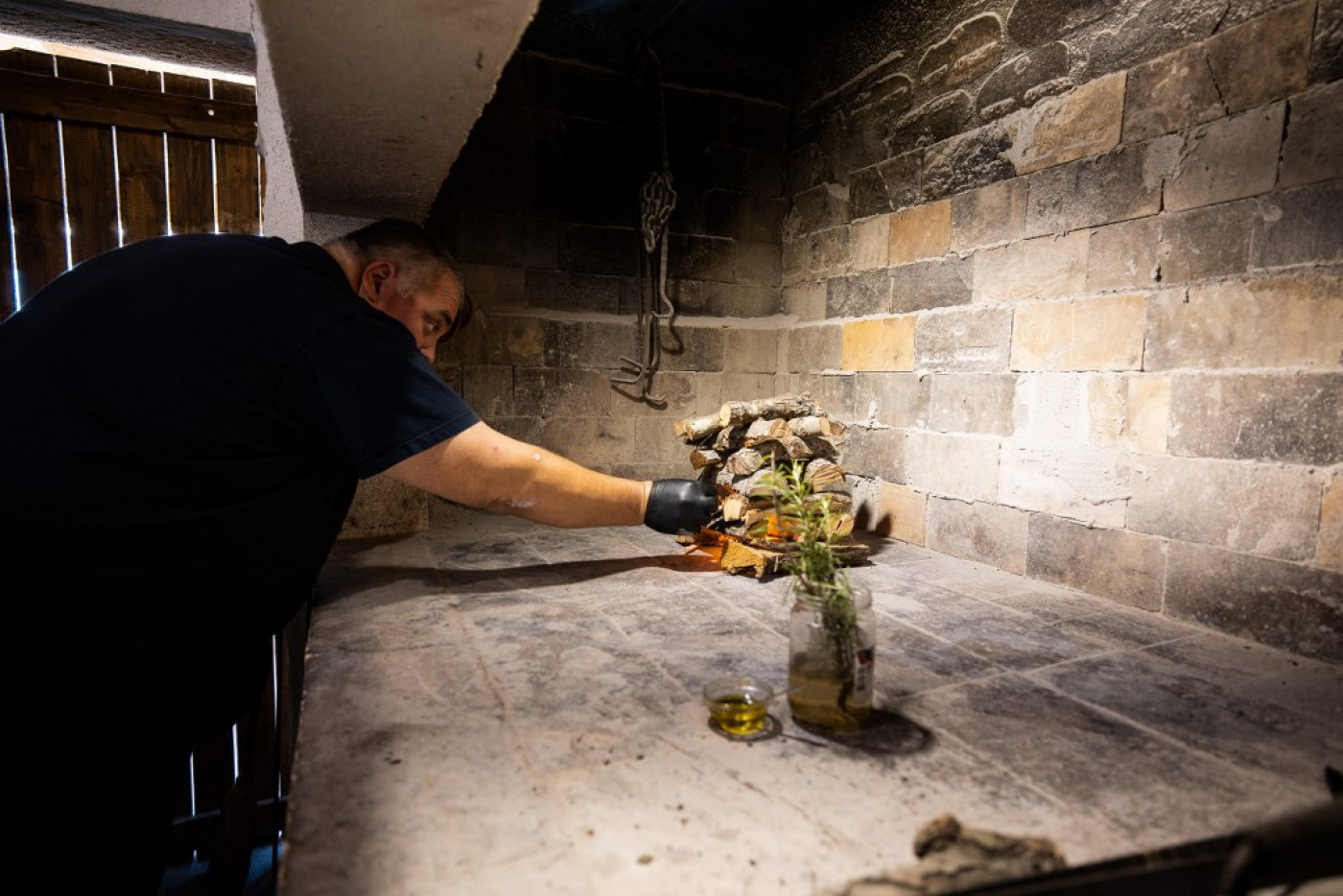
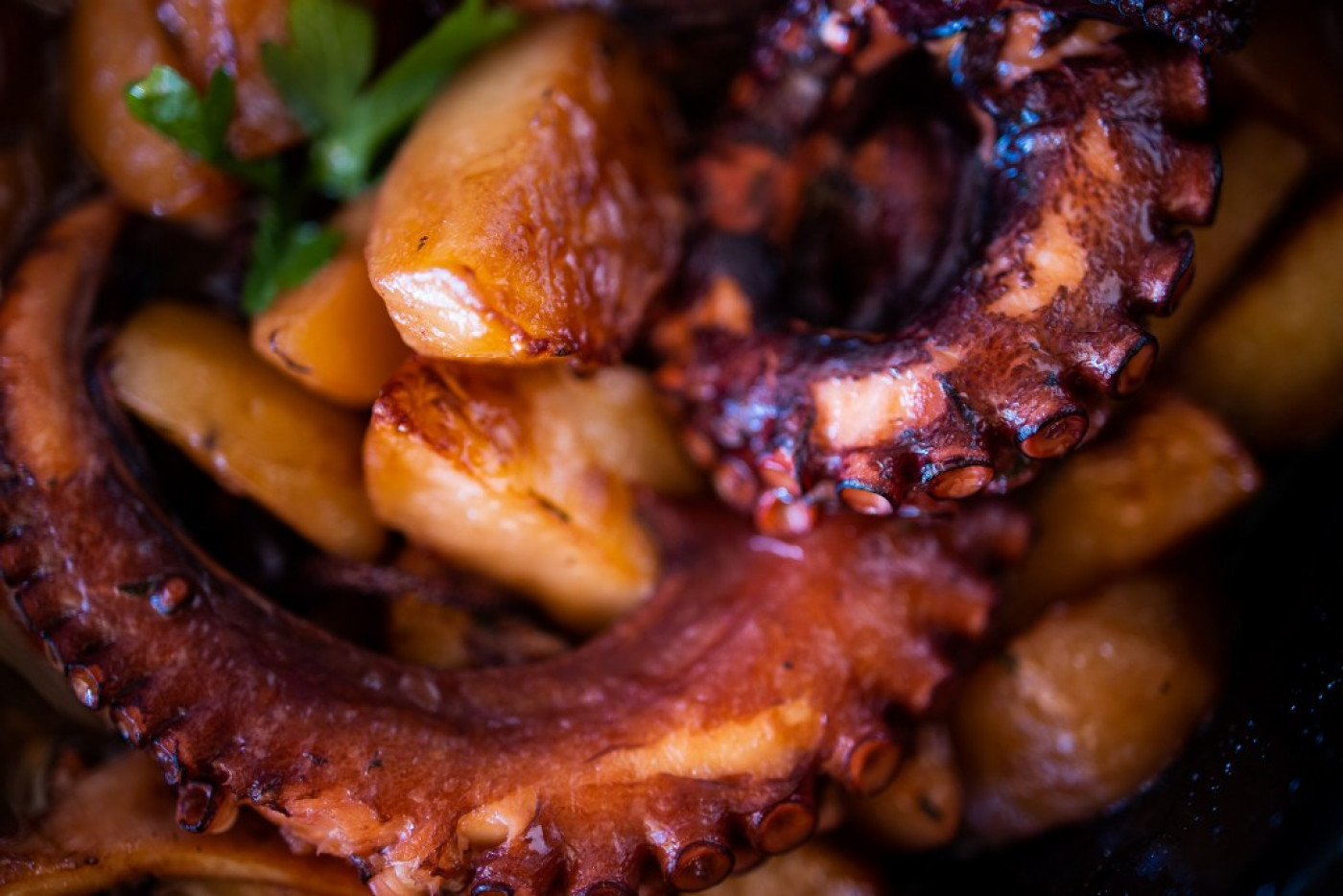
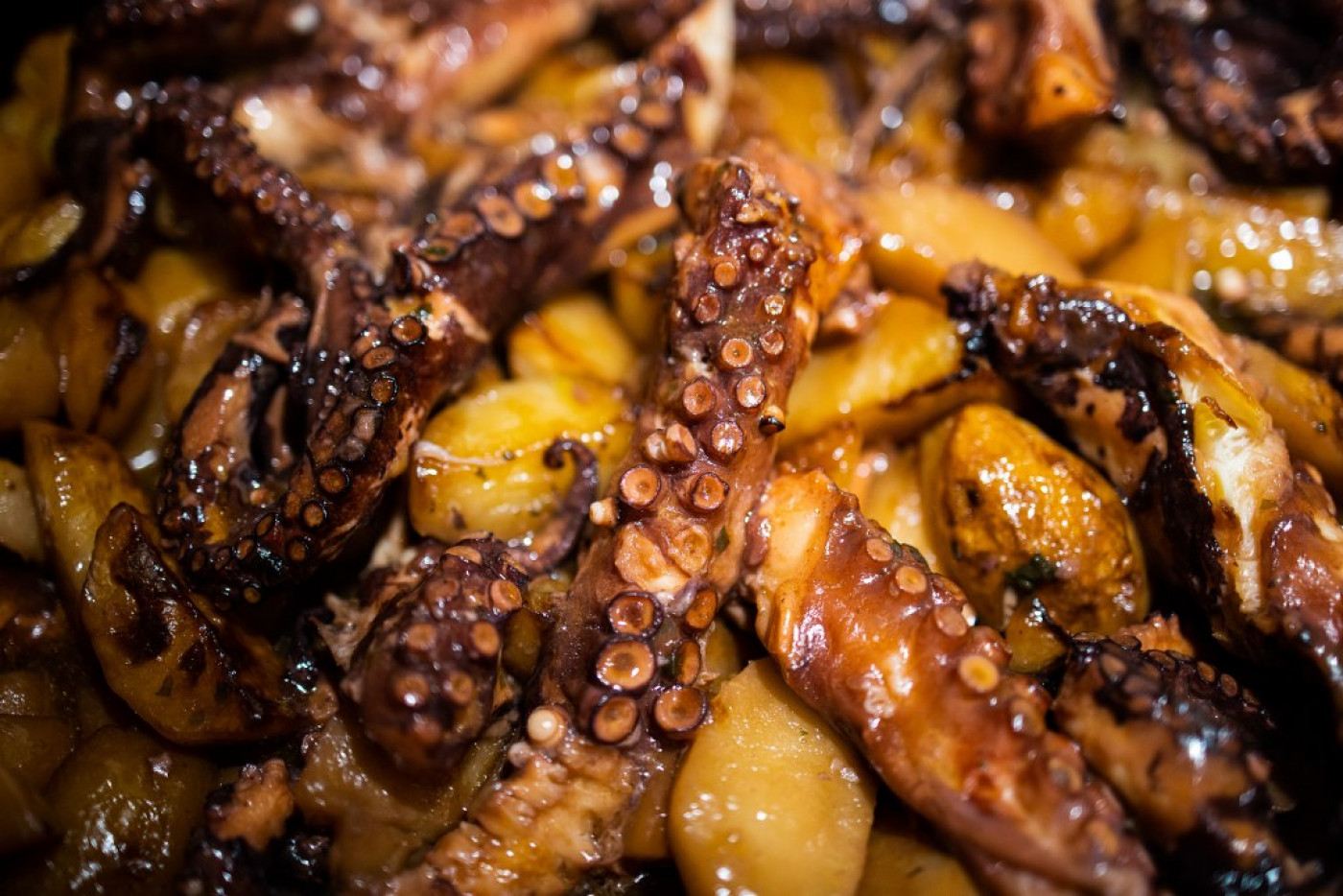
However, the primary speciality of Žuvanić's konoba is octopus prepared with potatoes under the baking lid (peka). He cooks this dish in the old way, according to which the octopus is not boiled in water before baking but exclusively in its own liquid and olive oil over a low fire.
After half an hour, when the octopus is cooked, he will add onion, parsley and a little white wine to the remaining liquid, and when the liquid is reduced, he will briefly fry the potatoes in it, which will literally "soak in" all the sauce.
By this time, he had placed the cooked octopus in a baking dish, separated the long red tentacles from the head, then added sliced , and fried potatoes covered the dish and ingredients with a baking lid, stacked it with live coals and hot ashes, and let it bake for about an hour. And the meal was done.
We enjoyed this wonderful meal, the soft and so aromatic octopus and potatoes with a new distinctive taste given them by the roasting sauce.
We could only imagine how many such delicious octopuses were hidden in the spacious interior of the ill-fated "Szent Istvan", just a few miles away from our tables.
Watch the video
.
Want to find more?
Suggested

Gastronomy
“With a Spoon” Tavern: That Is What We Call Real Food
26.01.2022.
News
New Seasonal Catamaran Line Between Zadar and Ancona in 2026
13.03.2026.

Gastronomy
Antique Podded Broad Beans in Lamb at Restaurant Kornat in Zadar
31.05.2022.

News
Record Attendance at the Tourist Information Center in Cedulin Palace
17.10.2022.