


04.04.2022.
Dalmatian Spit-Roasted Lamb is a Cult Dish in the “Tamaris” Restaurant in Zadar
Young Dalmatian lamb, meat of a few-month-old sheep of the Pramenka breed, which was raised on Dalmatian pastures full of aromatic Mediterranean plants, has a special, almost cult status in the rich and diverse Croatian and Dalmatian gastronomy, including Zadar.
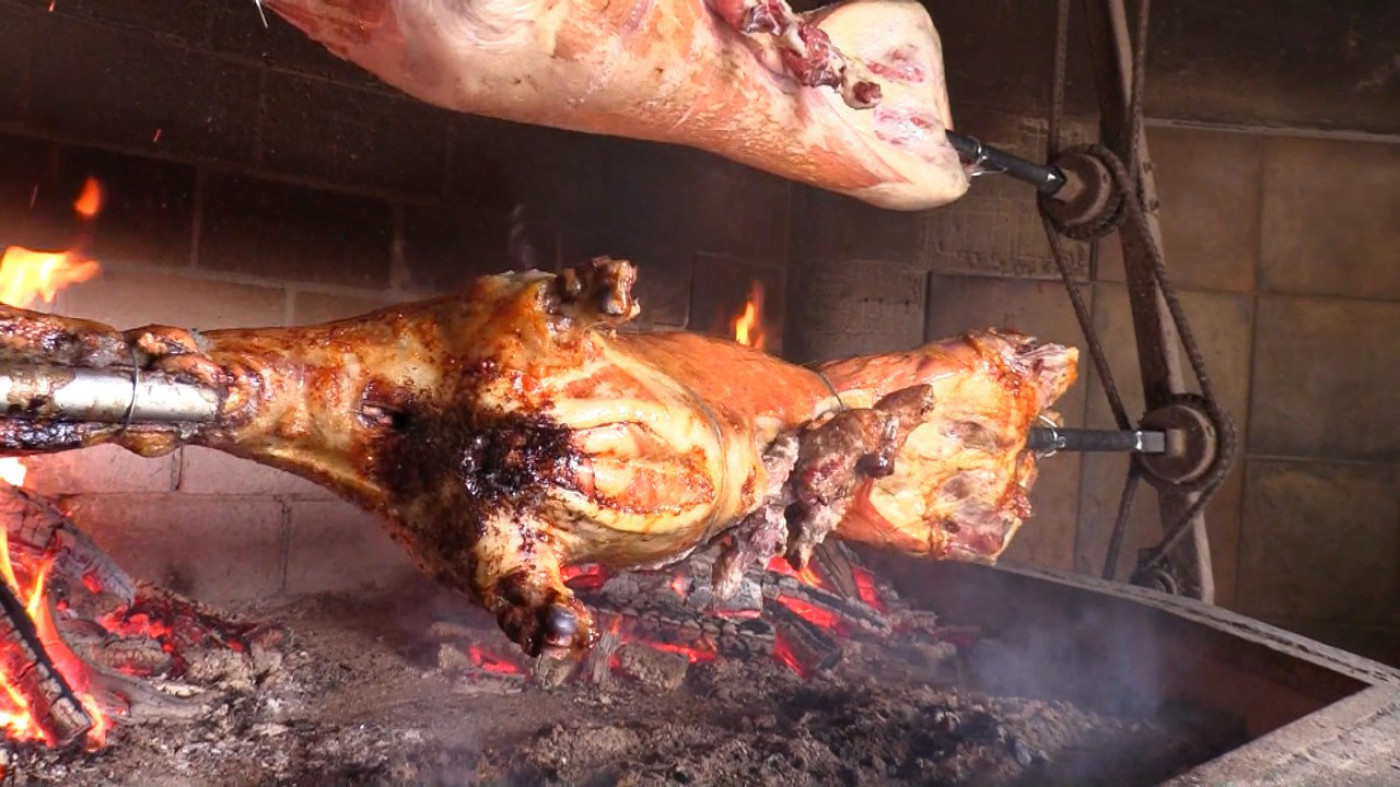
Prepared in a simple way and roasted on, certainly, the oldest cooking tool, spit, over a controlled open fire, lamb in Dalmatia is seasoned with only one spice before roasting, salt. It makes for so much more than the pleasure of notorious gourmets and meat and roast lovers. The enticing smell and specific taste of roasted lamb is not only associated with the most beautiful season - spring, when it is the season of young lamb, but also with the biggest Christian holiday - Easter. Young lamb on a spit is an almost obligatory main course of a hearty Easter meal. Gastronomically, it is a symbol of Easter, together with dyed boiled eggs and Easter bread - sweet bread made from flour and large quantities of eggs.
Dalmatia Was Named After a Sheep
The deep roots of young roasted lamb in the gastronomic tradition of Dalmatia and the Zadar region are not accidental. The first historical data on spit-roasted lamb date back as much as eight thousand years, and the name Dalmatia was created four centuries BC, when the Illyrians used to live here and it derives from the Illyrian word delma or dalma, which is the Illyrian word for sheep. The Illyrian tribe of this region was called Delmati or Dalmati. Also, the Croats who began to settle in the wider area of Dalmatia at the beginning of the Middle Ages and very soon after that formed their first state in the Zadar and Šibenik hinterland (from Nin to Knin), were mostly livestock farmers, more precisely, sheep farmers.
But the Middle Ages remained in (bad) memory of Europe and the Mediterranean of the time, as a period of famine when only a few had the privilege of a full table, mostly with meat, and rarely with vegetables and fish – the social elite at the time, kings, the aristocracy, rich merchants and others. The common people lived on the brink of starvation, dependent on the whims of weather conditions and the harvest, feeding mainly on porridge cooked from cereals, from other modest foods for the preparation of which it was necessary to spontaneously acquire new culinary knowledge. Abundant meat meals among the common people of that time were associated only with rare occasions in a year, primarily religious holidays. And the biggest Christian holiday, Easter, happens at a time when the meat of a young sheep is most delicious, when it is several months old, and when it is separated from its mother’s milk and already fed with assorted herbage from Dalmatian pastures.
It is exactly this multitude of assorted Mediterranean plants in Dalmatia, which is the main and only diet of sheep, which distinguishes the meat of Dalmatian lamb from that of the continental part of Croatia and neighbouring countries. And that even despite the fact that it is the same breed of sheep, Pramenka. Also, it has been scientifically proven that due to the specific Mediterranean herbage in Dalmatia, a special variety of the same breed of sheep was formed, which differs in smell, taste and meat texture from its mainland relatives, who have a far more monotonous diet. In the wider area of the Zadar hinterland alone, 3,500 species of plants have been registered, of which about seven percent are endemic, autochthonous. This is the main reason why lamb from the coastal parts of Croatia and the islands is different and tastier than elsewhere. Even the shape of the sheep itself is somewhat different here, it is smaller and thinner. If we add to that sea salt carried by gale-force wind bura, literally seasoning Dalmatian pastures with salt from the sea, and salt is a sheep's delicacy, then we can quickly solve the riddle why Dalmatian lamb meat is so different, so appreciated and why it has become a generally accepted gourmet delight, without which wedding or other ceremonial meals, especially on religious holidays, are unimaginable.
Specialty of Young Lamb from the Island of Pag
Young lamb from the island of Pag, only 30 kilometres from Zadar, has its own special place in the story of Dalmatian lamb, as well as in dreams of hardened gourmets. Pag lamb is especially valued, although sheep grazing on Pag, an island full of sheep and pastures, is similar and even poorer than in other parts of Dalmatia. The reason for this is that lambs on Pag are prepared for consumption from the age of 45 days, so that the young lamb does not even reach grazing - it is fed only on mother's milk. And the reason for that is the famous, world-renowned Pag cheese. Sheep farmers on Pag make this unique delicacy from the milk of their sheep (it used to be the same on other islands in the Zadar area), which is why lambs are separated from sheep. And as early as January and February, in March the latest, it goes into consumption as a top gastronomic experience.
In Dalmatia and Zadar, we prepare all sorts of dishes from lamb. Many people like it cooked (and by cooking we also get the great lamb soup), baked in the oven or, even better, under the baking lid (peka), then in lamb stew with young peas (the dish is called žgvacet) or artichoke. Still, the most appreciated and desired delicacy is the young Dalmatian spit-roasted lamb, although this method of preparation, with the entire body of the animal spinning over the fire, might cause animosity for some. After all, that is gourmet hypocrisy, because roasted lamb on a plate does not repulse anyone, quite the contrary, except, of course, vegetarians. Besides, the Germans revel in ox beef roasted in the same way, and almost the entire world in suckling pig, either roasted on a spit or in the oven in one piece.
Lamb Tastes the Best at “Tamaris” Restaurant
In Zadar, throughout the year, and especially at the end of winter until mid-summer, you will find good young lamb from the spit at two or three specialized meat restaurants, but the best lamb can be found at the now cult, and well-known throughout Croatia, “Tamaris” Restaurant. The Restaurant is located at the eastern entrance to Zadar, only ten minutes from the Zadar Airport, and the old centre of Zadar, and it has been run under that name by the Butković family for 28 years. The subtly decorated restaurant accommodates about a hundred guests, another 150 on the spacious roofed terrace, and above the restaurant there is a small elegant pension hotel with 16 rooms.
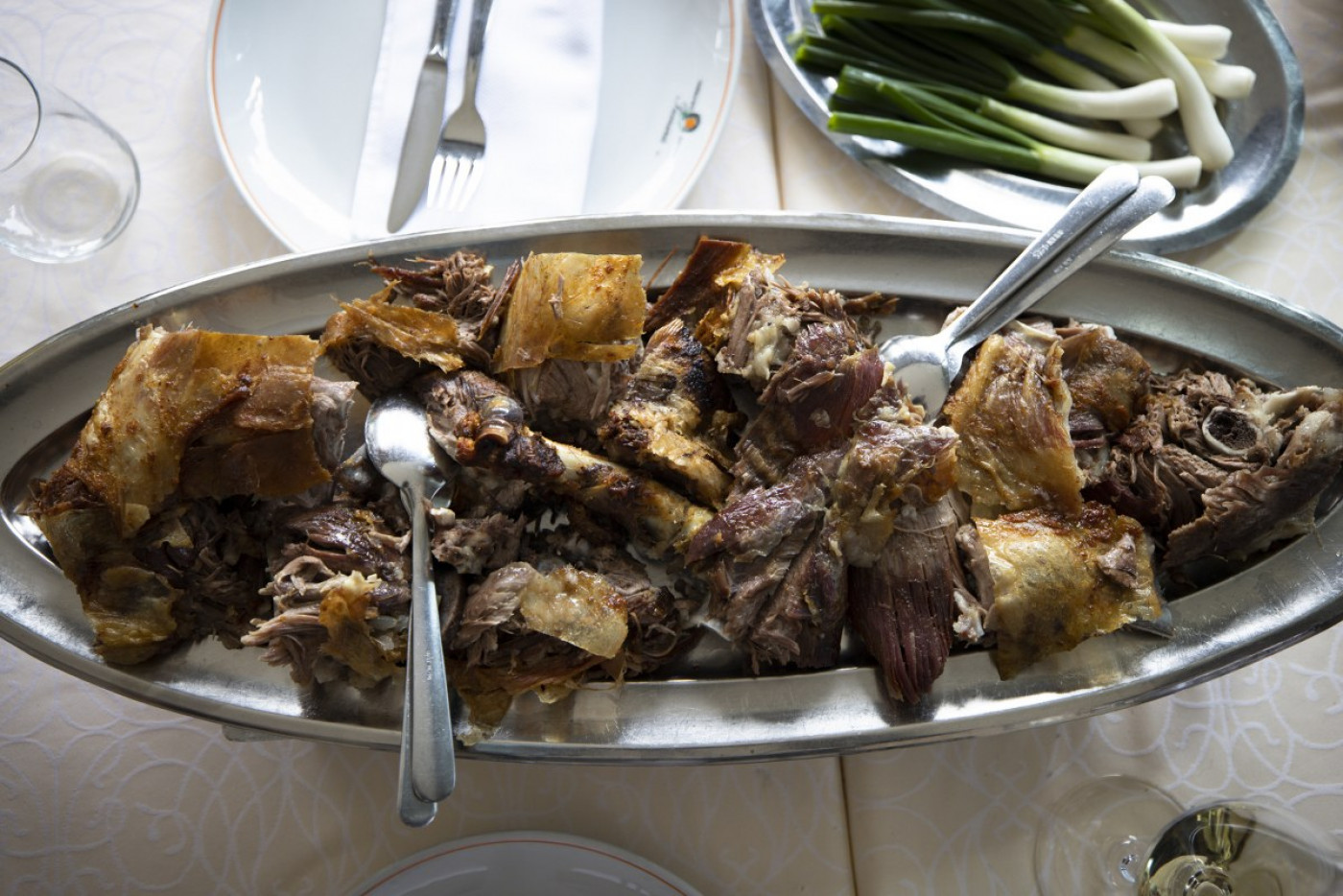
Although the “Tamaris” menu is carefully composed of different dishes, mostly grilled meat roasts, and even fish specialties, of which it is essential to single out a unique shrimp and asparagus risotto (it is not just a “replacement dish” for vegetarian guests, but a phenomenal gourmet delight), the main star of this restaurant’s kitchen, the reason why most guests come in the first place, are Pag and Dalmatian spit lamb, roasted over oak wood in a spacious, always warm and attractive roasting facility for everyone to see.
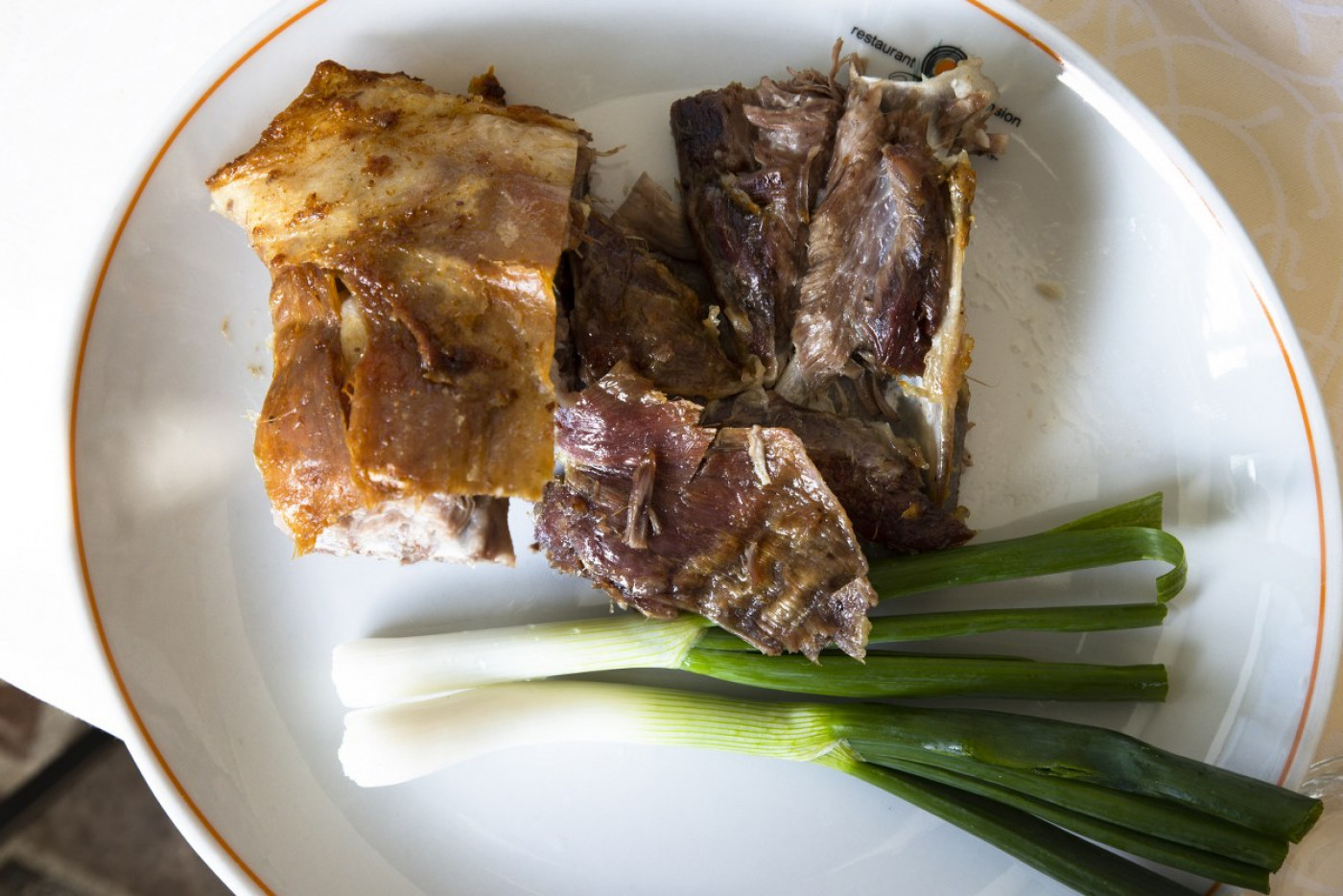
The owner of “Tamaris”, Darko Butković, personally procures lambs exclusively from the island of Pag, Ravni kotari and other parts of the Zadar and Šibenik hinterland. With a by now experienced eye, he chooses the best specimens of the sheep herd that, when cleaned, weigh no more than 12 to 14 kilos, often even less. Meat is prepared for roasting in his own slaughterhouse according to all high standards of HACCP, the Croatian Food Agency. The cleaned and drained meat of the whole lamb is then abundantly salted, after which it is left to the knowledge and experience of the grill master in the roasting facility, who must know how to control the fire and assess, without prior tasting, when the meat is ready for consumption. After resting shortly on the spit on which it was roasted, about two metres long, the lamb is carefully cut into smaller pieces and placed on serving trays. In Zadar, the most beloved pieces are from the front part of the lamb, with more bones, but equally tastier. Interestingly, lamb is generally not ordered in portions but by weight. For example, for a company of four, it is customary to order 1,20 kg of roasted meat, and if that is not enough, because lamb is extremely delicious and the company is still hungry, it is always easy to order more… At “Tamaris”, lamb must be served with young, spring onions (kapulica), baked potatoes, some seasonal salad and warm bread from their own oven.
A good white Dalmatian wine such as Pošip or a lighter red wine will always go well with “Tamaris” spit-roasted lamb. After some good lamb, many guests of the restaurant are tempted to return by the obligatory and widely known dessert prepared by the “Tamaris” confectioners, and that is baklava. It is originally a Turkish dessert made of thin pastry, walnuts, almonds or pistachios and sherbet, which has long been domesticated and popular in Zadar and Dalmatia. And if baklava is too sweet for you, you should opt for their airy cheesecake version, you simply cannot go wrong.
And finally, since we are discussing “Tamaris” and lamb, we must mention another specialty of the restaurant which is another favourite in Zadar and Dalmatia and a unique delicacy, which cannot be found in any other restaurant in Zadar. These are lamb tripe prepared in the Dalmatian way, a dish that only resembles a thick goulash soup, but in essence it is a completely different pleasure for the palate that would have probably been enjoyed by the legendary Anthony Bourdain, a notorious lover of offal, especially tripe.
Do you need more reasons to pay a visit to the “Tamaris” Restaurant?
Watch the video
.
Want to find more?
Suggested

History
Virtual Archaeology - New Technologies For Presentation Of Valuable Heritage
01.09.2020.

Events
Winter Fairytale in the Atrium of the Cedulin Palace
04.12.2024.
Gastronomy
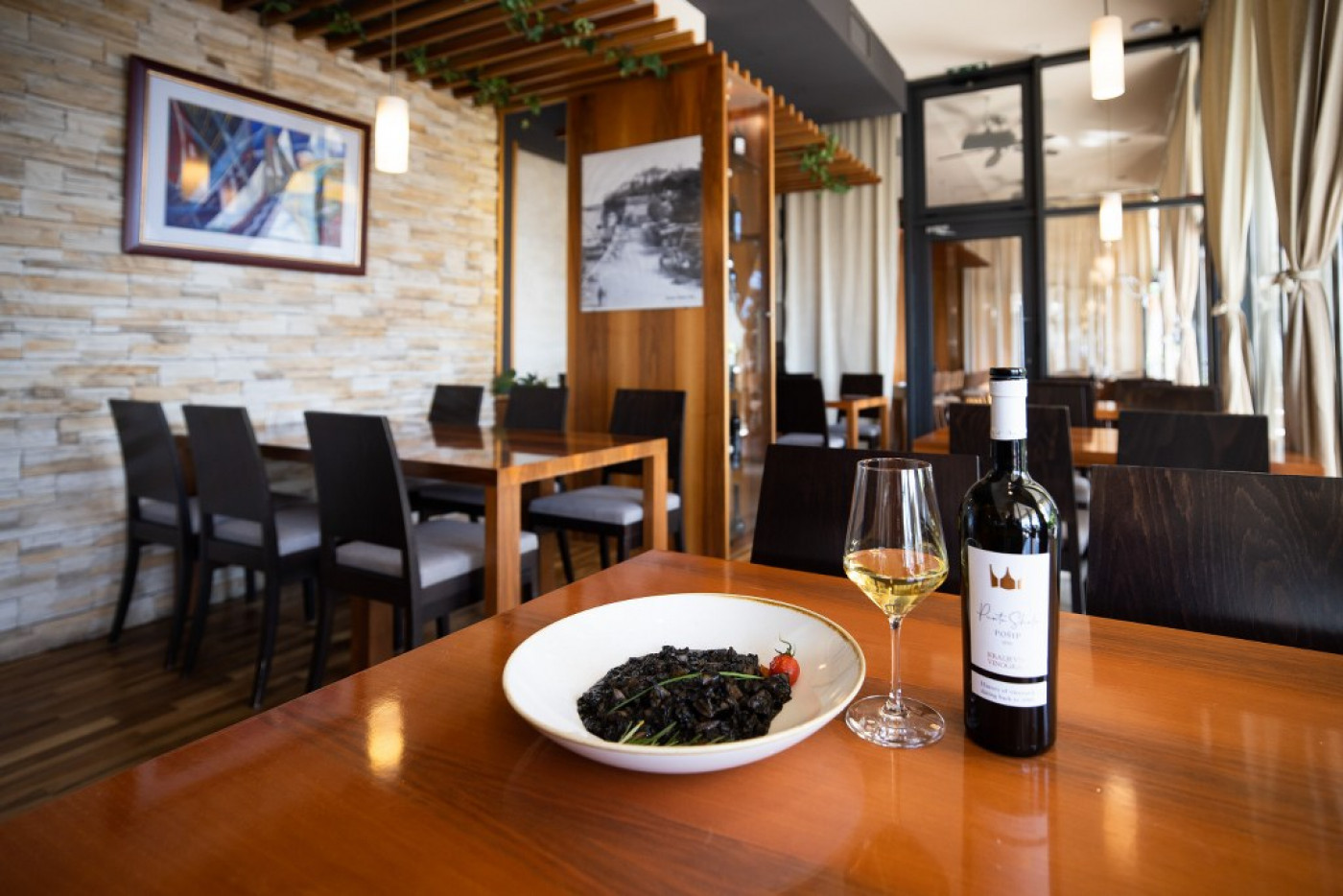
Black Cuttlefish Risotto at the “Bruschetta” Restaurant in Zadar
30.03.2022.

Events, Gastronomy
TSW Festival | Almost 105,000 Kuna Have Been Gathered for Humanitarian Purposes
24.05.2022.