

26.07.2021.
Kid Goat Meat Lešada, a Shepherd's Dish Made of Young Goat Meat
Lešada is a word that has an exceptionally high, privileged status in the alphabet of traditional and everyday gastronomy of Zadar and Dalmatia. Due to the simplicity of preparation and the double result of food, meat or fish cooking, in a larger amount of water, and vegetables, the lešada (boiled meat) is a favourite and frequent dish on the tables of Zadar families. The double effect is known: with one cooking technique, we also get cooked food, lešada, and soup that will be served before that meat or fish as the main course. Or it will later serve as a stock for sauces and dishes "na žlicu". Of course, vegetables such as carrots and potatoes cooked in the same pot can also be used as a side dish.
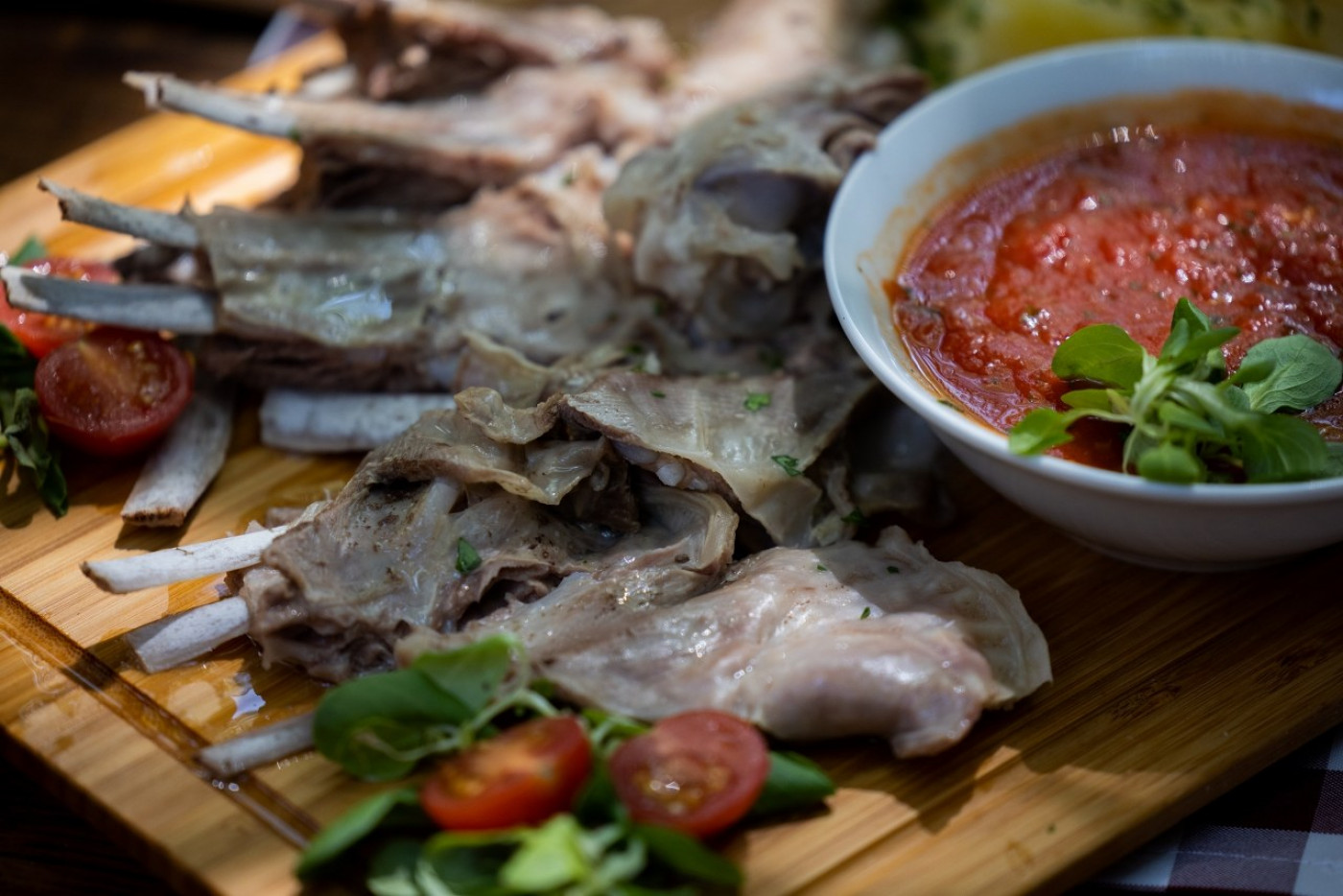
It's time for kid goat meat Lešada, a shepherd's dish made of young goat meat that for decades had been - banned
Fish and meat lešadas
Choosing the right, fresh foods, whether meat or fish, in the preparation of this simple dish is, along with the right cooking timing, the most important part of preparing lešada. And, in Zadar, we eat almost everything boiled: fish, from the sardine to dory and common dentex, and meat - veal, beef, poultry, lamb… Lešada is a favourite mid-morning snack for many, as well as lunch and a light supper. Although we also say that cooked vegetables are boiled (boiled Swiss chard), the real lešada is still primarily with fish and cooked meat dishes. Nutritionists will say that preparing food in this way is healthier than in some other ways, but ancient cookery books certainly did not count on it. Putting the food in a pot filled with water and letting it cook did not require too much time, so the housewife could always do some other household chores.
Fish and meat lešadas are offered by many Zadar restaurants and taverns, especially those that provide dishes of traditional cuisine in their authentic way of cooking. Therefore, it is unusual that in such a high restaurant offer, it is almost impossible to find one particularly praised lešada that has the status of a gastronomic deity and cult among local gastronomes and bonkulovićs - boiled kid goat meat. A kid is a young goat that matures for human consumption at a few months of age. And that is precisely at this time of year, in the middle of summer, in July, August and September. This is the time when the adorable young lamb enters a more mature phase - it ceases to be ‘young’. The ideal natural sequence for enjoying young meat full of flavours and aroma of Mediterranean herbs after the lamb is - the young kid.
Why goat breeding was banned
The Croatian brindled goat we breed on the coast, and the nearby mountain Velebit is a good climber and is constantly on the move in search of various Mediterranean plants. Therefore, its meat is far less fatty than, for example, lamb, and of all types of meat, it has the least cholesterol. It is also known that goats do not develop tumours and that their meat and milk are more digestible than other types of animals whose meat we eat and whose milk we drink. The goat has been present in this area for thousands of years, and today it is found on the regional Istrian coat of arms. So today, it sounds almost unreal that goat breeding in Croatia was banned entirely from 1954 to 1982. Supposedly for the preservation of natural resources.
Due to that and its intense smell, goat meat has lost its popularity in history in Dalmatia and Zadar. Only in the last few decades has this kind of meat returned to the tables and the priority lists of serious gourmets. The young kid meat, which does not have such a peculiar smell as an adult animal, and is tender and more pliable, arrives at our tables slowly but steadily again, although mostly at private feasts and rarely in the restaurant offers.
However, one Zadar restaurant, Konoba "Dalmacija", includes goat's lešada on its daily menu, of course, only in summer. This restaurant with Mediterranean food has a permanent menu bursting with the smell of the sea and good meat steaks, and the daily, extremely affordable menus change every day. The offer is mainly traditional fish and meat dishes of local gastronomy, and sometimes those from the continent. The owner of "Dalmacija", Josip Jerković, is from Slavonski Brod, but he has lived in the Zadar area for decades. Still, he has not forgotten his Slavonian origin, so sometimes his daughter Anđela, who runs the restaurant, includes a typical Slavonian dish like čobanac stew. This tavern has sausages and bacon from their domestic production on a permanent offer.
Tavern "Dalmacija" preserves the remains of an ancient Roman temple
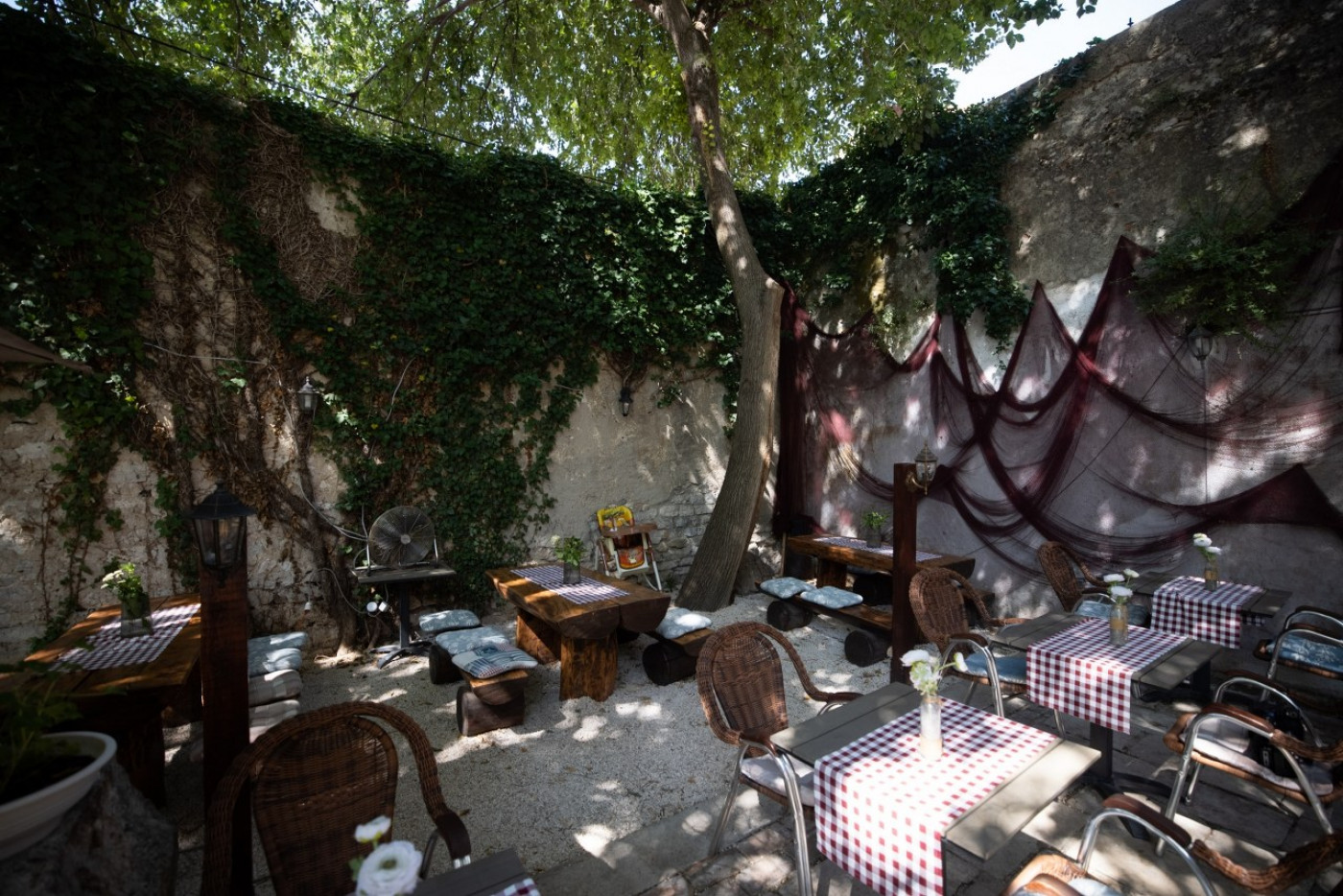
The location of Konoba "Dalmacija" is a story in itself. It is situated in the west of the Zadar Peninsula, in Kampo Kaštelo, near the old Roman Forum, the church of St. Donatus and the Cathedral of St. Anastasia. The interior is decorated in harmony with the ambience of the old Zadar taverns, but the spacious terrace is truly a fascinating part of this restaurant's story. It is, in fact, a courtyard in the place of which was an ancient Roman temple.
The protected foundations of the temple of Jupiter, Juno and Minerva are visible to the guests of "Dalmatia", and they can also see the large stone decorated parts of that ancient Roman sanctuary. Large lime and laurel trees provide a safe and airy shade in this courtyard hidden from view, even on the hottest summer days. Benches and tables are made of halves of thick Slavonian oak logs. A perfect setting!
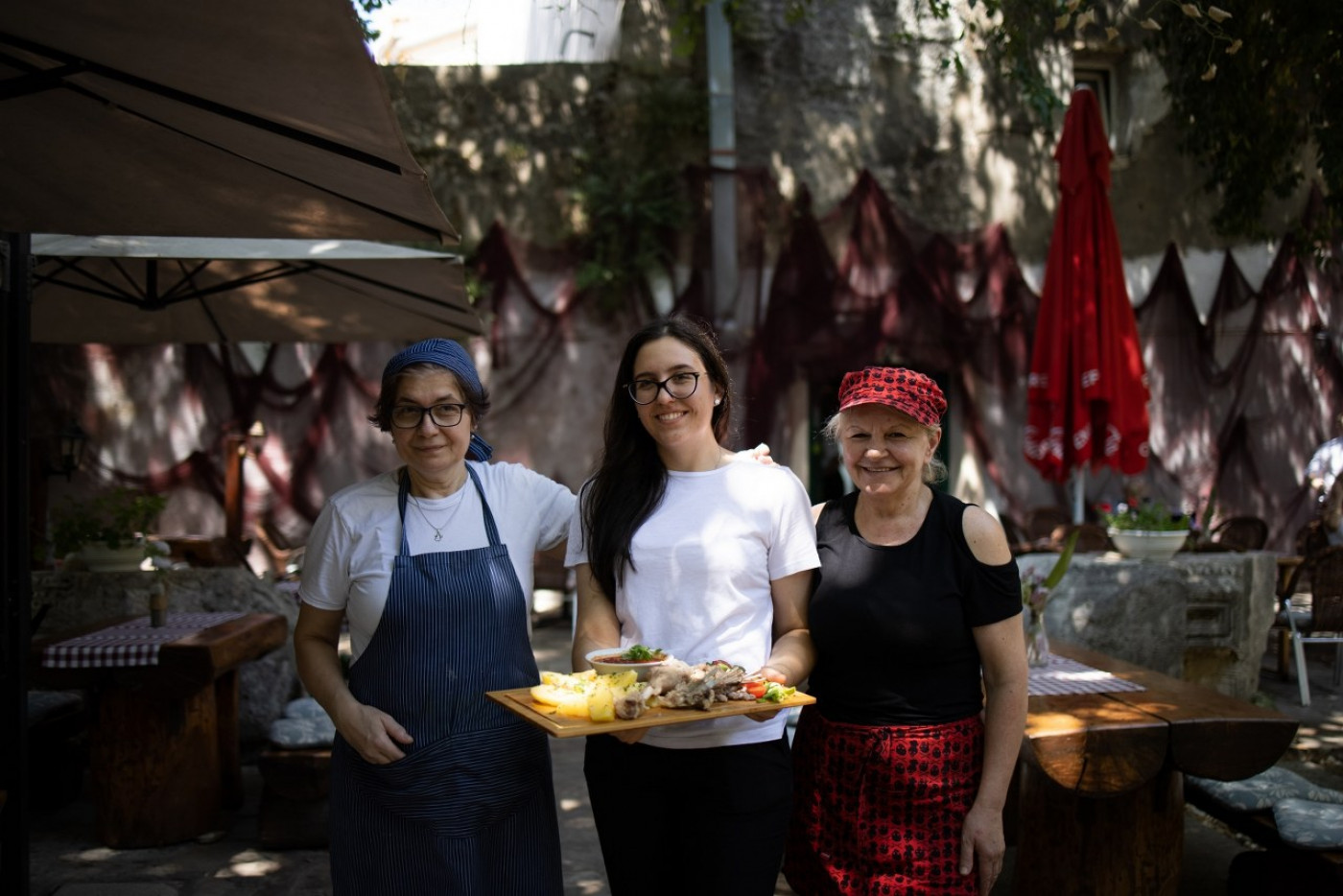
Like all other dishes, the kid goat lešada is prepared by the host Anđela and cooks Neda and Maša, nice ladies in their prime. Preparation is simple. In a large pot, they put together pieces of meat from a kid goat weighing about seven kilograms and vegetables such as onions, carrots, celery, green peppers, tomatoes. Briefly, they add vegetables we usually put in any soup and whole peeled potatoes, which will later be an excellent side dish to the boiled meat. Of course, because they cooked them in goat soup. They added water to cover the content, and after it came to a boil, the cooking took about one and a half hours. Quick and easy.
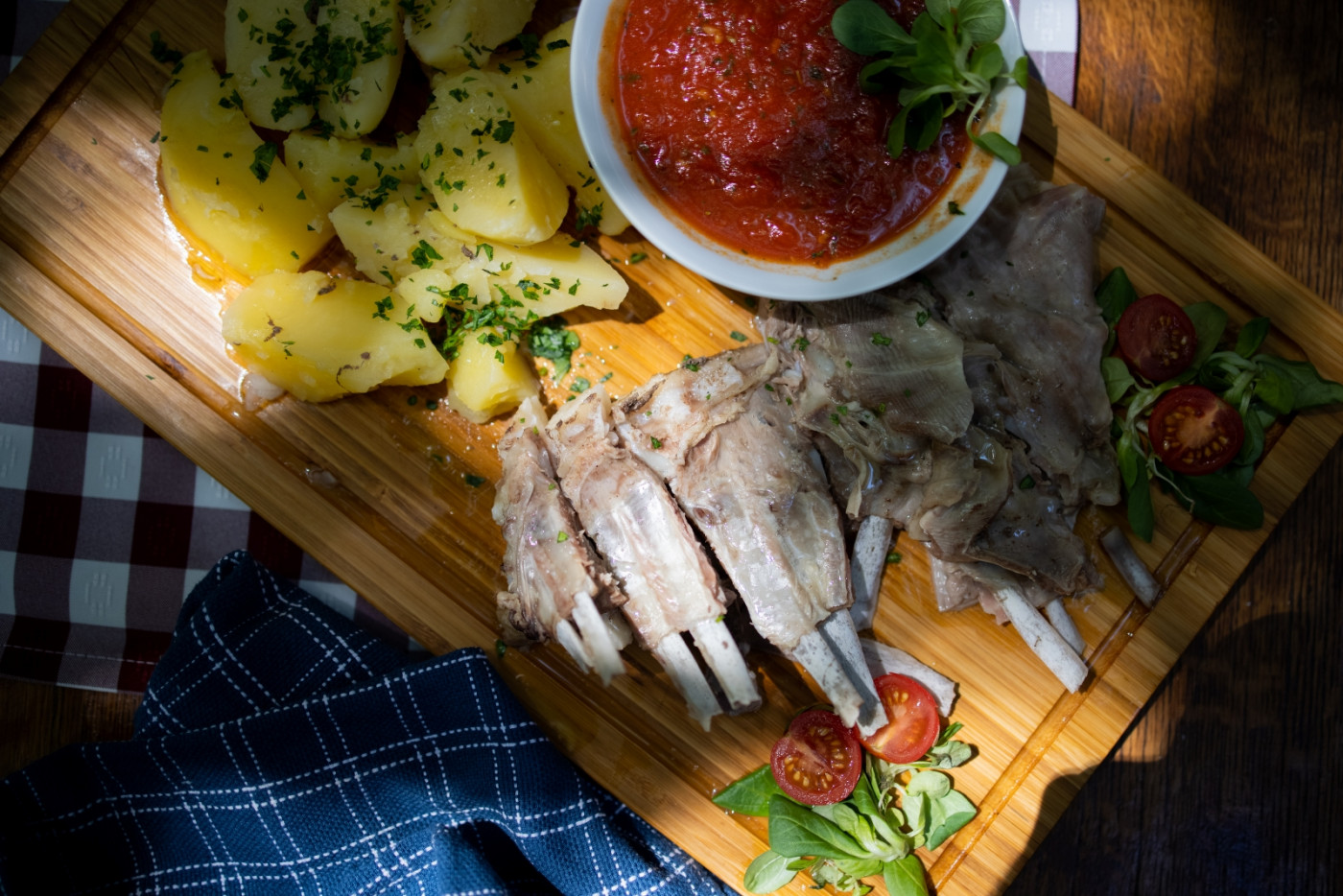
Like in Zadar and Dalmatia, serving lešada in the Tavern "Dalmacija" is a matter of tradition. On your plate, you will find several pieces of freshly cooked meat sprinkled with salt before serving, as well as boiled potatoes together with the obligatory sauce, a šalša of ripe tomatoes, pomidori, as we call this heavenly fruit in Zadar. This dish must also be served with some seasonal salad and a gemišt, a traditional summer drink in Croatia, a mixture of chilled white wine and mineral water.
We quench our thirst with a gemišt, but this combination goes excellent with this authentic shepherd's simple but still delicious summer dish. With all the side dishes and salads, the tender boiled kid goat meat is still the main star of this plate. The taste and smell of this lean and juicy meat in which all the flavours and scents of the goat's Mediterranean browse get together are usually retained on our palates for a long time.
Watch the video
.
Want to find more?
Suggested