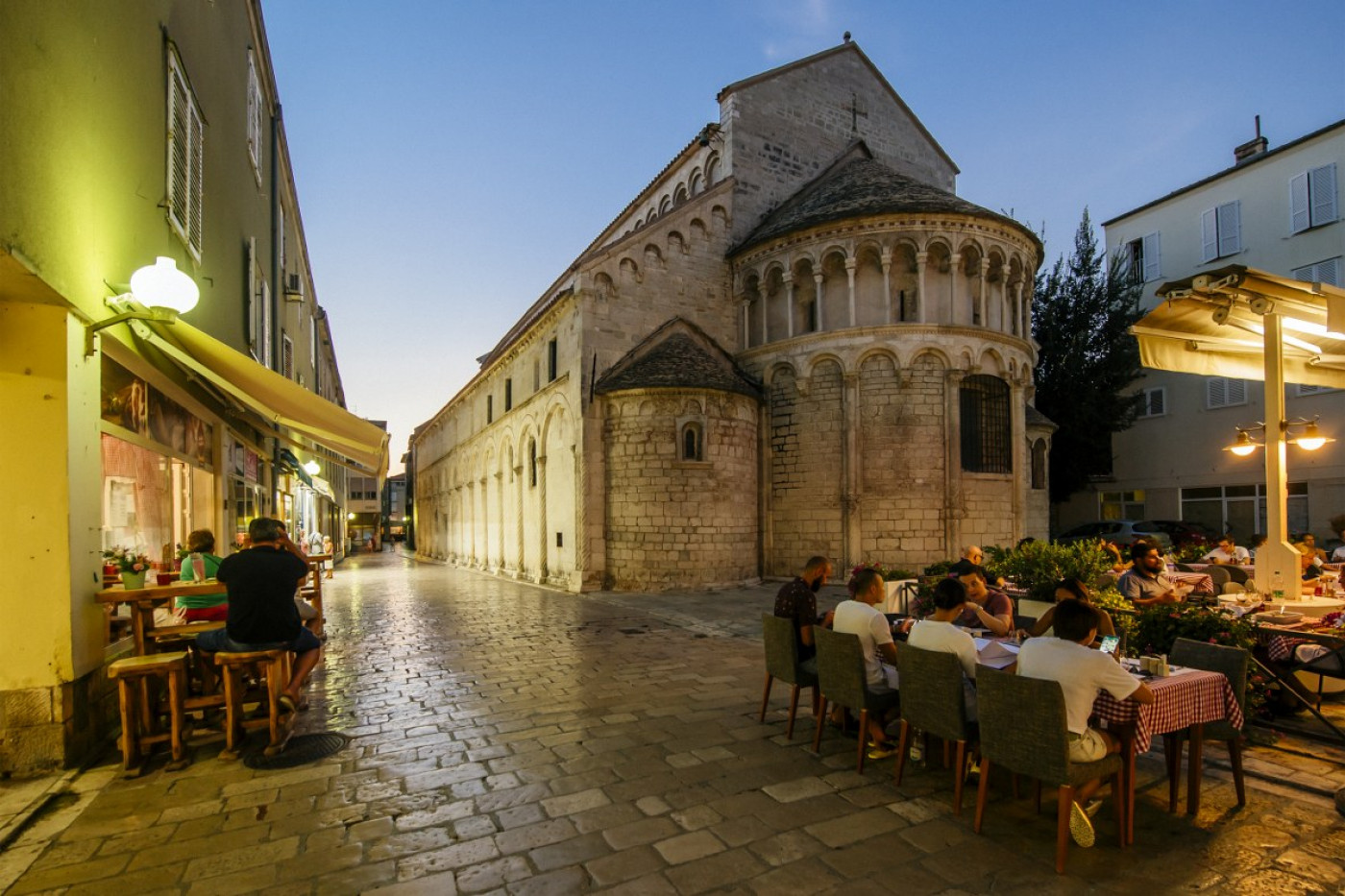
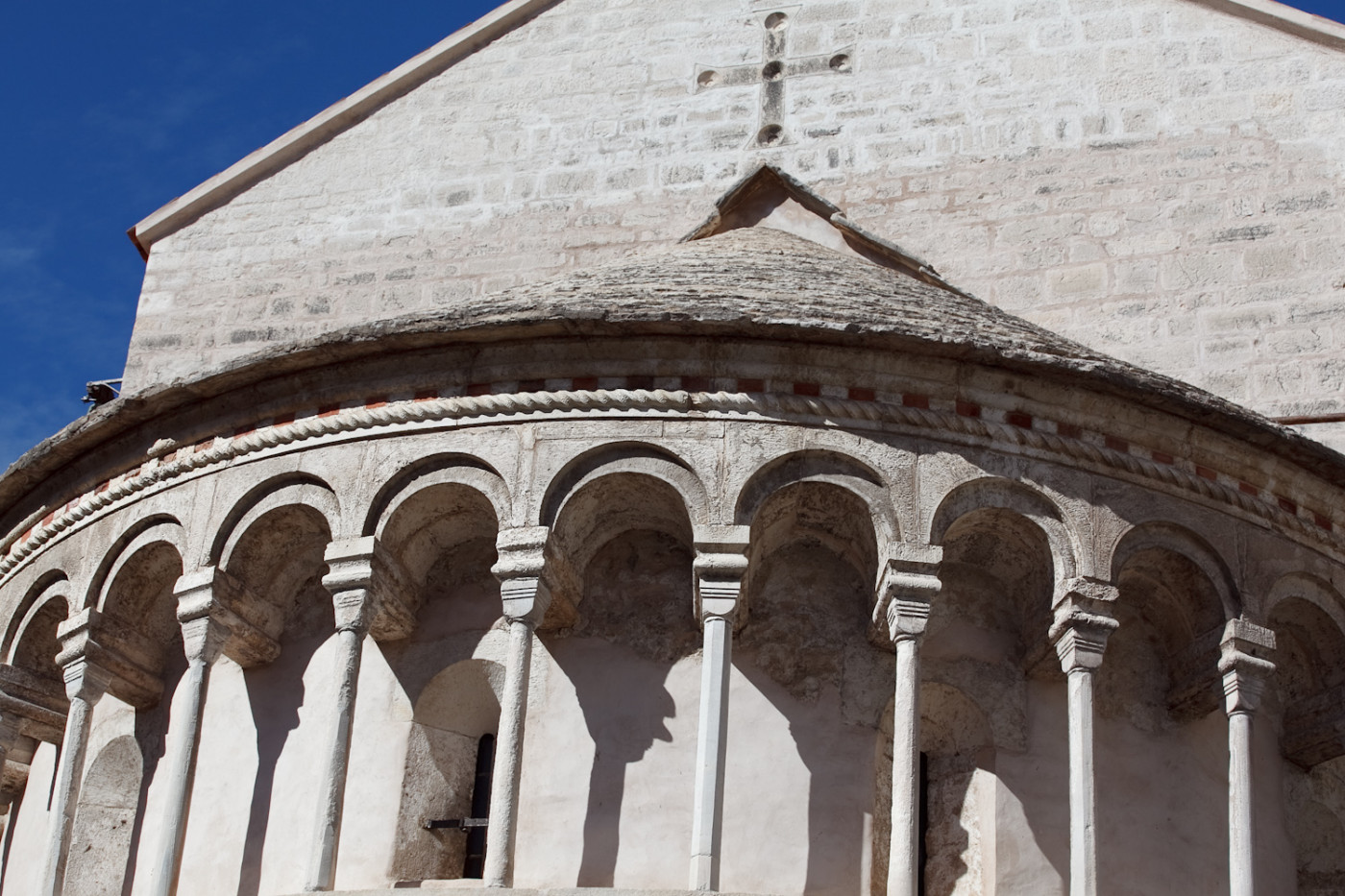
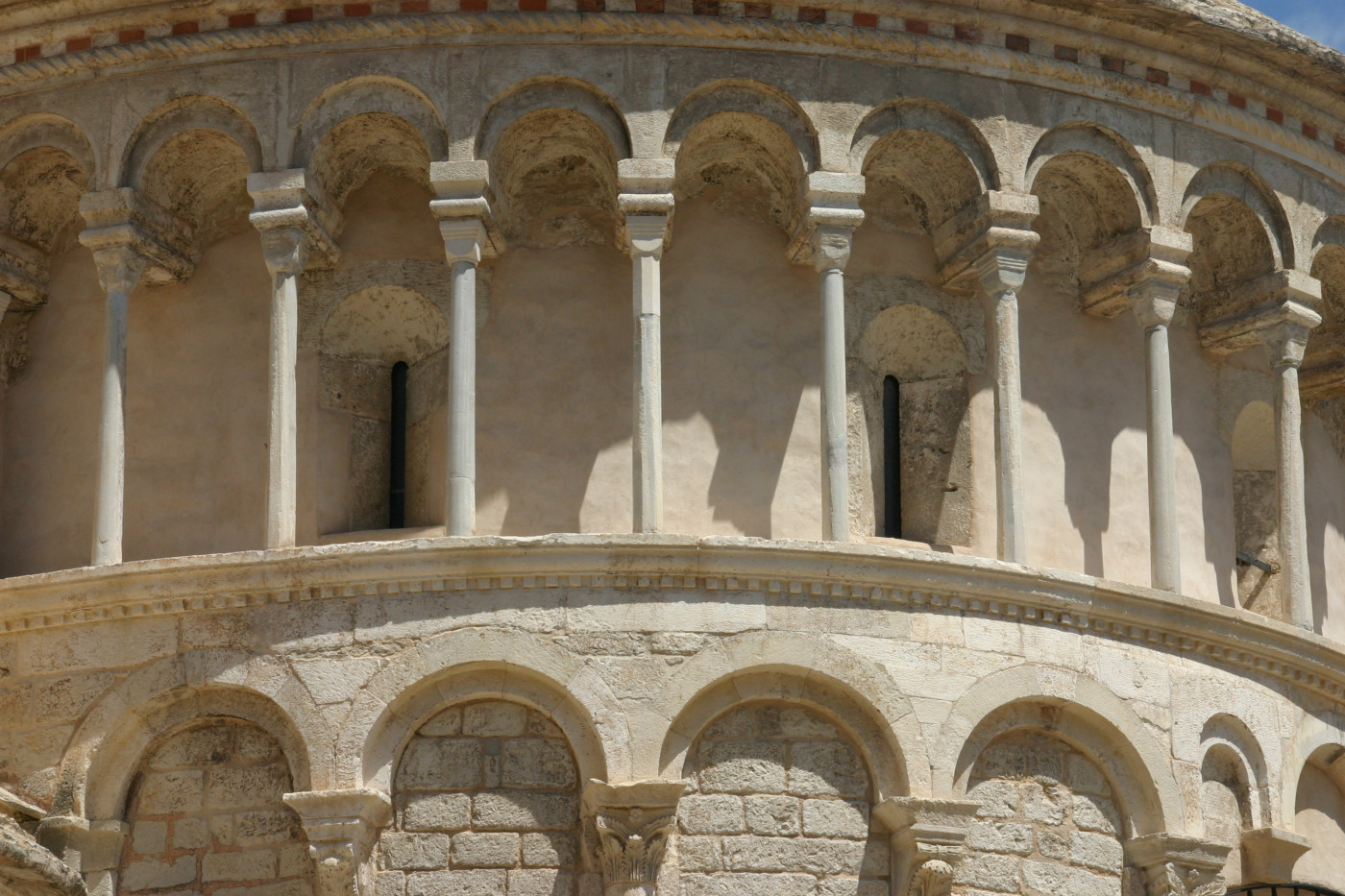
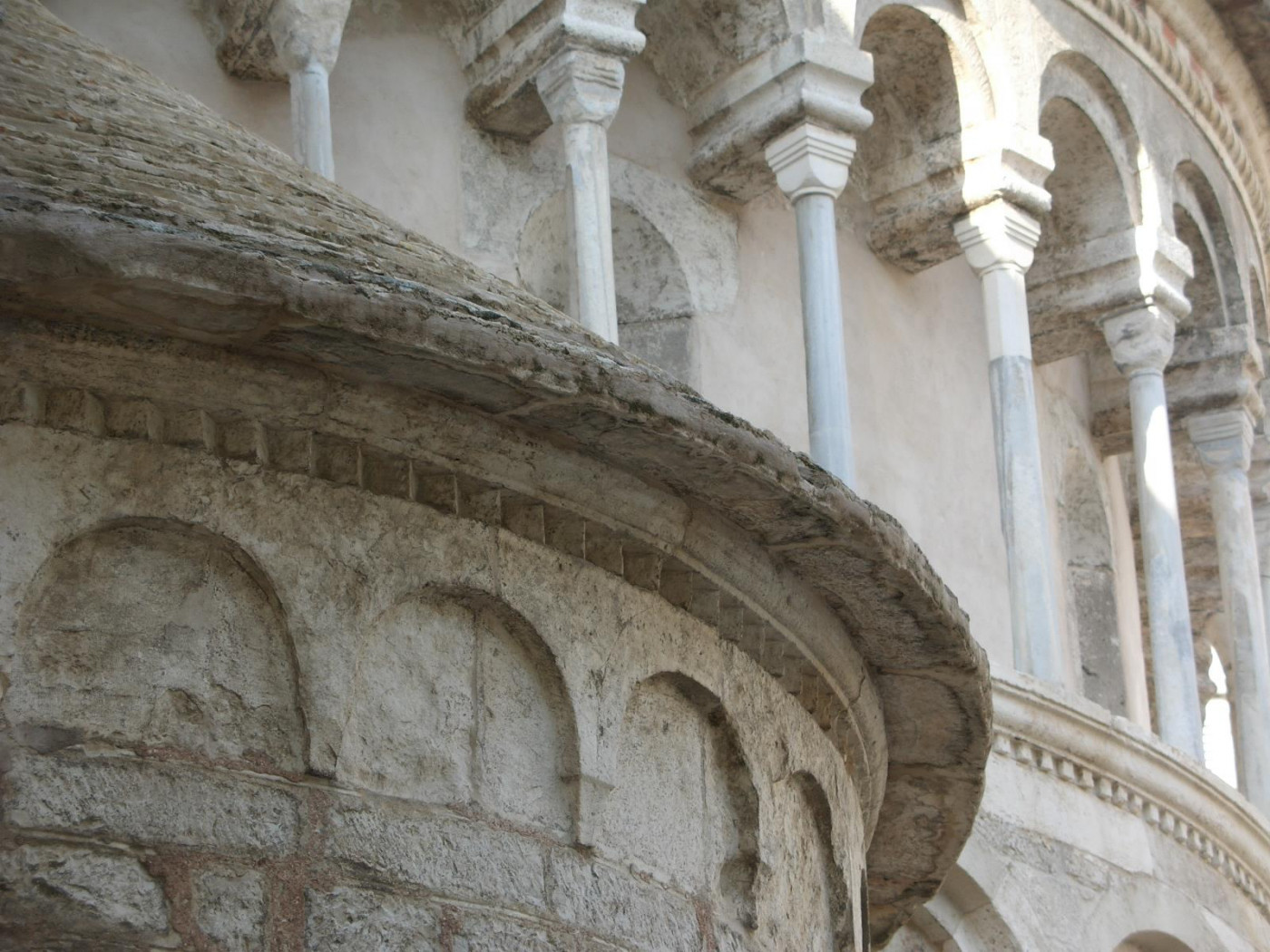
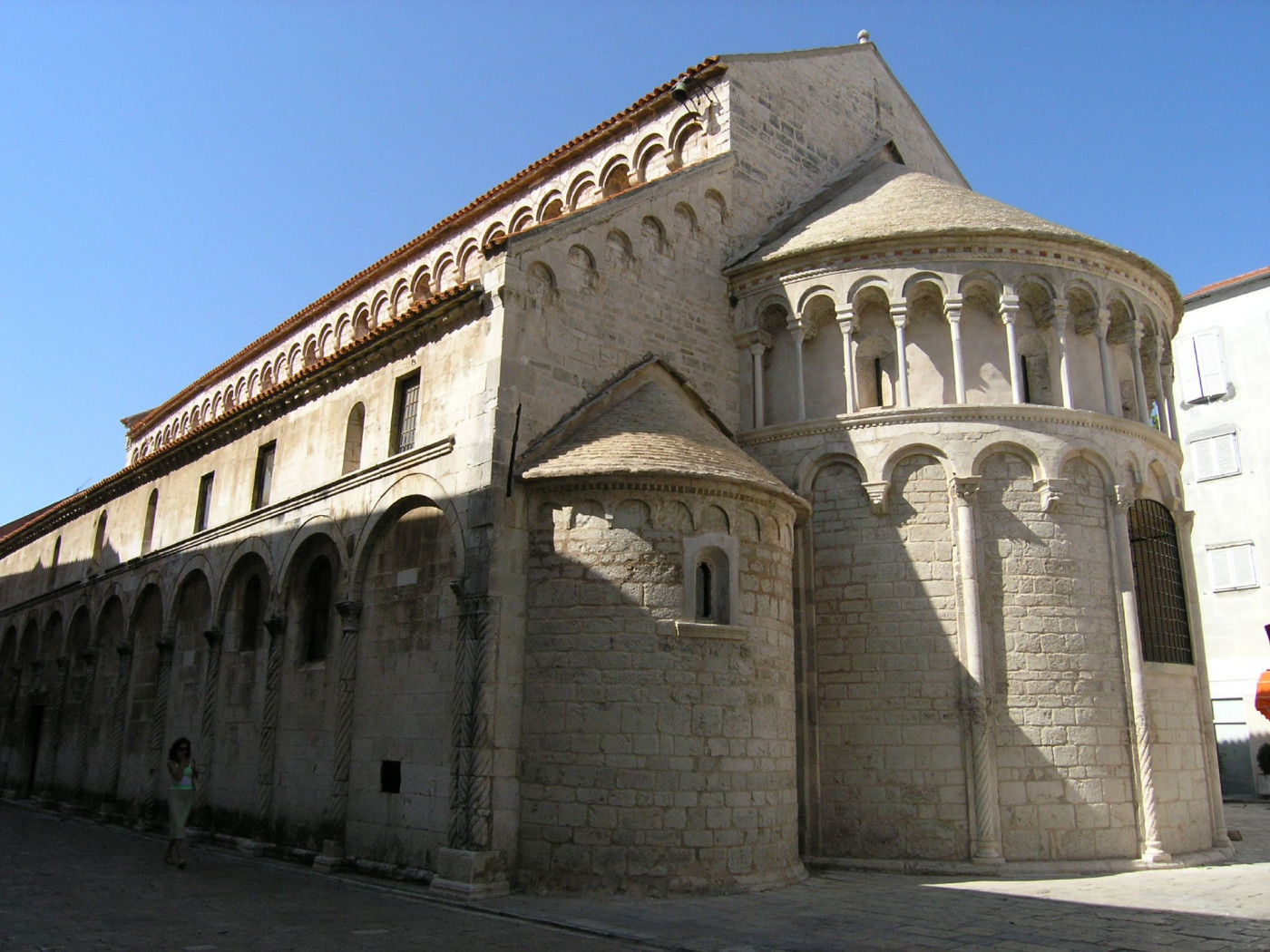
The Romanesque Church of St Chrysogonus got its name after one of the patron saints of Zadar, and it was consecrated by Zadar bishop Lampridius in 1175. It was built on the site of the Roman emporium and the Church of St Anthony the Hermit from the 6th century.
The Church of St Chrysogonus was built in the 10th century, with later adaptations, enlargement and consecration. Today the Church is the only part remaining of the former great Medieval male Benedictine Monastery. In 1387 the late Croatian-Hungarian Queen Elizabeth Kotromanić was buried in the Church of St Chrysogonus, and was later transferred to the Cathedral Basilica of Székesfehérvár. Together with the Cathedral of St Anastasia, this Church represents the most significant monument of Romanesque art in Dalmatia.