
01.09.2020.
Virtual Archaeology - New Technologies For Presentation Of Valuable Heritage
New technologies open up a number of new opportunities for presentation of history and heritage, thus creating completely new destination experiences for visitors.
If someone had told the representatives of the project consortium when they started implementing VirtualArch in 2017 that the whole world would be quarantined when it was completed and that they would not be able to meet and exchange experiences for the last time, they probably wouldn't believe. But that is exactly what happened, and thus the VirtualArch project gained additional importance. Unconscious and unplanned, but still it has.
Long before the world was hit by a global pandemic, the role of new and modern technologies in archaeological practice was widely discussed in the circles of archaeologists and representatives of related sciences.
The term "virtual archaeology" was first used by Paul Reilly, a research scientist and leader of the concept of virtual archeology, in the late 1980s and early 1990s as a response to the first era of personal computers and the first wave of digital technologies available to archaeologists in the field. . It outlined ways in which new computer technologies could be used to achieve new forms of documenting and interpreting archaeological materials and processes. The term was conceived as a general concept and “provocation” that was intended to encourage scientists to explore the interplay of digital and conventional archaeological methods. (Sugar, 2018)
Today, digital documentation and virtual reconstructions are a fundamental part of any archaeological research. In addition to speeding up fieldwork, they also open up new possibilities for the preservation and presentation of archaeological sites. It is especially reflected in underwater archaeology because, unlike terrestrial archaeologists, underwater archaeologists are significantly limited by the time spent under the sea and working on the underwater site, explains Mladen Pešić, director of the International Center for Underwater Archaeology in Zadar and leader of the underwater research team. within the VirtualArch project.
But probably the clearest examples of the use of modern technologies in this context are museums that use technologies such as innovative and creative content reviews on a daily basis through various digital platforms, mobile applications, tools and other technological innovations.
Given that cultural tourism is increasingly contributing to the economic development of the Republic of Croatia, at the same time questions such as whether the virtual world threatens the tourism sector or it is one in a series of promotional tools that can generate new feelings, experiences and ultimately increase arrivals tourists to a tourist destination, both rich in cultural and archaeological heritage? The leading independent professional tourist medium in Croatia, the portal HrTurizam.hr, says that new technologies (virtual reality or VR, augmented reality or AR, virtual museums, etc.) are not a threat, but an opportunity to better present tourist destinations. In other words, virtual reality creates the motive for a real experience and visiting a tourist destination in order to get for a real experience.
Features of the VirtualArch project
Unlike many other VR / AR visualization projects in archeology, the VirtualArch project approach is based on transnational collaboration. Facing similar challenges and sharing the same goals, albeit with diverse heritage, ten partners from eight countries came together in a European Union-funded project from the Interreg Central Europe 2014-2020 program. Project activities are aimed at the sustainable use and protection of less visible or invisible archaeological sites through the introduction of innovative approaches, tools and methods that support both the presentation and protection of archaeological heritage.
This heterogeneous approach is also reflected in the diversity of so-called pilot sites characterized by different cultures, environments, influences and challenges. All these sites contain unique finds, often made of organic material, which provide a kind of insight into the past and are therefore of international importance, both for research and for the general public - explains Jiří Unger, a member of the project consortium who published an article " VirtualArch: Making Archaeological Heritage Visible."
The sites are divided into three groups: urban areas, mines and underwater sites and relate to the following: prehistoric salt mines in Hallstatt (Austria), plateaus in Utin (Czech Republic), the medieval port of Puck (Poland), the medieval town of Nitra (Slovakia) ), medieval silver mines in Dippoldiswalde near Dresden (Germany), prehistoric soybeans in the Ljubljana Marshes National Park (Slovenia), medieval mines in Civezzano (Italy) and the last, but no less important, sunken port in Sukošan near Zadar dating from Roman times.
Sukošan, Croatia
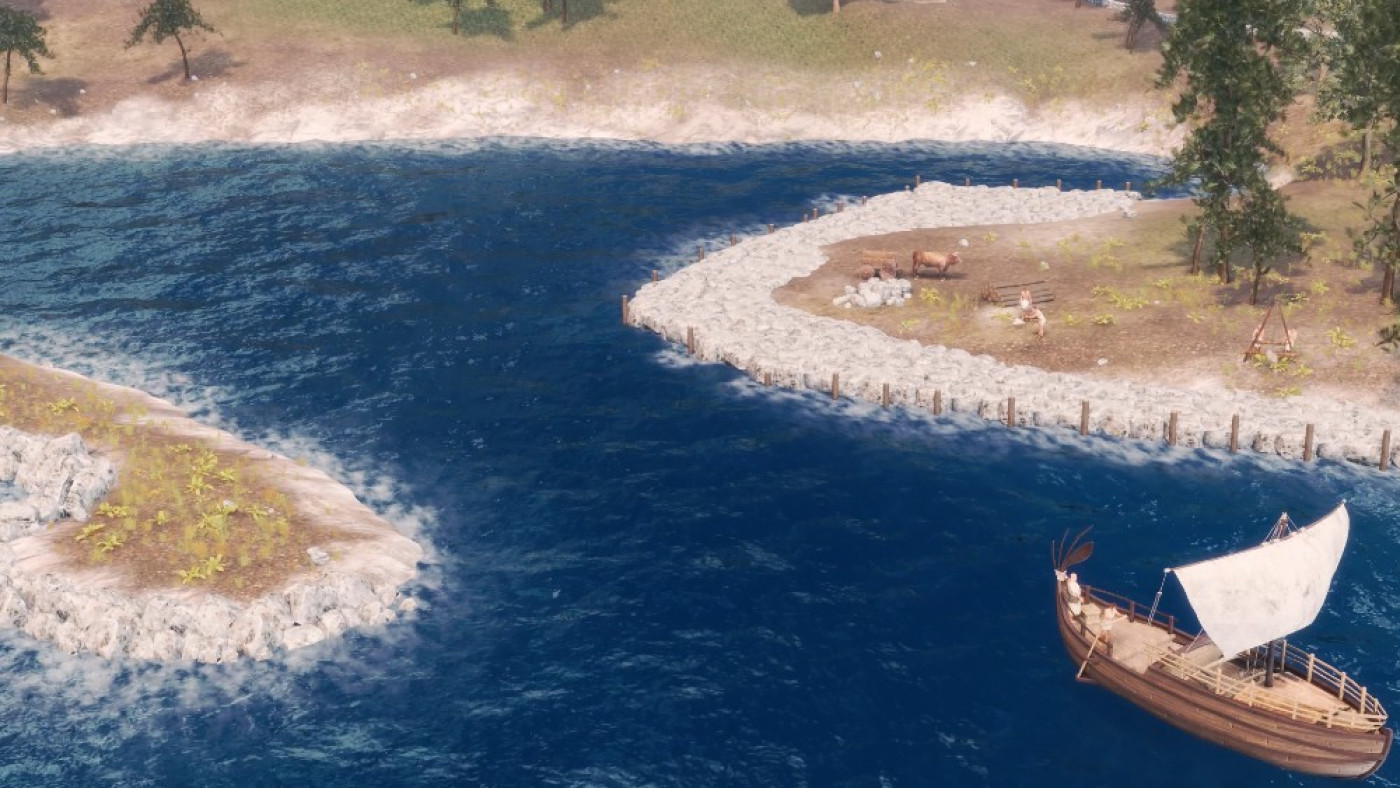
The former Roman port of Barbir is a submerged archeological site at a depth of about 1 - 3.6 meters in the village of Sukošan near Zadar. Visible submerged stone structures were defined as the remains of two piers and / or breakwaters that closed and secured the harbor, and the remains of an ancient ship and numerous small archaeological finds enabled the dating of the port of Barbir from the 3rd to the 5th century. (Pešić, 2018) Although, despite its undeniably great cultural and historical value, the port has been undiscovered and unknown even to the local population for years and the VirtualArch project has contributed to its visibility. Find more information about the project and the mobile app here!
Source: ZadarTopCity website
.
Want to find more?
Suggested

Gastronomy
Gastronomic Offer of Advent 2023 in Zadar, First Part
29.11.2023.

Gastronomy
The Botanist | Vegan Restaurant Deep-Rooted in the Mediterranean Gastro Heritage
26.05.2023.
Events
I Love Zadar, I Love Croatia
01.08.2024.

Gastronomy
Gastronomic Offer of Advent 2023 in Zadar, Fourth Part
07.12.2023.